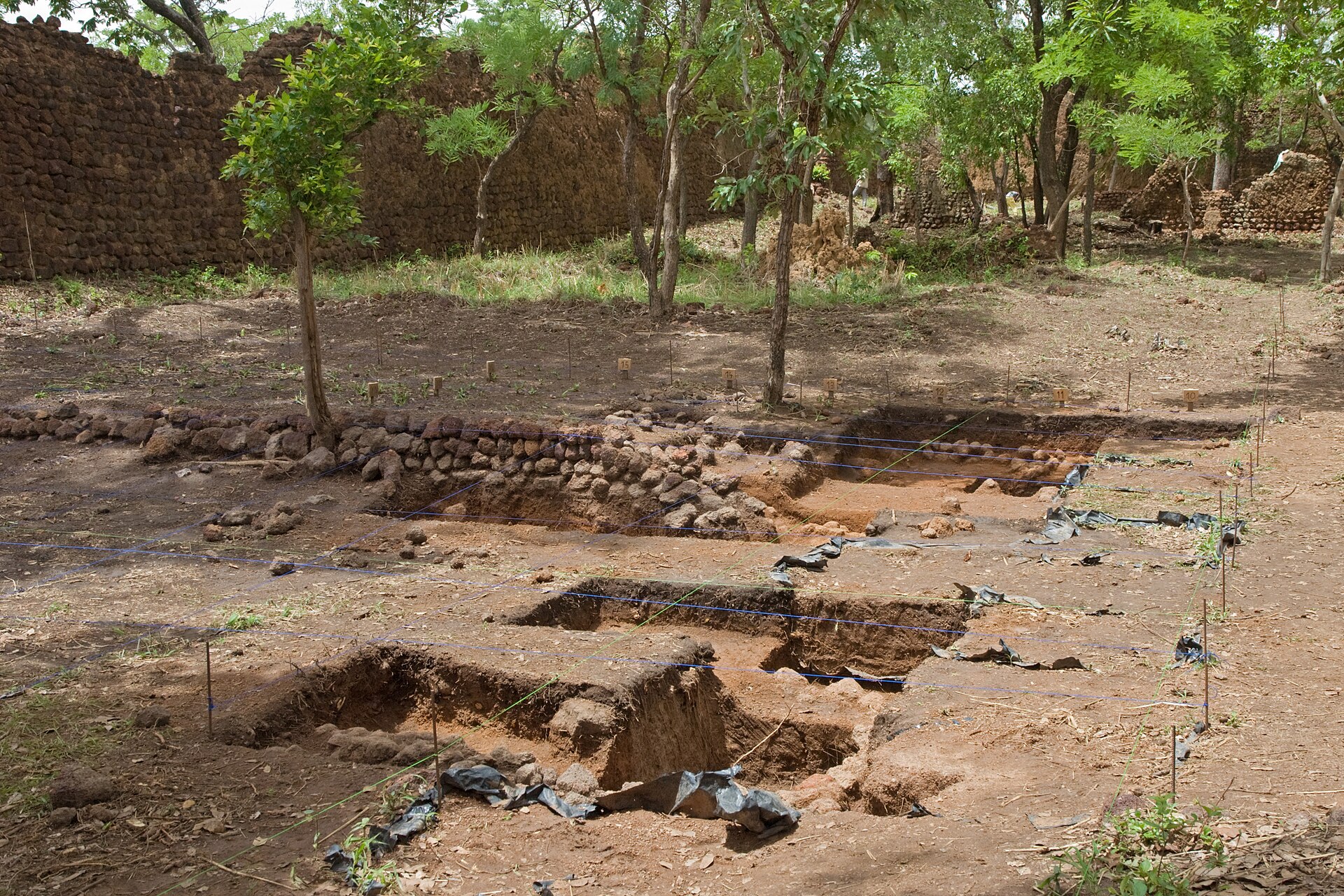
The ruins of Loropéni stand quietly in the southern reaches of Burkina Faso, not far from the borders of Côte d’Ivoire and Ghana. This ancient stone fortress, often called the country’s first UNESCO World Heritage site, is a place where time feels suspended. The walls, some still standing several meters high, enclose an area of about twelve thousand square meters, their reddish-brown laterite blocks weathered by centuries of sun and rain. Unlike the grand castles of Europe or the towering citadels of North Africa, Loropéni doesn’t dominate the landscape with its size or ornamentation. Instead, it carries a sense of mystery, its purpose and origins still debated by historians and archaeologists.
The fortress was likely built sometime between the 11th and 15th centuries, though some estimates push its construction even further back. It belongs to a network of similar structures scattered across the region, known as the Lobi or Koulango stone ruins, which stretch into neighboring countries. These sites were once part of a complex trade and defense system, possibly linked to the trans-Saharan gold routes that connected West Africa to the Mediterranean world. Loropéni, however, is the most intact and best-preserved example, offering a rare glimpse into the architectural and organizational skills of the societies that once thrived here.
Walking through the ruins, you notice how the walls curve and twist, forming an irregular shape that follows the natural contours of the land. There are no straight lines or symmetrical designs—just a pragmatic, almost organic layout that suggests the builders adapted to the terrain rather than imposing a rigid plan upon it. The main entrance is narrow, flanked by thick walls that would have made it difficult for invaders to storm. Inside, the space is divided into smaller enclosures, some of which may have served as living quarters, storage areas, or places of refuge. The absence of grand halls or elaborate carvings reinforces the idea that this was a functional structure, built for survival rather than display.
The people who constructed Loropéni remain somewhat elusive. The region was inhabited by the Koulango, Lobi, and other ethnic groups, but their exact relationship to the fortress is unclear. Some theories suggest it was a stronghold for local chiefs or a center for gold trading, while others propose it was a refuge during times of conflict. What is certain is that the site was abandoned by the 19th century, as the trans-Saharan trade routes declined and European colonial powers began to reshape the political landscape of West Africa. By the time French explorers documented the ruins in the early 20th century, the knowledge of who built them and why had already faded into local legend.
The surrounding area is just as intriguing as the ruins themselves. Loropéni sits in a region of rolling hills and savanna, where the land is dotted with baobab trees and small villages. The local communities, primarily from the Lobi and Gan ethnic groups, have lived here for generations, farming millet, sorghum, and peanuts, and raising livestock. Their way of life has changed little over the centuries, and while they may not know the full history of the fortress, they often regard it with a mix of curiosity and reverence. Some believe the ruins are inhabited by spirits, and it’s not uncommon to see offerings left at the base of the walls—a reminder that the past is never truly gone.
Visiting Loropéni is a quiet experience. There are no crowds, no guided tours with rehearsed scripts, and no souvenir stalls hawking trinkets. The site is maintained by local caretakers, who keep the paths clear and occasionally repair sections of the walls. The lack of commercialization means you can explore at your own pace, climbing over the stones, tracing the outlines of the enclosures, and imagining what life might have been like here centuries ago. The silence is broken only by the wind rustling through the grass and the occasional call of a bird. It’s a place that invites contemplation, where the weight of history feels tangible but not overwhelming.
The fortress’s inclusion on the UNESCO World Heritage list in 2009 brought it a measure of international recognition, though it remains relatively unknown to most travelers. This obscurity is part of its charm. Unlike more famous historical sites, Loropéni hasn’t been polished for mass tourism. The stones are still rough, the paths uneven, and the atmosphere unfiltered. For those who make the journey, it offers a rare opportunity to connect with a past that is both deeply African and yet largely untold. There are no grand narratives here, no epic battles or legendary kings—just the quiet persistence of a place that has endured for centuries, waiting to be understood.
The best time to visit is during the dry season, from November to March, when the roads are passable and the weather is mild. The journey from Ouagadougou, Burkina Faso’s capital, takes about ten hours by car, winding through small towns and rural landscapes. There are no luxury accommodations nearby, just simple guesthouses in the surrounding villages, where you can stay with local families and experience the rhythms of daily life. The lack of infrastructure might deter some, but for those willing to venture off the beaten path, Loropéni offers a glimpse into a side of West Africa that is rarely seen.
In the end, Loropéni is more than just a collection of old stones. It’s a testament to the ingenuity of the people who built it, a silent witness to the ebb and flow of trade, power, and culture in this part of the world. It doesn’t demand attention like the great monuments of other civilizations, but for those who take the time to listen, it has stories to tell—stories of resilience, adaptation, and the quiet strength of a place that has stood the test of time.