- Home
- Russia
- Radiant Lake
- Funa Fortress
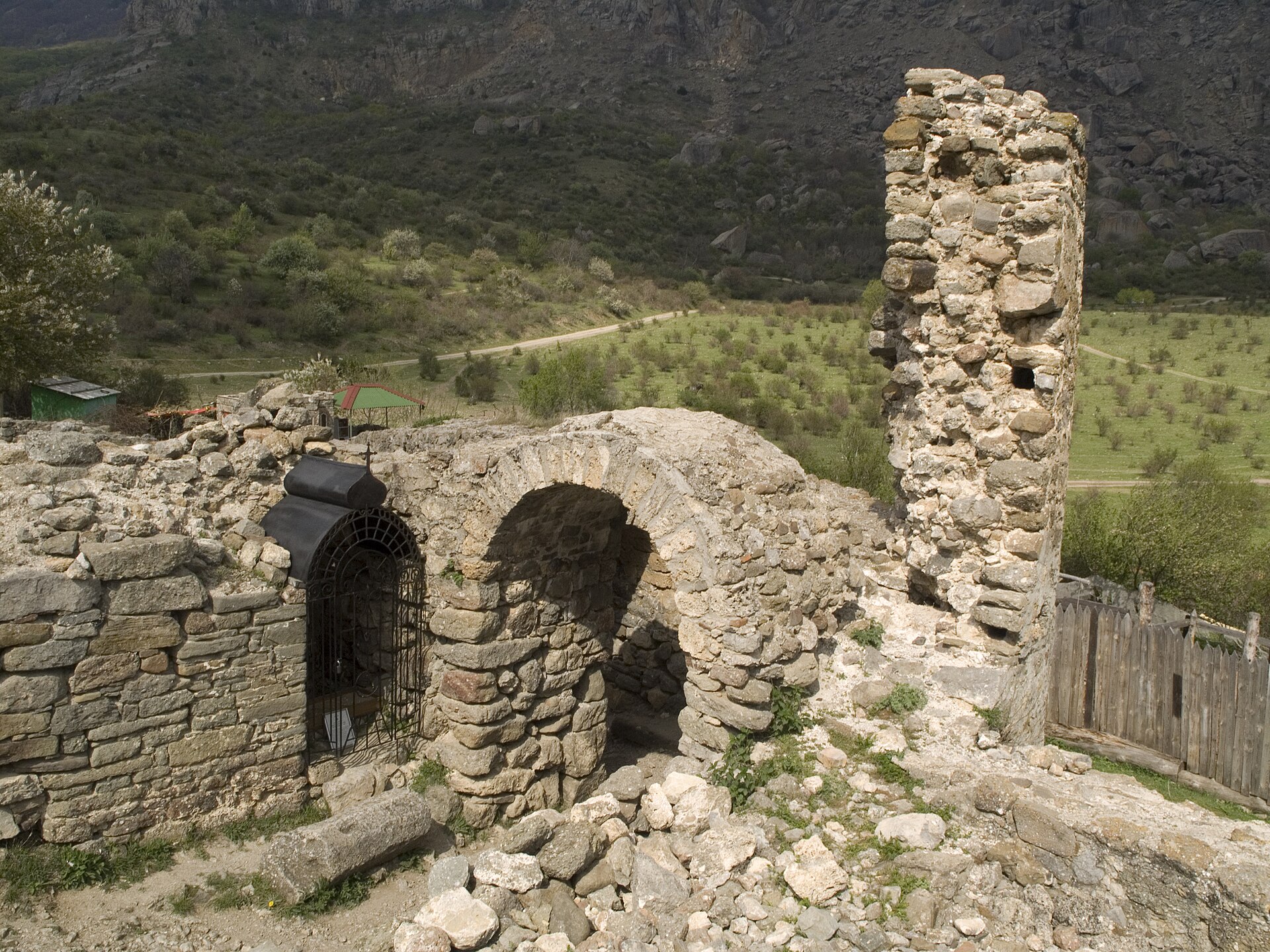
Photo: Alexostrov, CC BY-SA 3.0
Funa Fortress
out of 5 0 ratingsPerched on the slopes of Mount Demerdzhi, the ruins of Funa Fortress feel like a quiet whisper from another era. Unlike the more famous medieval strongholds of Crimea, this place has escaped the crowds, preserving a sense of solitude that makes its history feel all the more tangible. From its vantage point, the fortress overlooks a sweeping valley and the distant coastline, a view that has remained largely unchanged for centuries. The journey here is part of the experience—winding through dense forests and rocky trails, where the air carries the scent of pine and the only sounds are the rustling of leaves and the occasional call of a bird.
Funa was built in the 14th century as part of the defensive network of the Principality of Theodoro, a small but influential state that once controlled much of southwestern Crimea. Theodoro was a buffer between the Genoese colonies along the coast and the nomadic steppe peoples, its rulers balancing diplomacy and warfare to maintain their independence. The fortress served as both a military outpost and a local administrative hub, its name possibly derived from the Greek word for "foundation," reflecting its role as a cornerstone of the region’s stability. Life within its walls was far from isolated—archeological evidence suggests a bustling community of soldiers, merchants, and artisans, with homes, storage buildings, and even a small church clustered within the fortifications.
The architecture of Funa is unassuming yet effective, blending seamlessly into the rugged landscape. Constructed from local stone, the fortress’s remnants—crumbling walls, the skeletal remains of towers, and the outlines of inner structures—bear the marks of time and nature. The main tower, though partially collapsed, still offers a commanding view of the surrounding terrain, a reminder of its strategic importance. Unlike the towering ramparts of some Crimean fortresses, Funa’s defenses relied on the natural steepness of the slope, making it a formidable challenge for any would-be invader. The layout of the inner courtyard hints at a tightly packed settlement, where every inch of space was put to use.
The decline of Funa mirrored the fate of Theodoro itself. By the late 15th century, the principality had fallen to the Ottoman Empire, and the fortress, stripped of its strategic value, was gradually abandoned. Over the centuries, its stones were reclaimed by the earth, its walls slowly eroded by wind and rain. What remains today is a hauntingly beautiful ruin, a place where the past feels almost within reach. Walking among the scattered foundations, it’s easy to imagine the clatter of hooves on cobblestones, the murmur of voices in a long-forgotten language, the distant clang of a blacksmith’s hammer. The absence of modern intrusions—no souvenir stalls, no guided tour groups—only deepens the sense of stepping into another time.
The area around Mount Demerdzhi is as much a draw as the fortress itself. The mountain is famous for its dramatic rock formations, some of which resemble giant sculptures carved by the elements. The forests here are thick and untamed, home to rare plants and wildlife, while the air carries a crisp, clean quality that feels worlds away from the coastal resorts. For many visitors, the hike to Funa is as rewarding as the destination, offering a chance to disconnect from the noise of everyday life and immerse themselves in the quiet beauty of the Crimean interior.
Funa’s obscurity is part of its charm. There are no signs pointing the way, no neatly paved paths leading to the ruins—just a rough trail that demands a bit of effort to follow. This lack of infrastructure keeps the site from feeling overrun, preserving its authenticity. Those who make the journey are rewarded with a sense of discovery, as if they’ve stumbled upon a secret hidden in plain sight. The fortress doesn’t offer grand narratives or polished exhibits; instead, it invites contemplation, allowing visitors to piece together its story from the fragments left behind.
For history enthusiasts, Funa offers a rare glimpse into a lesser-known chapter of Crimea’s past. Theodoro’s story is often overshadowed by the more famous Genoese and Ottoman periods, but the principality played a crucial role in shaping the region’s medieval identity. The fortress stands as a testament to the resilience of its people, who carved out a life in a land caught between empires. Unlike museum displays or reconstructed sites, Funa’s ruins feel raw and unfiltered, their weathered stones bearing the scars of centuries.
The best time to visit is in the early morning or late afternoon, when the light casts long shadows across the ruins and the valley below glows with a soft, golden hue. There’s no rush here, no need to adhere to a schedule—just the freedom to wander, to sit on a crumbling wall and watch the clouds drift over the mountains. The silence is profound, broken only by the occasional gust of wind or the distant cry of a hawk. It’s a place that rewards patience, where the longer you stay, the more details emerge: the faint outline of a doorway, the curve of an arch, the way the stones seem to hum with the weight of history.
Funa isn’t for everyone. There are no cafes, no gift shops, no neatly labeled exhibits to guide the way. It’s a place for those who prefer their history unvarnished, their landscapes wild, and their experiences unscripted. For those who do venture here, the fortress offers something increasingly rare—a connection to the past that feels immediate and unmediated. It’s a reminder that history isn’t just something to be read about in books; it’s something that lingers in the land itself, waiting to be discovered by those willing to look.
Day around this place
Where else to go on the same day
Building the day…
Where it is
44.75167, 34.38833