Perched on a gentle rise above the quiet town of Zaouiet Sousse, Borj El-Kebir stands as a silent witness to centuries of Mediterranean history. Its weathered stone walls, worn smooth by time and salt winds, tell a story far removed from the bustling resorts that now dot Tunisia’s coastline. This isn’t a place for hurried selfies or crowded tour groups—it’s where the past lingers in the stillness, where the air carries the faint echo of waves and distant voices from another era.
Built in the 16th century, the fortress was a strategic stronghold for the Ottoman Empire, a watchful eye over a sea that was anything but peaceful. From its elevated position, sentries could scan the horizon for pirate ships, rival fleets, or any sign of trouble brewing in the waters below. The Mediterranean of that time was a contested space, where power shifted with the tides, and fortresses like Borj El-Kebir were the difference between safety and vulnerability. The Ottomans, masters of both land and sea, understood this well, and their military architecture reflected a no-nonsense approach to defense.
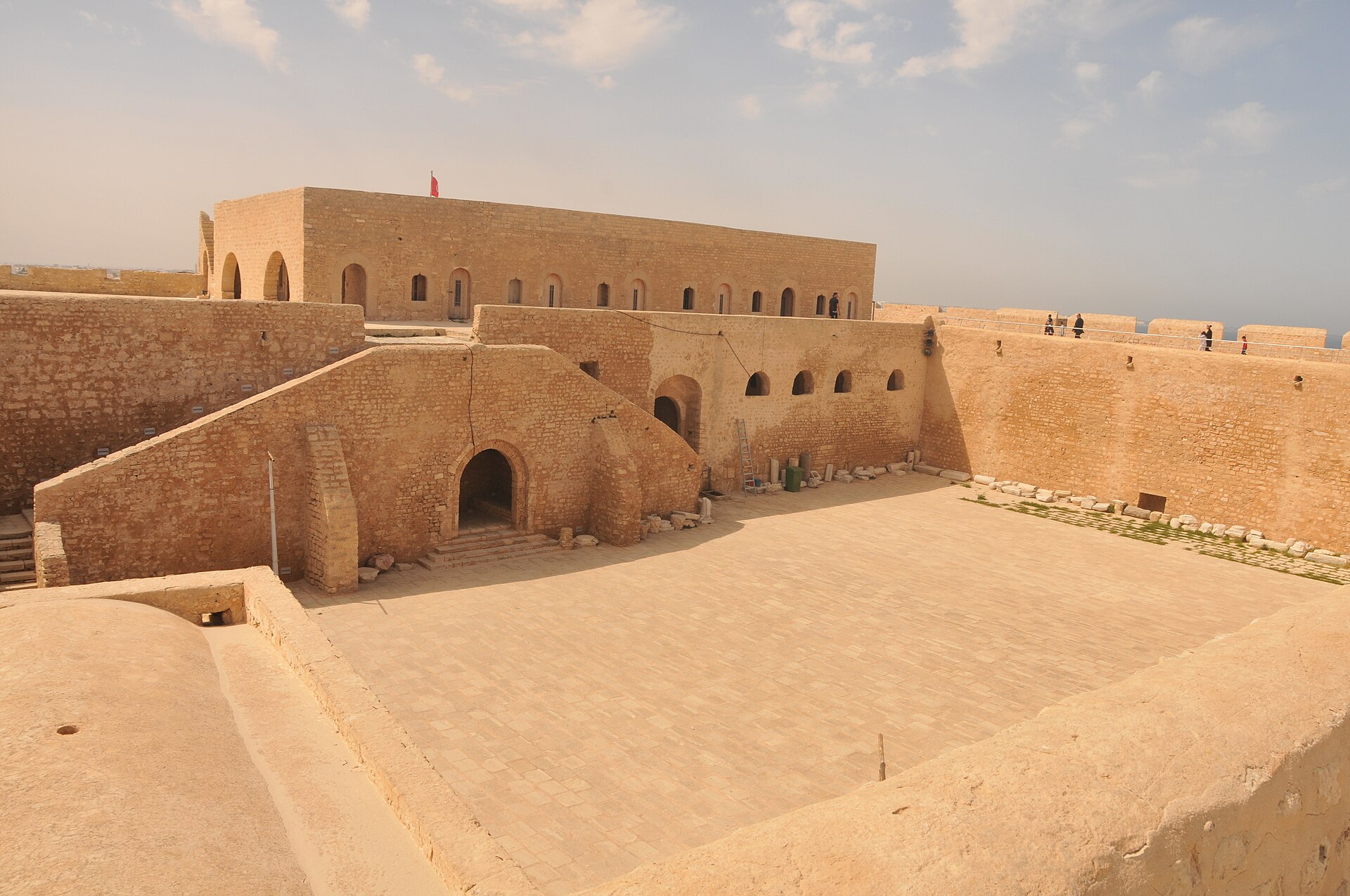
The design of the fortress is unmistakably Ottoman—thick walls punctuated by narrow slits for archers, a central courtyard where soldiers once drilled and supplies were stored, and towering lookouts that offered sweeping views of the coast. Inside, the remnants of barracks, storerooms, and even a small mosque hint at the daily life of the garrison. Time has softened the edges of these structures, but their purpose remains clear. The fortress was built to endure, and in many ways, it still does. The stones may be chipped, the plaster faded, but the sense of solidity is undeniable.
What makes Borj El-Kebir special today is its ability to make history feel tangible. Climb the worn steps to the ramparts, and the view unfolds like a living postcard: the terracotta rooftops of Zaouiet Sousse, the fishing boats bobbing in the harbor, the endless blue of the sea stretching to the horizon. On clear days, the line between sky and water blurs, and for a moment, it’s easy to imagine the scene as it was centuries ago—sails dotting the water, the clatter of hooves on cobblestones, the distant call to prayer. Unlike more famous Tunisian landmarks, this fortress hasn’t been polished for tourists. There are no souvenir stalls or guided tours here, just the quiet hum of the wind and the occasional cry of a seagull.
Local legends cling to the fortress like ivy to its walls. One tale speaks of hidden tunnels leading to the sea, secret passages that allowed Ottoman soldiers to slip away unnoticed or receive reinforcements under cover of darkness. Another whispers of buried treasure, though if anything was ever hidden here, it’s long since been found—or lost to time. The truth is less dramatic, but no less compelling: Borj El-Kebir is a place where stories take root, where the line between fact and folklore blurs. It’s the kind of place where you half-expect to turn a corner and find a soldier from another century leaning against the wall, watching the sea with the same quiet patience as the stones themselves.
For all its historical weight, the fortress remains a humble presence in Zaouiet Sousse. Locals pass by it daily without fanfare, as they might an old olive tree or a familiar mosque. It’s part of the town’s rhythm, not a relic to be gawked at, but a living piece of the landscape. This lack of pretension is part of its charm. There’s no need for grand narratives or dramatic backstories—Borj El-Kebir simply *is*, a steady presence in a world that’s always changing.
Visiting the fortress offers more than just a history lesson; it’s a chance to see Tunisia beyond the postcard images. Zaouiet Sousse isn’t a destination for those seeking luxury or nightlife. It’s a place where life moves at its own pace—fishermen mending nets on the shore, women haggling over spices at the market, children kicking a ball through narrow alleys. The fortress overlooks it all, a quiet guardian of a way of life that has endured for generations. In an age where so much feels manufactured for tourists, this corner of Tunisia feels refreshingly real.
If you find yourself here, take the time to linger. The best moments at Borj El-Kebir aren’t the ones you capture on camera, but the ones that unfold slowly—the way the light changes as the sun dips toward the horizon, the way the sea breeze carries the scent of salt and distant cooking fires, the way the stones seem to absorb the quiet of the evening. Sit on the ramparts at dusk, when the fortress glows in the golden light, and let your mind wander. Imagine the soldiers who once stood here, scanning the same sea for threats or opportunities. Or don’t imagine anything at all. Sometimes, the most memorable travel experiences are the ones that leave room for silence, for reflection, for the simple act of being present in a place where time feels a little more fluid.
Borj El-Kebir won’t offer you grand revelations or dramatic spectacles. What it will give you is something rarer—a sense of connection to the past, and to a place that hasn’t been sanitized for tourists. It’s a reminder that history isn’t just about dates and battles, but about the quiet, persistent echoes of human life. And if you’re lucky, you might leave with more questions than answers, which is often the best way to remember a place.