Ahar Fort is one of those quiet corners of Udaipur where time seems to pause, suspended between the past and the present. Tucked away on the city’s outskirts, it doesn’t draw the same crowds as the Lake Palace or the City Palace, and that’s precisely what makes it special. There are no souvenir vendors calling out, no guides competing for attention, no tourist buses lining the streets. Just ancient walls softened by creeping grass, and the wind moving through the ruins like a whisper.
This was once the heart of Mewar, a kingdom whose fortunes rose and fell within these walls. Founded in the 8th century, Ahar served as its capital long before Udaipur existed, bearing witness to dynasties, wars, and the slow erosion of power. Today, little remains of its former grandeur—just fragments of palaces, temples, and mausoleums scattered across what is now a necropolis. Yet even in decay, the ruins tell a story: of rulers who walked these paths, of battles decided in its halls, and of generations who came here to honor those who came before.
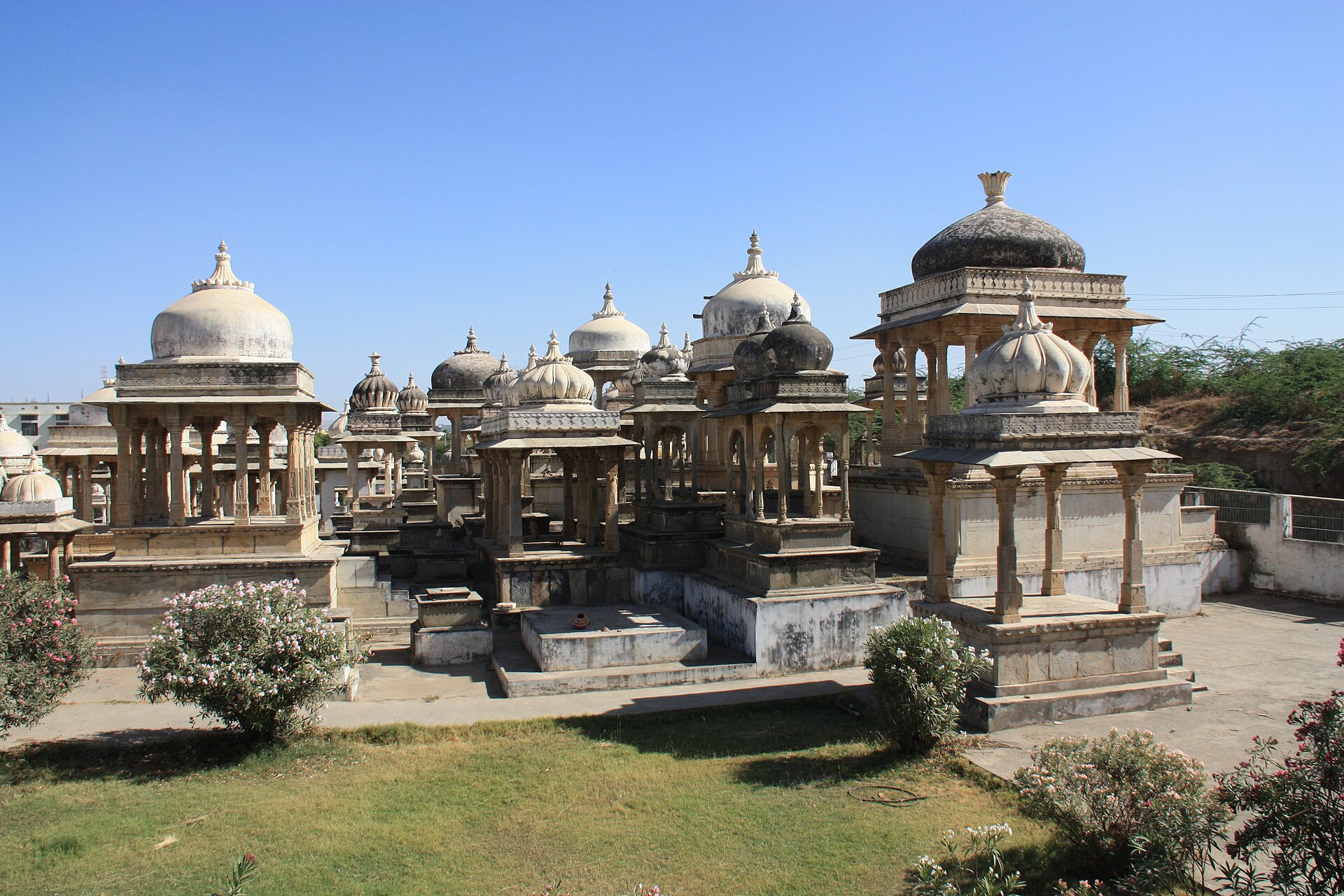
The most striking structures in Ahar are the royal chhatris, memorial pavilions built to commemorate the maharanas of Mewar. These elegant domed buildings, with their intricately carved columns and stone filigree, rise above the rest of the ruins like silent sentinels of a lost era. Each pavilion is dedicated to a different ruler, and though many have been worn by time, their craftsmanship still commands attention. The best time to see them is at dusk, when the setting sun bathes the stone in gold, stretching shadows long and deep across the ground.
Nearby, a small archaeological museum holds artifacts unearthed from the fort’s grounds. Inside, you’ll find ancient sculptures, coins, weapons, and everyday objects that offer glimpses into life centuries ago. The collection is modest, but each piece feels like a thread in the larger tapestry of Mewar’s history. The stone carvings of gods and goddesses are particularly striking, their details still sharp despite the passage of time.
Beyond its historical significance, Ahar is a pocket of wilderness in the middle of the city. Wild grasses and shrubs grow between the stones, and trees push through the ruins, offering shade from the midday heat. Locals often come here to escape the bustle of Udaipur, spreading out blankets for picnics or simply sitting in quiet reflection. In the early mornings, the air hums with birdsong, and by evening, a thin mist sometimes drifts over the ruins, softening the edges of the past.
Ahar isn’t the kind of place you visit for grand photo opportunities or guided tours. It’s where you come to slow down, to let the weight of history settle around you. There’s no pressure here—no itineraries, no crowds, no need to rush. You can wander between the crumbling walls, sit on a sun-warmed stone, and imagine the sounds that once filled this space: the clatter of hooves, the murmur of courtly debates, the voices of a kingdom in motion. Time moves differently in Ahar, and that’s why it lingers in the memory long after you’ve left.
For anyone trying to understand Udaipur beyond its postcard-perfect landmarks, Ahar is essential. It may not have the imposing scale of other monuments, but that’s part of its charm. There’s nothing here but stone, wind, and the quiet persistence of the past. If you find yourself in Udaipur, don’t hurry away. Stay awhile. Listen to the silence. Let the ruins speak.