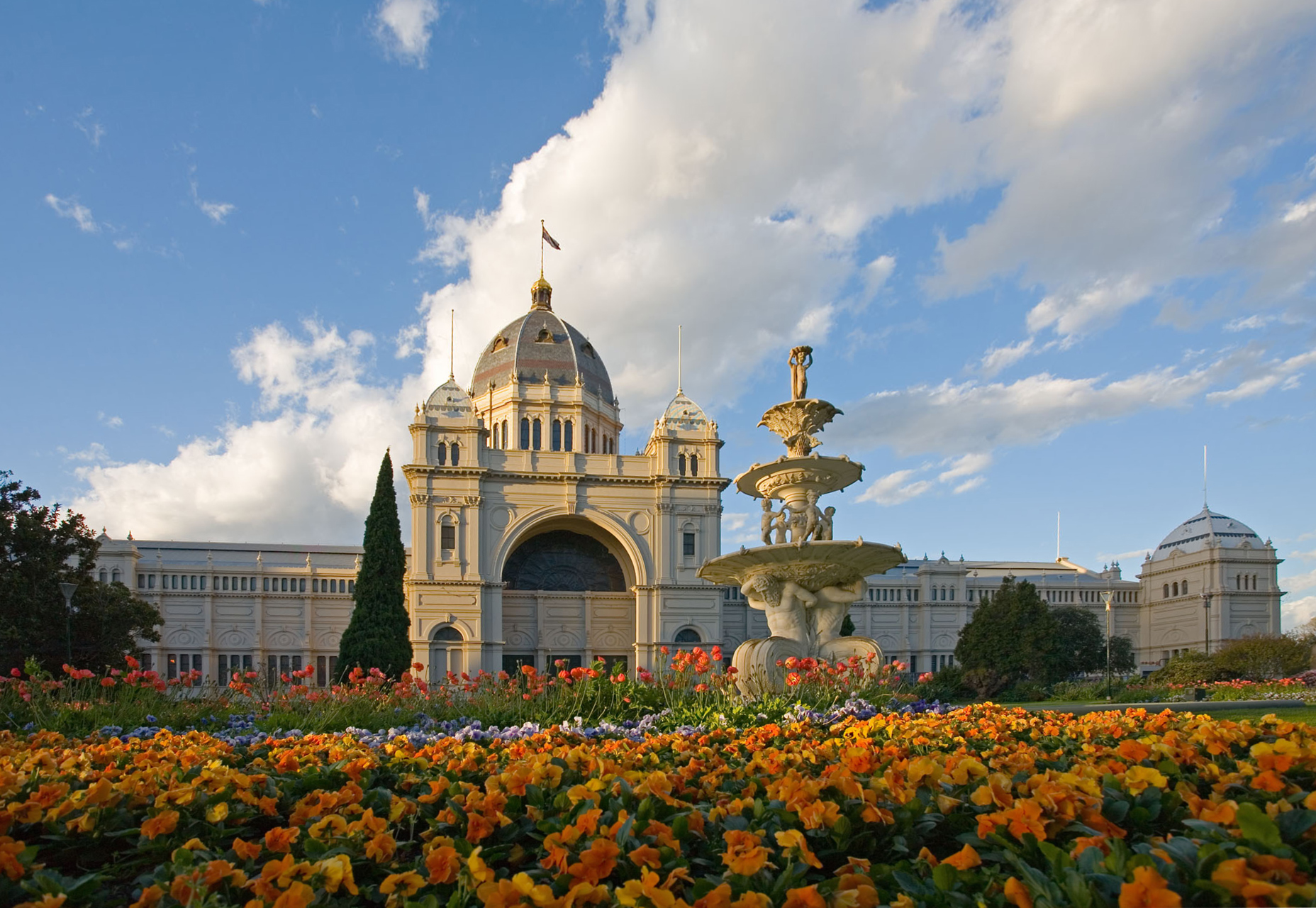
The Royal Exhibition Building in Melbourne is one of those rare places that feels suspended in time yet remains deeply connected to the city’s living history. Constructed in the late 19th century, it stands as a monument to an era when Australia was eager to assert itself on the world stage. Built for the 1880 International Exhibition, the building was meant to showcase the achievements of the Colony of Victoria in industry, science, and the arts. Melbourne was in the midst of a gold rush, and the city pulsed with ambition—architects and engineers were tasked with creating something grand, a statement that would cement its reputation as one of the most dynamic places in the British Empire.
The architecture of the Royal Exhibition Building still commands attention more than a century later. Designed in an eclectic style with strong influences of the Renaissance and Byzantine traditions, its soaring dome dominates the skyline of Carlton Gardens, evoking the grandeur of Europe’s great cathedrals while retaining a distinctly Australian lightness. The facades are adorned with intricate stucco work, columns, and arches, while the interior spaces feel vast and airy, flooded with natural light from towering windows. In its time, such structures were more than mere exhibition halls—they were temples of progress, where every detail reflected a belief in the future.
Construction was completed in record time despite the scale of the project. Hundreds of workers labored on the site, and materials were sourced from across the colony and beyond. Special care was taken with decorative elements—marble, gilded bronze, and elaborate murals were used to dazzle visitors. When the building opened in 1880, it wasn’t just a venue for the exhibition; it became a symbol of Melbourne’s cultural and economic ascendancy. At the time, the city served as Australia’s temporary capital, and the Royal Exhibition Building embodied its aspirations.
After the exhibition, the building didn’t fade into obscurity. It continued to serve the city, hosting international fairs, scientific conferences, concerts, and even sporting events. In 1901, it played a pivotal role in Australia’s history when the first federal parliament convened within its walls, as Melbourne briefly remained the nation’s capital. Later, when the government moved to Canberra, the building returned to its original purpose, though on a smaller scale. By the mid-20th century, there were even calls to demolish it, dismissing it as a relic of the past. Fortunately, locals and historians recognized its value and fought to preserve it.
Today, the Royal Exhibition Building is one of the few surviving structures of its kind in the world. In 2004, it was inscribed on the UNESCO World Heritage List, a testament to its significance. Unlike many 19th-century exhibition halls that have been lost or altered beyond recognition, Melbourne’s building has retained its original character. It’s a rare case of architectural heritage not only surviving but remaining in active use. Exhibitions, trade fairs, weddings, and corporate events still take place here, filling its halls with the same energy they held over a century ago.
Carlton Gardens, the park surrounding the building, is an integral part of its story. Once a simple plot of land on the city’s outskirts, it was transformed into a picturesque landscape for the 1880 exhibition, complete with fountains, tree-lined avenues, and exotic plants. Today, the gardens offer a peaceful retreat, where visitors can stroll beneath mature trees, relax on the lawns, or admire the building from a distance. Together, the park and the exhibition hall create a harmonious blend of nature and architecture, a place where the grandeur of the past feels alive.
For Melburnians, the Royal Exhibition Building is more than just a landmark—it’s a piece of the city’s identity. It harks back to a time when Melbourne was young and full of promise, when every new project felt like a step toward the future. The city has changed, but the building remains a tangible link to that era. Guided tours explore its history, from the gold rush to the first exhibitions and the daily life of 19th-century Melbourne. For visitors, it’s a chance to see Australia not just as a land of natural wonders but as a place with a rich cultural heritage.
A visit to the Royal Exhibition Building is an immersion in the past without the sterile feel of an open-air museum. The building has a life of its own, shifting between quiet moments and bustling activity depending on the season. On some days, the halls are empty, allowing the architecture to take center stage—the vast galleries, soaring ceilings, and the play of light on the walls. On others, the space comes alive with antique fairs, art exhibitions, or fashion shows, transforming once again into a hub of connection and discovery. It’s a place that never feels outdated because it constantly finds new ways to stay relevant.
The Royal Exhibition Building is more than just a structure—it’s Melbourne’s history set in stone. It tells the story of a city that grew, evolved, and dreamed of greatness while staying rooted in its past. Today, surrounded by modern skyscrapers, it serves as a reminder that true value isn’t always found in the new. Sometimes, it lies in preserving what has already been built and passing it on to future generations. In that sense, the Royal Exhibition Building is more than an architectural monument—it’s a symbol of continuity, helping to define Melbourne as the city we know today.