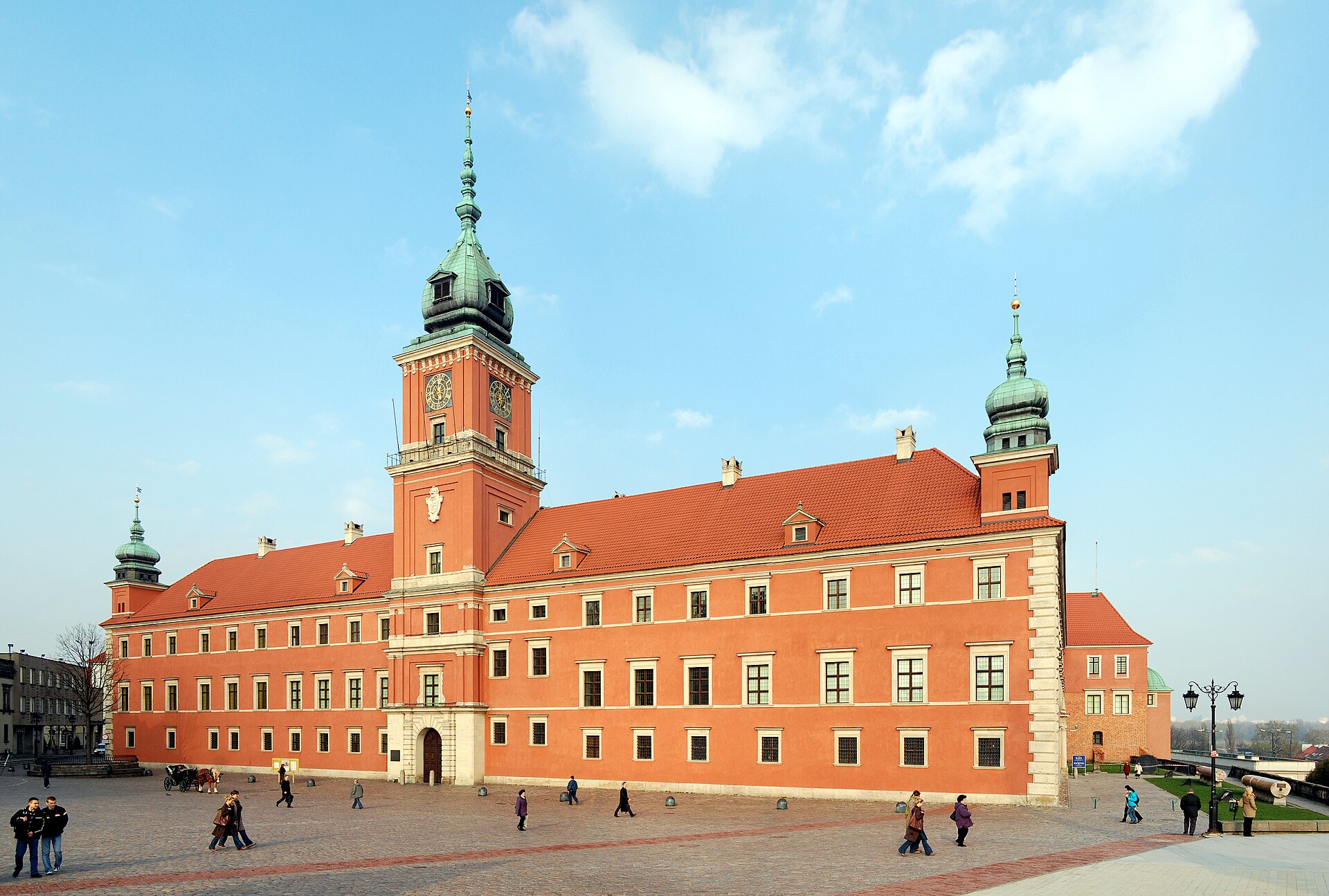
The Royal Castle in Warsaw is more than just a building—it’s a testament to the city’s resilience and rebirth. Standing at the heart of the Old Town on Castle Square, its story is woven into the very fabric of Poland’s capital. Over centuries, it has transformed from a medieval fortress into a grand royal residence, surviving wars, fires, and reconstructions. Today, it appears much as it did in the 18th century, a masterful blend of Baroque and Neoclassical styles, though its walls whisper of far older times.
The first fortifications here date back to the 14th century, when Warsaw was still a modest settlement growing into a political hub. A Gothic castle rose on this spot, later becoming part of the city’s defenses. The real turning point came in the 16th century, when King Sigismund III moved the capital from Kraków to Warsaw. The fortress was reborn as a royal palace, expanding to reflect the grandeur of a vast Commonwealth stretching from the Baltic to the Black Sea. Its halls began to fill with art, opulence, and the weight of state affairs.
The castle’s golden age arrived in the 18th century under King Stanisław August Poniatowski, Poland’s last monarch. He turned it into the cultural and political heart of the nation, hosting parliamentary sessions, lavish balls, and gatherings of Enlightenment thinkers. It was under his rule that the interiors took on their current splendor—gilded halls, intricate frescoes, and priceless collections of art. The Knight’s Hall, with its monumental paintings depicting Polish history, remains one of the most striking spaces, a vivid reminder of the nation’s past.
Like Warsaw itself, the castle endured immense suffering. In 1939, it was one of the first targets of German bombs, its structure severely damaged. After the Warsaw Uprising in 1944, the Nazis systematically demolished what remained, leaving only ruins. For years, it seemed lost forever. Yet Poland refused to let it fade. In 1971, a massive reconstruction effort began, one of the most ambitious heritage projects in Europe. Using old blueprints, photographs, and descriptions, restorers painstakingly rebuilt the castle, and in 1984, it reopened its doors.
Now, the Royal Castle is both a museum and a living piece of history. Walking through its halls feels like stepping into the world of kings and courtiers. The State Apartments retain their original 18th-century furnishings, while the Picture Gallery displays works by masters like Rembrandt and Canaletto. The Great Assembly Hall, with its soaring ceilings and tall windows overlooking the Vistula, still hosts official ceremonies, a quiet nod to the castle’s enduring role in Polish statehood.
Yet the castle holds more than just tales of royalty. Its cellars once served as prison cells, and during wars, they sheltered ordinary citizens. Some rooms now house exhibits on the daily lives of Warsaw’s people, their customs and struggles. This balance—between grandeur and humility—makes the castle’s story richer, a reminder that history belongs to everyone, not just those who ruled.
Castle Square itself is one of Warsaw’s most vibrant spots. Tourists gather around Sigismund’s Column, street musicians play, and locals stroll across the cobblestones, soaking in the atmosphere. At night, the square glows under soft lights, the castle illuminated against the dark sky. The past feels close here, almost tangible.
Visiting the Royal Castle is a chance to connect with Poland’s complex history, to marvel at the determination that brought it back from ruin. There’s nothing staged about it—every room, every detail carries the weight of real stories. Even if history isn’t your main interest, the castle leaves an impression. It’s a place where the past lingers, where beauty and resilience stand side by side, inviting you to look closer.