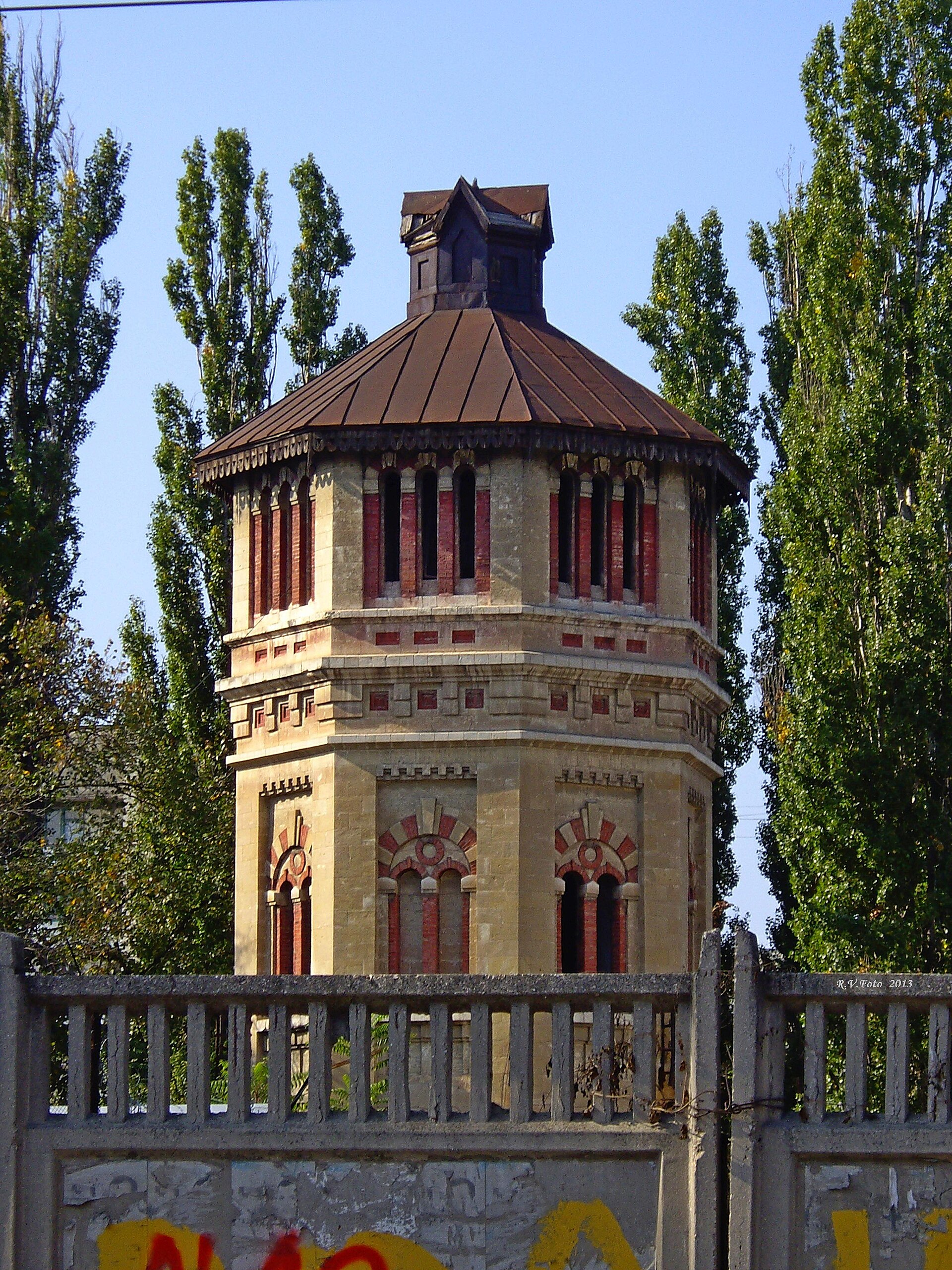
The former Simferopol Zemstvo Hospital stands quietly in the heart of the city, a cluster of brick buildings that have witnessed over a century of quiet, essential work. Built in the late 19th and early 20th centuries, these structures were part of a broader movement to bring organized, humane healthcare to provincial Russia. At a time when medical services were often scarce outside major cities, this hospital became a vital institution, offering care to both urban residents and those from surrounding villages. Its walls hold stories of ordinary people—doctors, nurses, and patients—whose lives intersected here in moments of illness, recovery, and sometimes loss.
The architecture of the complex reflects the practical yet thoughtful design of public buildings from that era. The facades are symmetrical, with tall windows that once flooded the interiors with natural light, a deliberate choice to improve conditions for both patients and staff. The brickwork is simple, adorned with modest decorative elements that balance functionality with a sense of dignity. Inside, the layout was likely designed for efficiency: wards, offices, and utility rooms connected by long corridors, creating a space where medical care could be delivered with some measure of order. Hospitals like this were more than just places of treatment; they were centers of learning, where new medical practices were introduced and refined.
Zemstvo medicine emerged in Russia as a response to the desperate need for accessible healthcare in rural areas. The Simferopol hospital was a key part of this system in Crimea, serving as a hub for medical professionals who traveled from other regions to bring their expertise to the peninsula. Here, doctors treated outbreaks of typhus and cholera, performed surgeries, and assisted in childbirth—routine yet critical work that shaped countless lives. The hospital was a social institution as much as a medical one, bridging gaps between urban and rural communities at a time when such connections were rare.
Over the decades, the buildings have seen many changes. During the Soviet period, they likely continued to function as a medical facility, though under a different system. Some modifications may have been made to adapt to new needs, but the core structure remains intact. Today, the complex is surrounded by modern development, and its historical significance isn’t immediately obvious to passersby. Yet if you look closely, the signs of age are there: weathered brick, original window frames, and doorways that hint at the passage of time.
For those interested in history, these buildings offer a glimpse into an era when medicine was still finding its footing. There were no advanced technologies, but there was a growing understanding that even basic measures—cleanliness, ventilation, skilled care—could make a difference. The hospital stands as a testament to the belief that healthcare should be a right, not a privilege, and to the people who worked tirelessly to make that belief a reality. It’s not just an architectural relic; it’s a monument to human effort and compassion.
Today, the buildings may house different institutions, but their original purpose is still visible in the details. Walking past, you can almost imagine the scene a century ago: horse-drawn carts delivering patients, nurses moving swiftly through the halls, doctors debating diagnoses. The complex isn’t a museum, nor is it preserved in amber. It continues to exist as part of the city’s daily life, a subtle reminder of the past that doesn’t demand attention but rewards those who take the time to notice.
Simferopol is a city layered with history, where even the most unassuming structures can tell a story. The former Zemstvo Hospital is one such place. It doesn’t draw crowds or boast grand facades, but that’s precisely what makes it meaningful. It’s a quiet witness to the everyday struggles and triumphs of those who lived and worked here, a piece of history that feels more human than monumental. For those who appreciate the past in its unvarnished form, it’s a place worth pausing to consider.