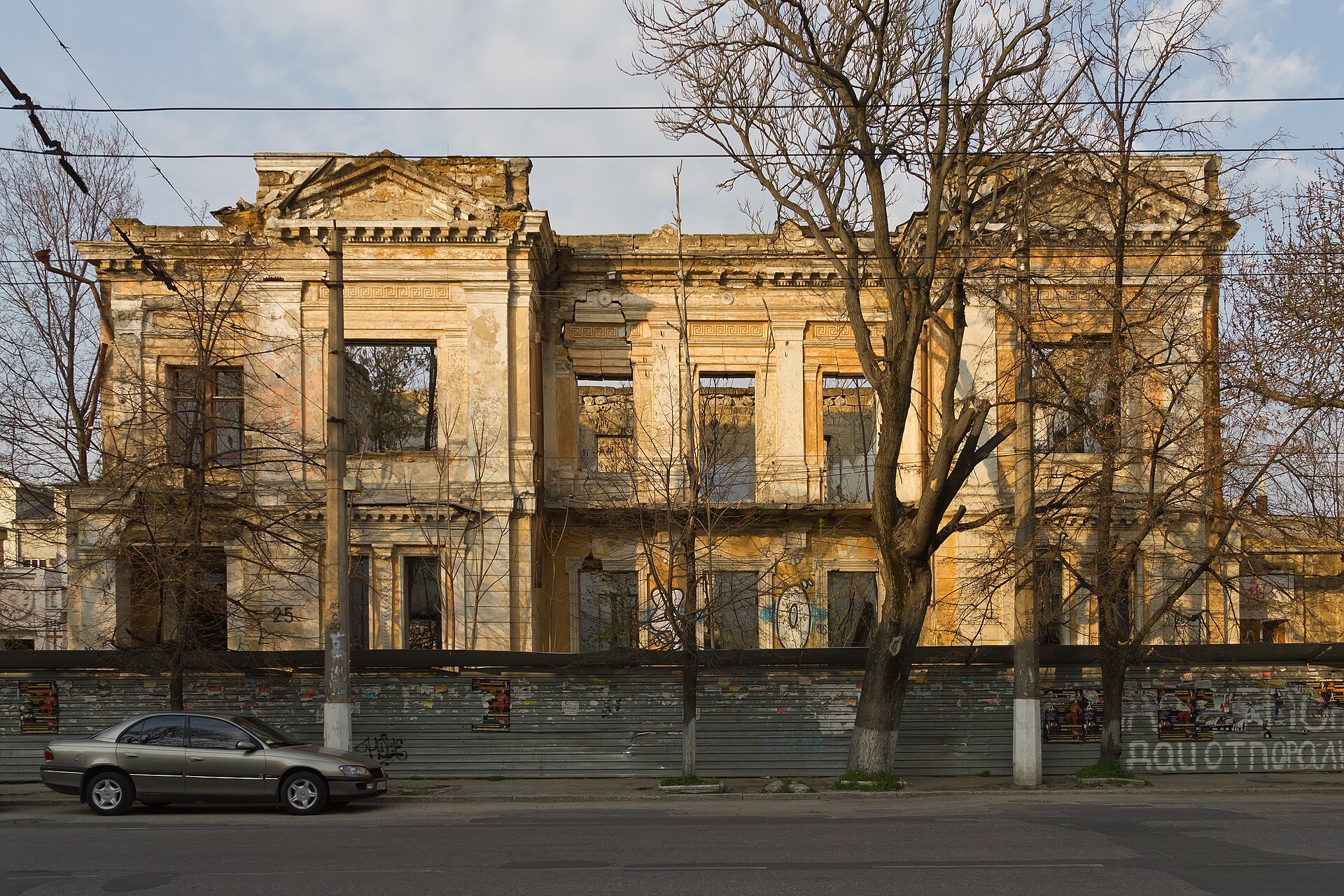
The Arendt-Rebetz estate in Simferopol is one of those quiet corners of the city where time seems to slow down. Built in the mid-19th century, it carries the spirit of an era when Crimea was just beginning to transform into a fashionable resort, and Simferopol was more than just an administrative center—it was a place where the lives of people who left their mark on the peninsula’s history intersected. Today, the estate’s buildings are not only an architectural landmark but also a subtle reminder of how the city has evolved while preserving its unique character.
The main house, designed in a classical style with late Empire influences, stands out with its understated elegance. Tall windows, a symmetrical facade, and restrained yet refined decor reflect the taste and prosperity of its original owners. Nikolai Andreevich Arendt, a prominent physician and public figure of his time, acquired the estate in the 1850s. His legacy extends beyond medicine—he played a key role in establishing Simferopol’s first city hospital and was deeply involved in charitable work. Later, the estate passed to the Rebetz family, who also contributed to the city’s development.
Inside, the house retains much of its 19th-century estate layout. Spacious rooms with high ceilings, delicate plaster moldings, antique fireplaces, and parquet floors create an atmosphere of warmth and aristocratic charm. While not all interiors have survived in their original form, what remains offers a glimpse into the leisurely evenings once spent here—music, reading, and unhurried conversations. In its time, the estate was more than a residence; it was a gathering place for the intelligentsia, where new ideas, scientific discoveries, and cultural events were discussed.
Beyond the main house, the estate includes outbuildings, service wings, and a small garden that was once the estate’s pride. Though no longer the lush park it was in the 19th century, the garden still holds the quiet allure of a bygone era. It’s easy to imagine the estate’s owners and their guests strolling here, enjoying the silence and the scent of blooming trees. During the Soviet period, the estate served various institutions, which inevitably affected its condition. Yet, despite the changes, it remains one of the few surviving fragments of old Simferopol.
The estate’s significance is deeply tied to the city’s history. In the 19th century, Simferopol was a hub of scientific, medical, and cultural activity, home to figures whose names are still recognized far beyond Crimea. The Arendt-Rebetz estate became a center of this intellectual life. Nikolai Arendt, for instance, was not only a physician but also a close friend and personal doctor of Nikolai Pirogov, the renowned surgeon who frequently visited Simferopol. Such connections made the estate a place where important events of the time unfolded.
Today, the estate is managed by various organizations, and its future continues to draw the interest of historians and local researchers. While not all buildings are in perfect condition, restoration efforts are ongoing. For residents and visitors alike, the estate is more than an architectural monument—it’s a chance to connect with history and sense the echoes of the past. Walking its grounds, one can’t help but wonder how many people have passed through here over the past century and a half, what conversations took place under its roofs, and what decisions were made within its walls.
The Arendt-Rebetz estate is a place where Simferopol’s history comes alive. It serves as a reminder that the city wasn’t always bustling and crowded—that there was a time when its streets were quiet, its gardens shaded, and its homes filled with people who sought to make the city better. In today’s rapidly developing Simferopol, such places are especially valuable. They help preserve the memory of those who laid the city’s foundations and remind us that a city is more than just buildings and streets—it’s a living legacy passed down through generations.