Santa Marta’s Quinta de San Pedro Alejandrino is one of those rare places where history feels almost tangible. Tucked away on the edge of the city, this colonial estate was the final refuge of Simón Bolívar, the man who led much of South America to independence. It was here, beneath the shade of ancient trees and within the cool corridors of the old house, that Bolívar spent his last days before dying in December 1830. Today, the estate is more than a museum—it’s a living monument to an era when a continent broke free from colonial rule.
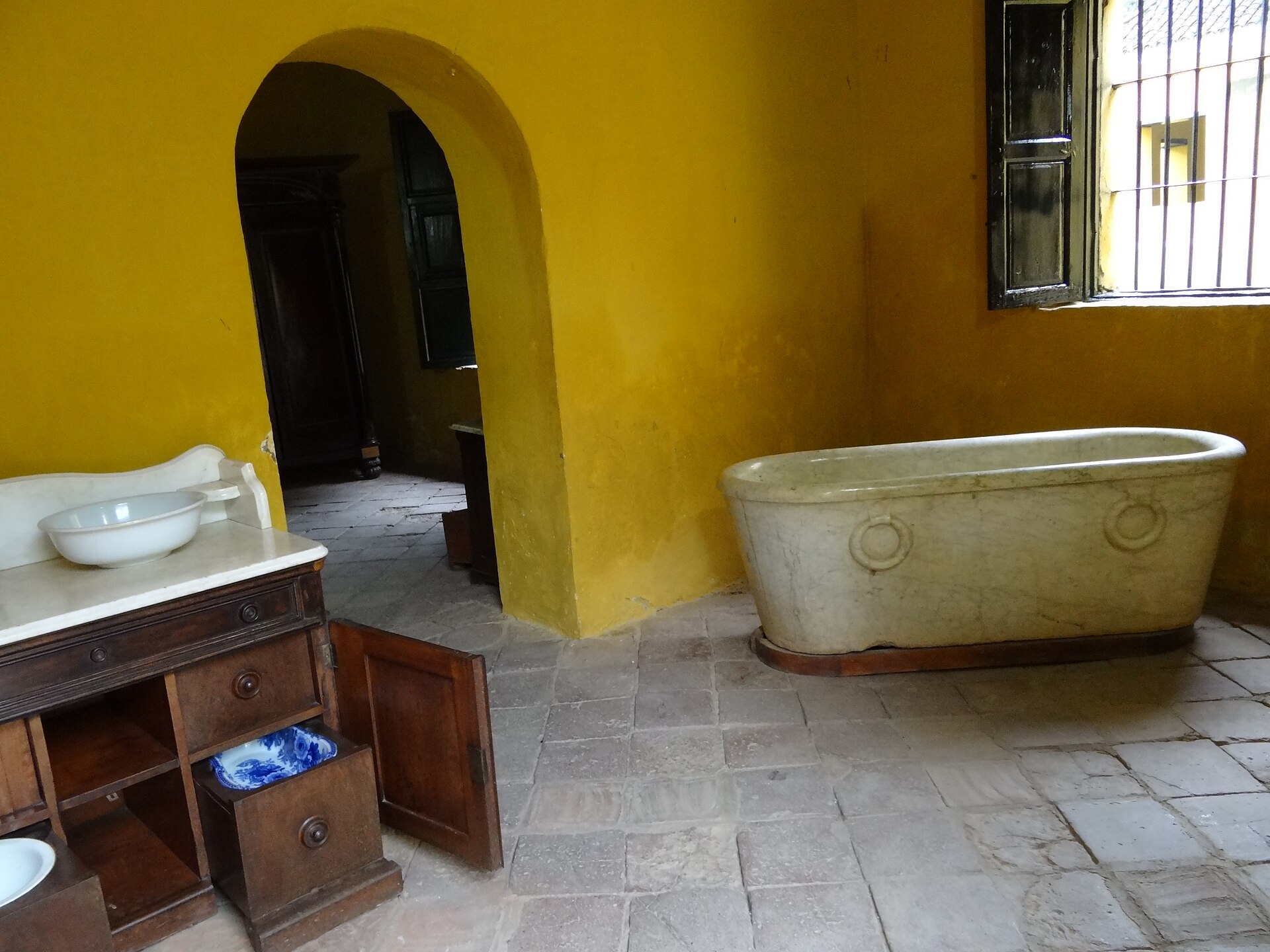
The architecture of the quinta reflects the blend of Spanish tradition and local craftsmanship typical of New Granada’s colonial estates. Built in the late 17th century, the main house stands with thick clay-and-stone walls, terracotta roofs, and inner courtyards where fountains once murmured. The surrounding park, once a sugarcane plantation, now shelters mango trees and palms, their branches offering respite from the Caribbean heat. In the evenings, the air fills with the scent of flowering shrubs, and the quiet rustle of leaves seems to carry whispers of the past.
Inside, the house retains the atmosphere of the early 19th century. The rooms where Bolívar spent his final weeks display furniture from the era—dark mahogany pieces, portraits of independence leaders, and maps of battles that reshaped a continent. His bedroom, preserved almost as it was, holds a four-poster bed beneath a canopy, and on the wall hangs a copy of his last letter, written in a trembling hand. Other rooms house collections of weapons, documents, and personal belongings of those who fought alongside him, each object a silent witness to a turbulent time.
The estate’s gardens are a world unto themselves. Winding paths lead to small ponds where ducks glide across the water, and beyond them, the green slopes of the Sierra Nevada rise in the distance. At the heart of the park stands a statue of Bolívar by Italian sculptor Pietro Tenerani. The figure sits on a rock, lost in thought, and has become one of Santa Marta’s most recognizable landmarks. Locals and visitors often gather here, some to reflect in silence, others to capture the moment in photographs.
Quinta de San Pedro Alejandrino is more than a memorial—it’s a cultural hub. Throughout the year, the estate hosts exhibitions on Colombian history, classical music concerts, and lectures. In December, on the anniversary of Bolívar’s death, the quinta becomes a place of pilgrimage, drawing politicians, diplomats, and ordinary citizens who come to pay their respects. For the rest of the year, it remains a quiet retreat, where the only sounds are the crunch of gravel underfoot and the occasional call of a bird.
For Colombians, this place holds deep significance. Bolívar is not just a historical figure but a symbol of freedom and national unity, his vision of a united Latin America still resonating today. The quinta serves as a reminder of the struggles that secured independence, yet it’s also woven into the fabric of daily life in Santa Marta. Schoolchildren visit on field trips, families picnic on the lawns, and elderly locals sit on benches, sharing stories of the past.
A visit here isn’t a dry history lesson—it’s an immersion in something vivid and immediate. There’s no grandiosity, just the quiet weight of old walls and the rustle of leaves. It’s easy to imagine Bolívar, frail and weary, walking these paths, searching for a way forward as the young republics he helped create teetered on the brink of collapse. Or the laborers who once worked the sugarcane fields, unaware that their landlord would become a legend.
Santa Marta itself is a city steeped in history, but the quinta gives it an added dimension. Here, the past isn’t preserved behind glass—it breathes. That might be why people return again and again, drawn by the sense of connection to those who came before. History, after all, isn’t just something you read about in books. Sometimes, it’s something you can almost touch.