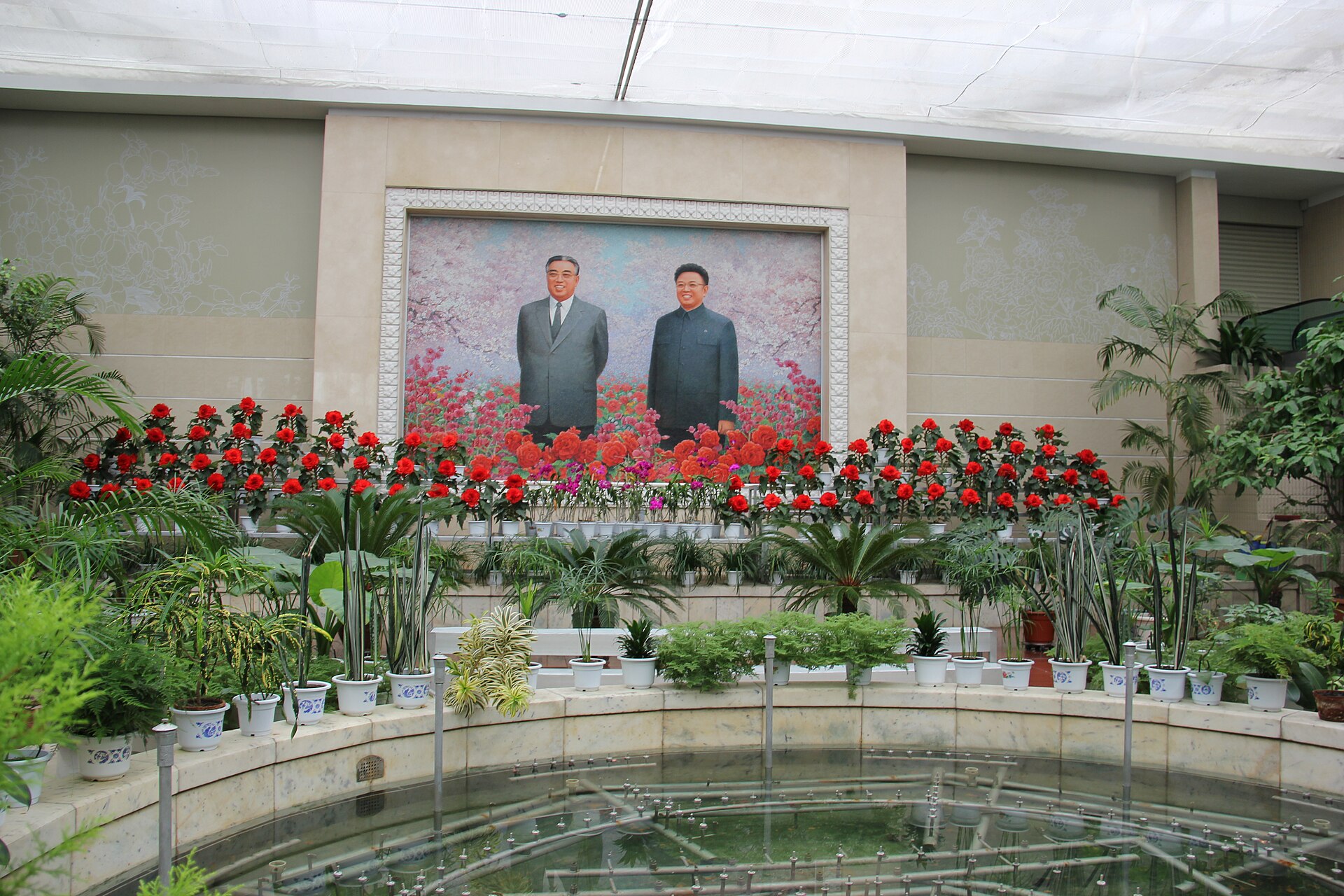
In Pyongyang, some places don’t just show you things—they tell you how the world is meant to be seen through the lens of North Korea’s ideology. The Kimilsungia and Kimjongilia Exhibition Hall is one such place. These two flowers, orchids named after Kim Il Sung and Kim Jong Il, are more than just symbols; they’re living metaphors of a personality cult woven into the fabric of the state. The building itself is unassuming next to Pyongyang’s grand monuments, but what it holds transforms it into something like a botanical shrine with a deeply political purpose.
The story of these flowers begins far from Korea. The Kimilsungia is a hybrid orchid, bred by an Indonesian horticulturist in 1964 and presented to Kim Il Sung during his visit to Jakarta. Its delicate pinkish-lavender petals were named in his honor while he was still alive—a rare occurrence in botanical naming. The Kimjongilia came later, in 1988, when a Japanese grower cultivated a new variety of begonia and dedicated it to Kim Jong Il. What started as diplomatic gifts soon became part of the country’s official iconography, appearing on postage stamps, coins, and even in state documents.
The exhibition hall functions as both a museum and a center of ideological education. Unlike typical botanical displays, there are no informational panels about plant species or gardening tips. Instead, visitors encounter arrangements where the flowers share space with portraits of the leaders, quotes from their writings, and photographs of them admiring the blooms. The focus isn’t on the beauty of the plants but on their connection to the nation’s history and its rulers. Even their blooming cycles are tied to significant dates: the Kimilsungia flowers in April, around Kim Il Sung’s birthday, while the Kimjongilia blooms in February, near Kim Jong Il’s.
The building’s architecture is simple and practical, like much of Pyongyang’s modern construction. It’s not a grand monument but a functional space designed for visitors. Inside, glass and metal dominate, with light tones and minimalist lines. Yet even here, there are subtle touches—national patterns on the walls, images of Mount Paektu, the sacred peak central to Korean mythology and now part of the state’s ideological narrative. The atmosphere isn’t that of a scientific museum but something closer to a place of reverence, where every exhibit reinforces the legacy of the leaders.
For foreigners, a visit here can feel like stepping into a different kind of ritual. There’s none of the casual ease found in other tourist spots, where you might simply admire flowers or snap a few photos. Instead, the experience is carefully guided, with hosts who don’t just talk about botany but about how these plants became symbols of an era. Sometimes, tours include poetry readings or songs dedicated to the leaders. For North Koreans, this place is part of everyday life, where ideology and nature intertwine, and flowers become inseparable from national identity.
Neither the Kimilsungia nor the Kimjongilia grows wild in Korea. They exist only in greenhouses and carefully tended gardens, cultivated to bloom on schedule. This makes them even more symbolic—they’re not just flowers but the result of human effort to sustain a cult of personality. In a way, they reflect how many aspects of life in North Korea are carefully constructed, from architecture to holidays, from history to daily rituals.
The exhibition hall isn’t a must-see for tourists, but those who visit often leave with a unique perspective on the country. There’s no conventional exoticism or entertainment here, just a chance to see how deeply ideology can permeate even the most unexpected areas—like botany. Some might find it strange, others intriguing, but it’s undeniably a part of North Korea’s reality, one you won’t encounter anywhere else.
There’s no tourist infrastructure around the hall—no cafes, no souvenir shops, no signs in foreign languages. This place isn’t meant for leisure; it’s for education and remembrance. It doesn’t try to cater to outsiders but instead presents itself on its own terms. That’s the logic behind it: North Korea doesn’t aim to be convenient for tourists. It offers a glimpse of the world as it’s seen here, and the Kimilsungia and Kimjongilia Exhibition Hall is one of those places where that philosophy is most vividly on display.