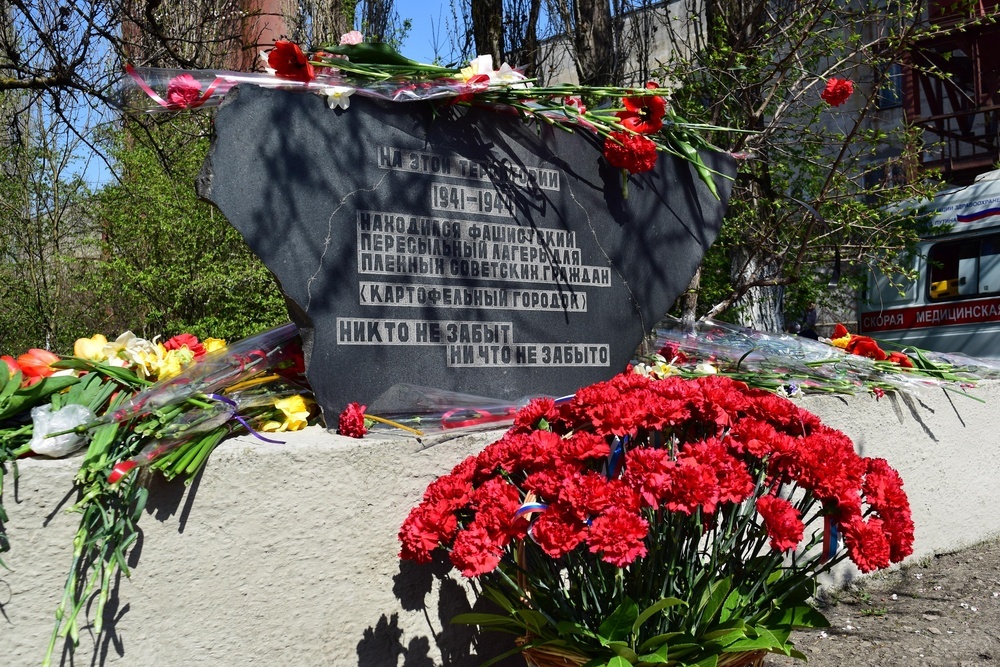
Potato Town in Simferopol is one of those places that doesn’t fit neatly into the usual idea of a landmark. It’s not a museum, not a grand architectural monument, and not even a park—just a quiet corner of the city that has somehow preserved the spirit of another era. Built in the mid-20th century as part of an agricultural experiment, it was meant to showcase how Crimea’s land could be efficiently cultivated. Back then, this patch of earth on the outskirts of Simferopol was transformed into a model settlement for potato farming. They didn’t just build greenhouses and warehouses; they put up homes for workers, a school, a kindergarten, a community center, and even a few shops and a canteen. The idea was to create a self-sufficient microcosm, a living example of Soviet agricultural progress.
Today, only a handful of those original buildings remain, but they’ve held onto their character remarkably well. The houses are low, brick, and unmistakably Soviet in their design—simple lines, minimal ornamentation, everything built for function rather than aesthetics. The roofs are painted a faded green, the walls show signs of age, yet the place doesn’t feel neglected. Around the houses stretch small gardens where locals still grow vegetables, and here and there, old fruit trees stand as silent witnesses to the past. There are no tourist signs, no souvenir stalls, no cafes—just the quiet hum of everyday life, the occasional passerby, and the sense that time has barely moved forward.
What makes Potato Town unusual is that it was never officially preserved or turned into a historical site. It wasn’t restored for the sake of ticking a box, and it never became a museum under the open sky. Instead, it’s simply a place where life goes on, untouched by the usual trappings of heritage conservation. The paint on the doors is chipped, the gates creak, and the house numbers are still hand-painted. The people who live here treat it with quiet affection, but without any grand sentimentality. For them, it’s just home—a neighborhood where families have lived for generations, where some work in the city, others tend their gardens, and a few simply enjoy the slow pace of life away from the bustle of the main streets.
The architecture is unassuming, but there’s a certain charm in its simplicity. The houses were built from standard Soviet blueprints, yet each one has its own small variations—a different window shape, a slightly altered porch, a roof that doesn’t quite match the neighbor’s. In the Soviet era, such settlements were common, but few have survived in their original form. Most were demolished, rebuilt, or swallowed up by high-rises. Here, though, the layout remains almost unchanged: narrow streets, sidewalks made of concrete slabs, wooden utility poles with old-fashioned streetlights. Even the asphalt, if it ever existed, has long since worn away, leaving behind dirt roads that turn to mud after rain and dust in the summer heat.
Potato Town isn’t the kind of place people travel to on purpose. You might stumble upon it by accident, taking a wrong turn or following a local’s recommendation. But those who do find their way here often leave with a quiet sense of surprise. There are no guided tours, no audio guides, no plaques explaining the history. If you want to learn about the place, you have to piece it together yourself—by talking to residents, flipping through old family photos, or just watching the rhythm of life unfold. Sometimes, handwritten notes on fences advertise homemade preserves or fresh vegetables for sale, a small but telling detail of how things work here.
Life moves at a different pace in Potato Town. Mornings are filled with birdsong, afternoons with the sound of hammers in nearby gardens, and evenings with the murmur of neighbors chatting on benches. In summer, the air is thick with the scent of blooming gardens and fresh greenery, and in the evenings, the smell of grilled meat drifts from backyards. Winter brings a starker beauty—smoke curling from chimneys, snow on the roofs, warm light spilling from windows. It’s not a postcard-perfect scene, but there’s a quiet comfort in its authenticity.
This place is a reminder that history isn’t always made of grand events or monumental buildings. Sometimes, it’s tucked away in unassuming corners where life carries on according to its own rules, untouched by tourist trails or urban development plans. There’s nothing extraordinary about Potato Town, and that’s precisely what makes it special. It’s not a destination for those seeking spectacle, but for those who appreciate the beauty of the ordinary, who value genuineness over polish, and who aren’t afraid of stillness. You won’t find excitement here, but if you’re looking to step into the past, to understand how people lived half a century ago, there’s no better place to do it.