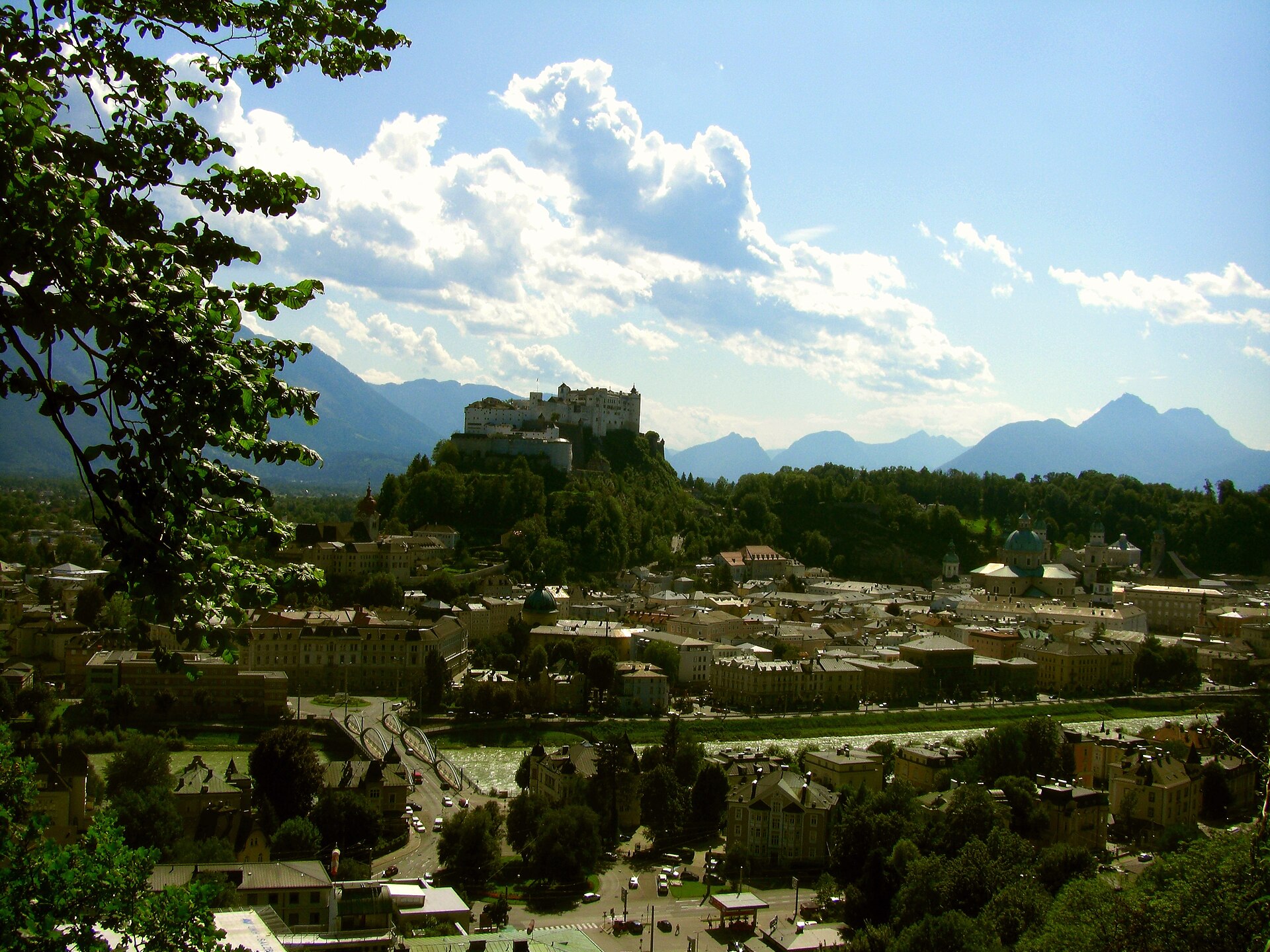
Kapuzinerberg rises above Salzburg, a hill that has overlooked the city for centuries. Its name comes from the Capuchin monastery founded here in 1602, when the Counter-Reformation was reshaping Europe’s religious landscape. At just over six hundred meters, its steep slopes and forest paths create seclusion, though it’s only a short walk from the old town. From the summit, the view includes red-tiled rooftops, the cathedral’s spires, Hohensalzburg Fortress, and the Salzach River winding through the valley.
The monastery’s role in Salzburg’s history
The hill’s history is tied to the city’s religious identity. Archbishop Wolf Dietrich von Raitenau ordered the monastery’s construction to strengthen Catholic influence during a period of upheaval. Salzburg was then an ecclesiastical principality, and each new monastery reinforced its authority. The Capuchins, known for their ascetic lifestyle, settled here, and their monastery became a pilgrimage site. The order still resides here today.
The monastery’s architecture reflects the Capuchins’ commitment to simplicity. Thick stone walls, narrow windows, and exposed wooden beams define the buildings. The main church, dedicated to Saint Francis of Assisi, is small, with wood, stone, and frescoes depicting saints’ lives. The design rejects excess, favoring restraint.
Trails, ruins, and hidden corners
Beyond the monastery, Kapuzinerberg offers forest trails, viewpoints, and fortifications. The Imberg Fort, built in the 17th century, is now ruins, but its structure hints at its former strength. Paths lead to chapels carved into rock and old wells that once supplied the monastery. Each turn reveals a new perspective of the city below.
The hill changes with the seasons. Summer brings shade and locals walking dogs. Winter covers the slopes in snow. Spring blooms chestnut trees, and autumn colors the forest. Year-round, the hill draws those seeking solitude—joggers, dog walkers, or anyone wanting quiet.
Kapuzinerberg blends history and nature. Unlike the old town’s crowded streets or the fortress’s tourists, this hill offers a quieter side of Salzburg. There’s no rush here. You can wander trails, listen to birdsong, then return to the city’s faster pace.
From the summit, Salzburg’s churches, alleys, bridges, and distant Alps come into view. The hill’s gift is timelessness. Sit on a bench, watch the city, and think of others who climbed here over centuries. In a fast world, Kapuzinerberg slows time.