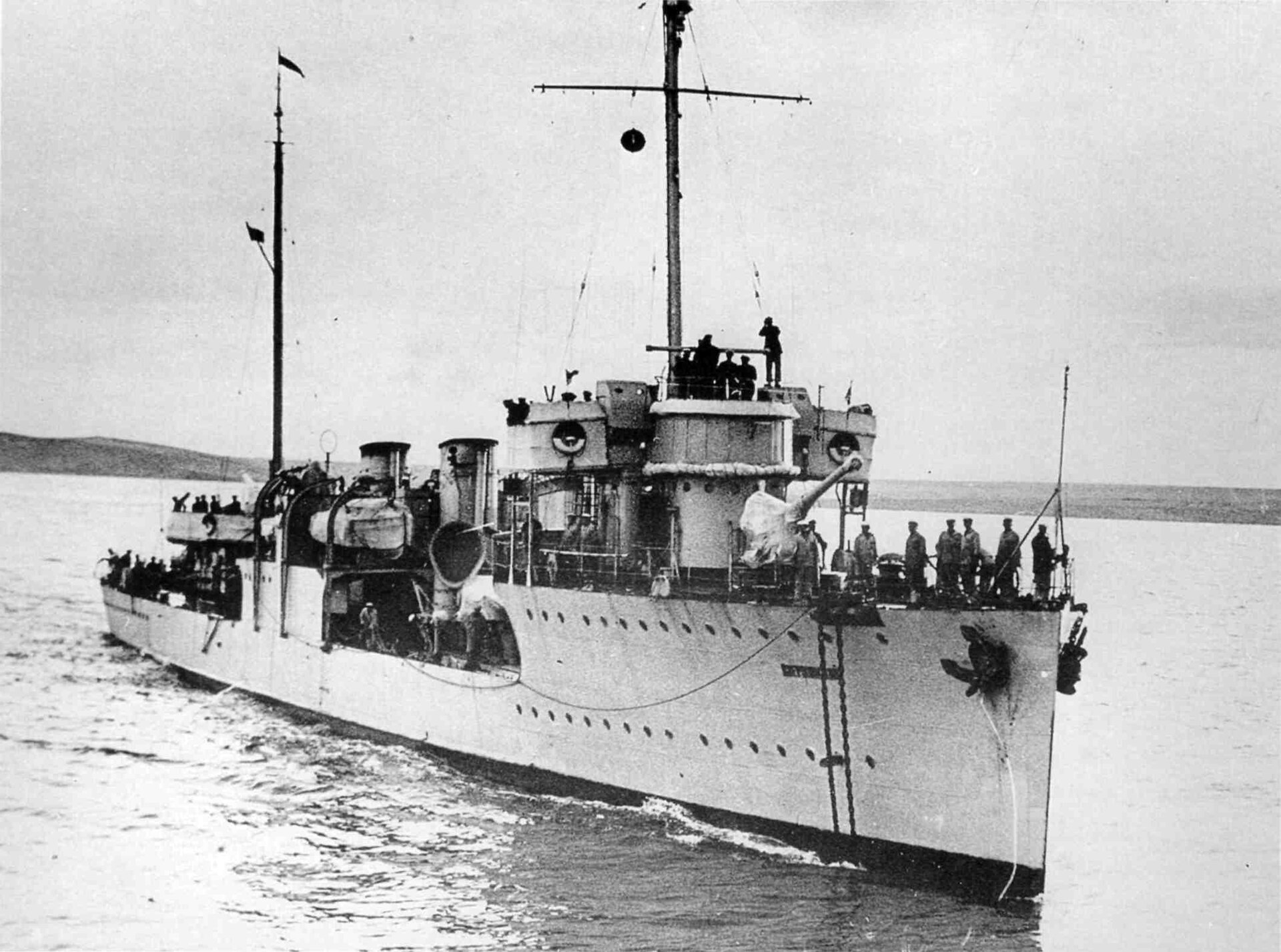
The destroyer once known as *Kaliakra* rests in Sevastopol not as a monument, but as a silent witness to a turbulent century. Moored along the waterfront, its weathered hull tells a story that no plaque or tour guide could fully capture. This ship has seen empires rise and fall, wars begin and end, and generations of sailors pass through its cramped corridors. Now, it stands as a rare surviving relic of Russia’s early 20th-century naval history, preserved not behind glass, but in the very steel and rivets that once carried it into battle.
Built in 1906 at the Nikolayev shipyards, *Kaliakra* was among the first of a new class of destroyers for the Black Sea Fleet. The name itself carried weight—it honored a decisive naval victory in 1791, when a Russian squadron crushed the Ottoman fleet near Cape Kaliakra in Bulgaria. For a ship of its time, it was fast, lightly armored, and designed for hit-and-run tactics, a reflection of the changing nature of naval warfare. The early 1900s were a period of rapid technological shifts, and *Kaliakra* embodied that transition, bridging the gap between the old wooden warships and the steel dreadnoughts that would soon dominate the seas.
Its service in World War I was marked by the chaos of the Black Sea theater. The ship patrolled supply routes, hunted enemy vessels, and found itself at the center of skirmishes that shaped the region’s fate. But the war was only the beginning of its trials. After the 1917 Revolution, *Kaliakra* changed hands, passing to the Bolsheviks before being scuttled in Novorossiysk in 1918 to prevent it from falling into enemy hands during the Allied intervention. Salvaged and repaired, it returned to service under a new name—*Dzerzhinsky*—and a new flag, though the scars of its past remained.
World War II brought even greater hardship. The ship played a crucial role in the defense of Sevastopol, ferrying wounded soldiers and delivering supplies under relentless bombardment. In 1942, it took heavy damage and was pulled from the front lines for repairs. The war left its mark on the vessel, but it endured, later serving as a training ship before being repurposed as a floating barracks in the 1950s. By then, its fighting days were over, but its story was far from finished.
Today, *Kaliakra* is open to visitors, though there are no grand exhibits or polished displays. The ship has been left largely as it was, with rust creeping along its decks, dents from shrapnel still visible, and the cramped interiors offering a glimpse into the harsh realities of life at sea a century ago. Walking through its narrow passageways, it’s easy to imagine the clatter of boots on metal, the hum of engines, the tension of battle. There’s no attempt to romanticize the past—just the raw, unfiltered presence of history.
For those with an interest in naval engineering, the ship is a fascinating study in early 20th-century design. The layout of its compartments, the placement of its guns, the way its crew lived and worked—all of it speaks to a time when warfare at sea was becoming faster, deadlier, and more mechanized. But even for visitors who don’t consider themselves history buffs, *Kaliakra* offers something deeper. It’s a reminder that the past isn’t just something we read about; it’s something we can touch, stand on, and feel.
Sevastopol has always been a city where history lingers. The streets, the harbors, the fortifications—all of them carry the weight of what came before. *Kaliakra* is no different. It doesn’t just represent the past; it embodies it. When the wind sweeps across its decks, it’s hard not to think of the men who once stood there, the orders they followed, the battles they fought. The ship has outlived its original purpose, but in doing so, it has taken on a new one: preserving the memory of those who served on it, and the wars that shaped a nation.
There’s a quiet dignity to *Kaliakra*. It doesn’t demand attention, nor does it offer easy answers. It simply exists, a tangible link to a time when the world was remade by conflict. For those who take the time to explore it, the ship doesn’t just tell a story—it lets you step inside it. And in a city like Sevastopol, where the past is never far away, that’s a rare and powerful experience.