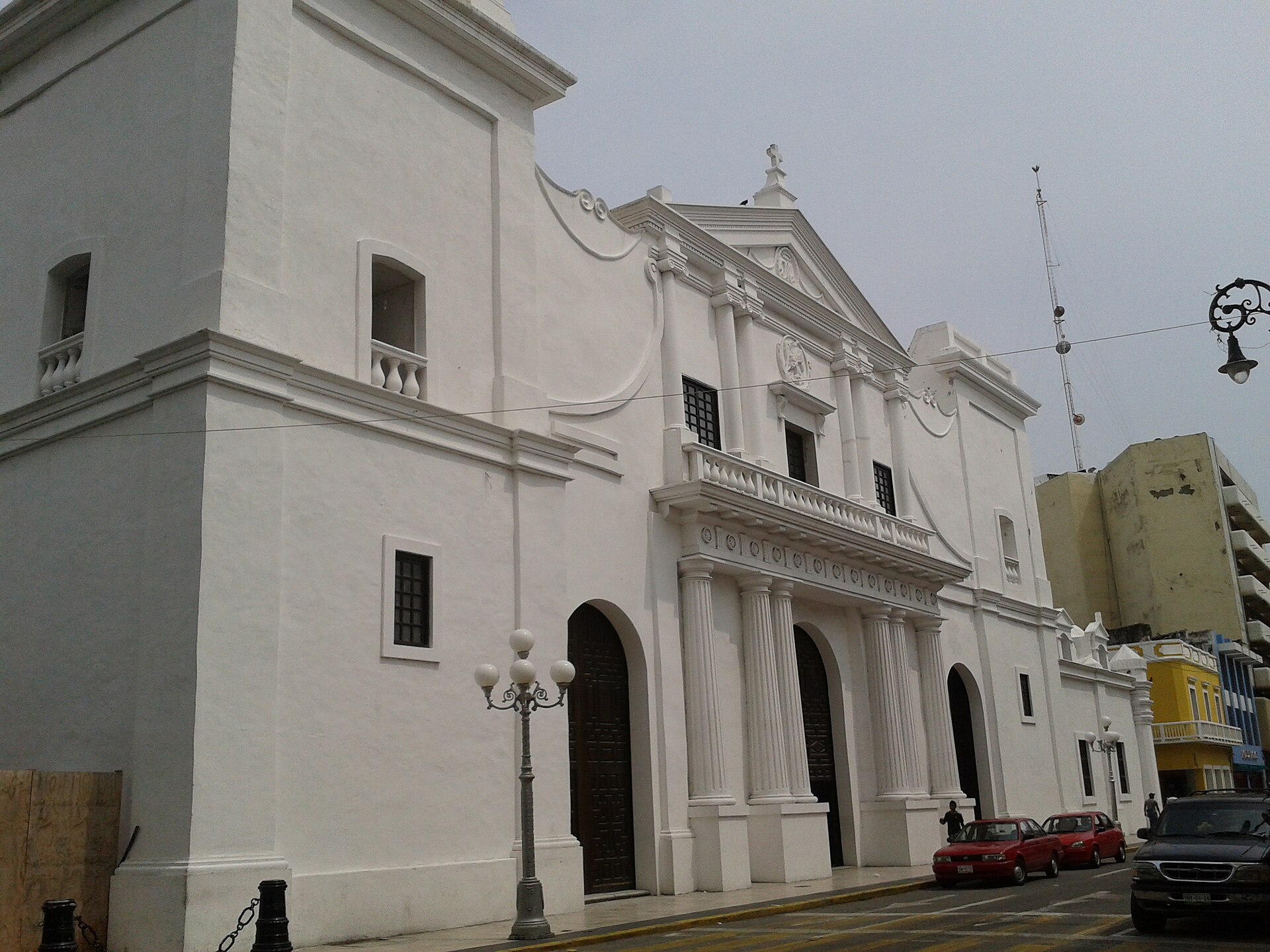
Photo: Abigailm, CC BY-SA 3.0
Veracruz Cathedral
out of 5 0 ratingsThe Cathedral of Veracruz is one of those places that doesn’t immediately demand attention, but slowly reveals its depth and character. Tucked away in the heart of the city, it stands on the central Zócalo square, where life moves at its own unhurried pace. Unlike the grand cathedrals of other Latin American cities, this one is unassuming—modest in scale, yet deeply rooted in the life of Veracruz. It feels lived-in, almost ordinary, in the best possible way, much like the city itself.
Construction began in the mid-17th century, and over the years, the building evolved alongside the growing port town. What started as a small church, built on the site of an older chapel, was gradually expanded and modified to serve the needs of the community. The architecture reflects this layered history, blending Baroque and Neoclassical elements without the extravagance often found in colonial churches. The façade is simple, almost austere, with two towers flanking the entrance. These towers once served a practical purpose, too—they were landmarks for ships approaching the harbor, guiding sailors home through the Gulf waters.
Inside, the cathedral doesn’t overwhelm with opulence, but there’s a quiet warmth to the space. High vaulted ceilings, wooden pews, and faded frescoes create an atmosphere of quiet reflection. The Chapel of Our Lady of Guadalupe holds particular significance for locals. Veracruz has always been a city of sailors, and for centuries, mariners would stop here before long voyages to pray for safe passage. That tradition hasn’t faded—even now, it’s not uncommon to see fishermen or sailors lighting candles or kneeling in prayer before setting out to sea.
The cathedral is woven into the fabric of Veracruz’s history. As one of the first Spanish settlements on the continent, the city’s identity was shaped by its role as a gateway between Europe and the Americas. The cathedral wasn’t just a place of worship; it was a stage for the city’s most important moments—coronations, funerals of prominent citizens, and celebrations of military victories. During times of conflict, its doors offered refuge, its walls bearing witness to both triumph and sorrow. Today, it remains a place where the past and present intersect, a silent observer of the city’s enduring spirit.
Beyond its walls, the Zócalo pulses with life. This square is the heart of Veracruz, where the air hums with music, the scent of fresh fruit and fried snacks, and the chatter of locals and visitors alike. Street vendors set up stalls under the shade of trees, while musicians play everything from traditional son jarocho to modern ballads. The cathedral watches over it all, its presence a constant amid the ebb and flow of daily life. As evening falls and the square lights up, the building’s silhouette takes on a softer, almost contemplative quality, a reminder that the city’s story is still being written.
Visiting the cathedral isn’t just about seeing a historic landmark—it’s about feeling the essence of Veracruz. Unlike the crowded tourist sites of other Mexican cities, this place retains an authenticity that’s hard to find elsewhere. There’s no rush here, no scripted experience. You can sit on a pew, listen to the bells echo across the square, and let your mind wander to the generations of people who have passed through these doors—sailors, merchants, families, revolutionaries—each leaving behind a piece of their own story.
What makes the cathedral special isn’t just its age or its architecture, but the way it embodies the soul of the city. History isn’t confined to plaques or guided tours here; it’s alive in the worn stone steps, the flickering candles, the murmured prayers of those who still come seeking comfort or hope. It’s a place where time feels both suspended and fluid, where the weight of centuries coexists with the immediacy of the present.
For anyone who wants to understand Veracruz beyond its postcard images, the cathedral offers a quiet invitation. It doesn’t ask for admiration or awe—it simply stands, as it has for centuries, a steady presence in a city that has seen empires rise and fall, storms come and go, and life carry on. In that way, it’s not just a building, but a keeper of memories, a witness to resilience, and a testament to the enduring spirit of a place where land and sea, past and present, have always met.
Day around this place
Where else to go on the same day
Building the day…
Where it is
19.19979, -96.13825