- Home
- Mexico
- Mexico City
- Metropolitan Cathedral of Mexico City
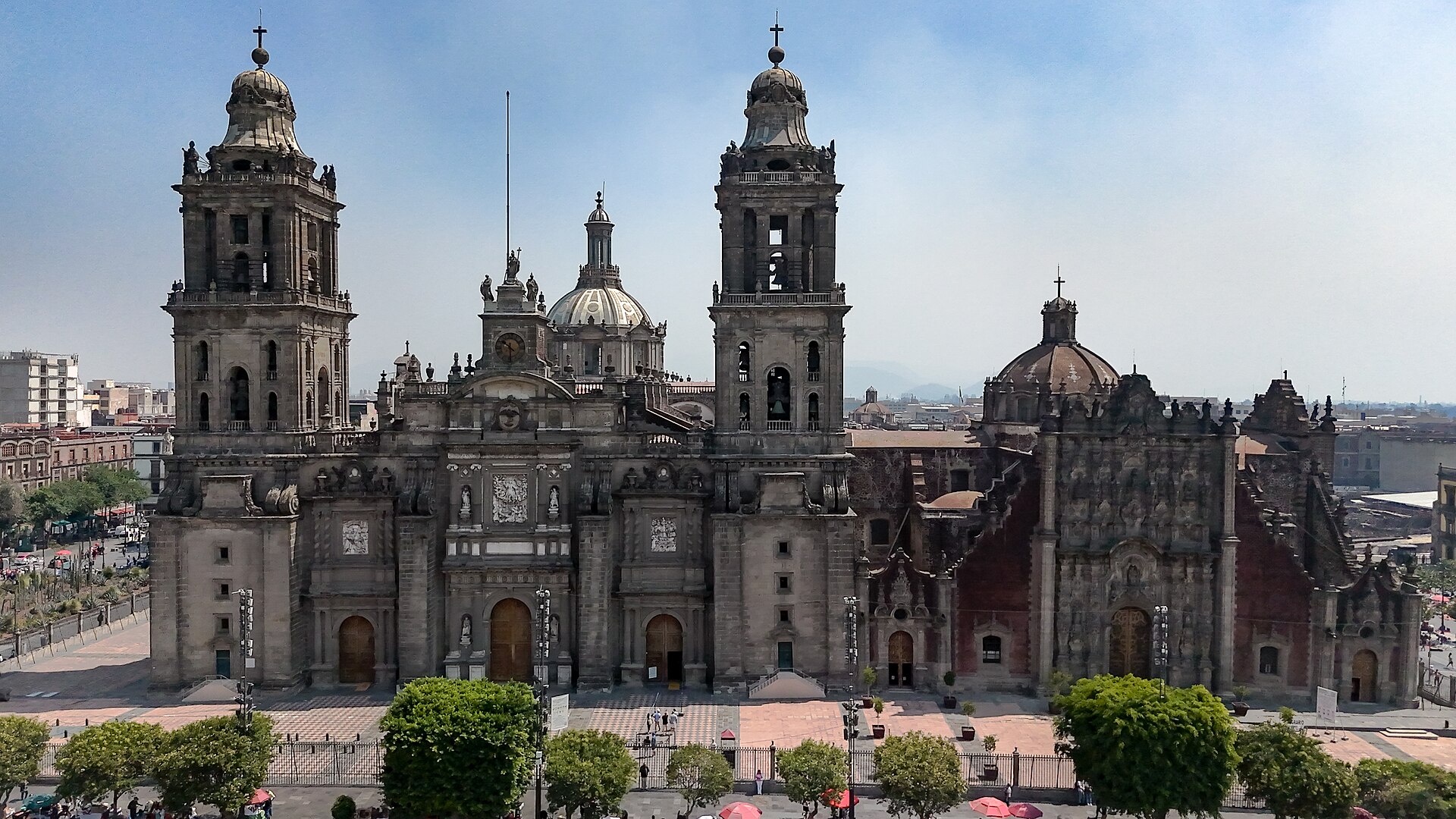
Photo: ProtoplasmaKid, CC BY-SA 4.0
Metropolitan Cathedral of Mexico City
out of 5 0 ratingsMexico City’s Metropolitan Cathedral is one of those rare places that doesn’t just occupy a space in the city—it feels like it has grown from it, as if the stones themselves hold the weight of centuries. Built on the ruins of an Aztec temple, the cathedral has stood for nearly five hundred years, watching over the capital’s transformations, its revolutions, and its quiet, everyday moments. It is more than a house of worship; it is a living record of Mexico’s layered history, where colonial ambition, indigenous heritage, and modern identity intertwine in ways that are still visible today.
Construction began in 1573 under the orders of Spain’s King Philip II, but the cathedral took nearly three hundred years to complete. Architects came and went, styles shifted, and the result is a building that defies easy classification. The exterior blends Renaissance severity with Baroque exuberance and even touches of Neoclassicism, particularly in the grand façade facing the Zócalo. Statues of apostles and saints line the entrance, their stone faces weathered by time, while towering columns and intricate carvings project the power of the Spanish crown. Yet inside, the cathedral feels unexpectedly airy, its high vaulted ceilings and stained-glass windows bathing the space in a soft, diffused light that contrasts with the heaviness of the exterior.
The Altar of the Kings is one of the cathedral’s most breathtaking features, a masterpiece of Mexican Baroque completed in the 18th century. Gold leaf covers nearly every surface, from the twisting columns to the intricate reliefs of saints and angels, creating an effect that is both dazzling and overwhelming. The gold wasn’t just for decoration—it was meant to symbolize divine radiance, to inspire awe in those who stood before it. Nearby, the choir stalls, carved from dark wood, sit empty now, though they once accommodated the clergy during services. Their silence feels deliberate, as if preserving the echoes of prayers long since spoken.
The cathedral has endured its share of hardships. Earthquakes have shaken its foundations, fires have scorched its walls, and time has worn away at its structure. Yet each time, it has been repaired, sometimes altered, but always restored to its place at the heart of the city. In the 19th century, after Mexico gained independence, the cathedral took on new significance. It hosted the coronations of emperors and later the inaugurations of presidents, becoming a stage for the nation’s evolving identity. In the 20th century, another crisis emerged: the ground beneath the cathedral began to sink, causing the building to tilt dangerously. Engineers worked for years to stabilize it, and today it stands straight once more, though the scars of that struggle remain—a reminder of how precariously the past balances with the present.
Inside, the cathedral invites slow exploration. Ancient paintings line the walls, their colors faded but still vivid in places. Confessionals, carved with intricate patterns, stand like silent witnesses to generations of penitents. The tombs of bishops and conquistadors lie beneath the floor, their inscriptions worn smooth by time. The crypt below holds the remains of many of Mexico’s most influential figures, as well as one of the country’s most revered relics: an image of the Virgin of Guadalupe, which draws pilgrims from across the nation. Unlike many European cathedrals, where the atmosphere can feel distant and austere, here the air is alive with devotion. People kneel in prayer, light candles, and leave handwritten notes with their hopes and sorrows, all beneath the gaze of centuries-old frescoes.
Outside, the Zócalo—the vast square that spreads before the cathedral—is a constant whirl of activity. Street vendors sell trinkets, musicians strum guitars, and crowds gather for protests, celebrations, or simply to soak in the energy of the city. But the moment you step inside the cathedral, the noise fades. The thick stone walls muffle the sounds of the outside world, leaving only the quiet shuffle of footsteps and the occasional murmur of a prayer. It’s a place where the past feels tangible, where the weight of history isn’t just observed but experienced.
The cathedral remains an active place of worship, with daily masses held in Spanish. Even if you don’t understand the words, the ritual is unmistakable: the deep tones of the organ, the scent of incense, the flicker of candlelight. On feast days, the cathedral transforms. Flowers adorn the altars, bells ring out over the city, and the space fills with music and movement. It’s a reminder that this isn’t just a museum—it’s a living, breathing part of Mexico’s spiritual life.
In many ways, the Metropolitan Cathedral is a mirror of the country itself. Its walls hold the stories of indigenous peoples and Spanish colonizers, of revolutionaries and modern-day worshippers. It has been a symbol of power, a site of resistance, and a sanctuary for the faithful. Though it no longer serves as the political center of Mexico, it remains a place where people return, again and again, to connect with something deeper—whether through prayer, reflection, or simply standing in silence beneath its ancient arches. The cathedral doesn’t just tell Mexico’s history; it lets you feel it.
Day around this place
Where else to go on the same day
Building the day…
Where it is
19.43439, -99.13308