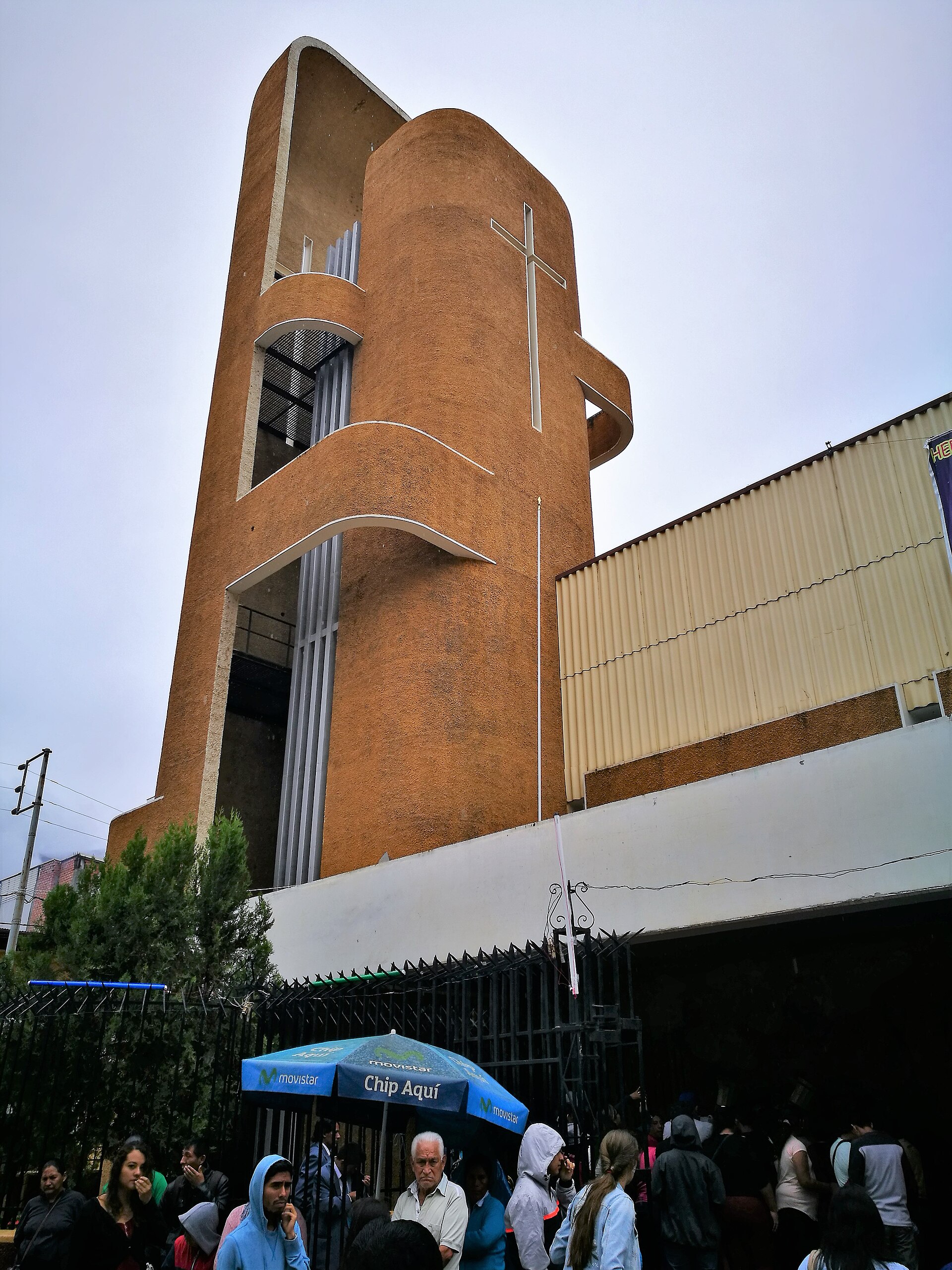
Photo: Pitxiquin, CC BY-SA 4.0
Huanuco Cathedral
out of 5 0 ratingsThe Cathedral of Huánuco sits quietly in the center of the city, its presence unassuming yet deeply rooted in the life of the place. Unlike the grand, towering churches that dominate other Peruvian cities, this one blends into the fabric of Huánuco’s main square, its modest facade softened by the low, colorful buildings that surround it. There’s no fanfare here, just the steady rhythm of daily life—street vendors calling out their wares, the murmur of conversations, the occasional laughter of children playing nearby. The cathedral doesn’t demand attention; instead, it invites you to slow down and notice the details that reveal its story over time.
Its origins trace back to the early colonial period, when Spanish settlers established Huánuco as a city in the 16th century. The first church on this site was a simple structure, built from local materials like stone and clay, reflecting the practical needs of a growing community. Over the centuries, the building evolved, shaped by the forces of history—earthquakes that cracked its walls, fires that scorched its interiors, and the gradual expansion of the city itself. Each repair and renovation left its mark, turning the cathedral into a patchwork of styles and eras, a physical record of the people who built, rebuilt, and cared for it.
The architecture is a study in understated elegance. The facade, with its clean lines and subtle Baroque flourishes, hints at the colonial influence that defined much of Peru’s religious buildings. The portal and window frames carry delicate carvings, small but precise, a nod to the craftsmanship of the time. Inside, the space opens up into a wide, airy nave, the high vaulted ceilings supported by sturdy columns that give the interior a sense of quiet grandeur. The altar, gilded and intricately carved, draws the eye immediately, its design a blend of Spanish Baroque traditions and local sensibilities. The walls are adorned with faded frescoes and religious paintings, some barely visible now, their edges worn by time but still holding the traces of the artists who created them.
Beyond its religious significance, the cathedral has long been a cultural heart for Huánuco. It’s where the city gathers for major Catholic festivals, where the notes of sacred music echo through the nave during concerts, and where local artists display their work in exhibitions. During Holy Week or Christmas, the square in front of the church transforms into a lively hub of activity. Pilgrims from nearby villages join the city’s residents, filling the air with the sounds of hymns, the scent of traditional sweets like *panetón* and *chocolatada*, and the warm glow of decorations. For a few days, the cathedral isn’t just a place of worship—it’s the center of a community celebrating together.
On ordinary days, the cathedral offers a different kind of experience. The wooden pews, worn smooth by generations of worshippers, invite quiet reflection. The only sounds are the occasional rustle of a prayer book, the soft footsteps of visitors, or the distant hum of the city outside. Unlike the more famous cathedrals in Lima or Cusco, this one rarely sees crowds, which makes it a place where you can take your time. You might sit for a while, studying the details of the altar or the way the light filters through the stained glass, or simply let the stillness settle around you. The doors are always open, whether you come to pray, to admire the architecture, or just to escape the noise of the world for a little while.
Huánuco is a city with layers of history, and the cathedral stands as a silent witness to much of it. Long before the Spanish arrived, this site was part of the Inca’s central plaza, and even earlier, it was home to older settlements whose traces have been uncovered by archaeologists. The cathedral, like many colonial buildings in Peru, rests on foundations that stretch back centuries, a reminder that the past is never truly buried. This gives the building a deeper resonance—it’s not just a church, but a bridge between eras, a place where the weight of history feels tangible.
Preservation efforts in recent decades have helped ensure that the cathedral remains a living part of Huánuco’s heritage. The passage of time takes its toll on stone and wood, and the delicate frescoes and carvings require careful restoration. Local authorities and the church community work together to maintain the building, balancing the need to preserve its historical integrity with the realities of modern use. The results are visible in the well-kept facade, the thoughtfully restored interiors, and the ongoing commitment to keeping the cathedral not just standing, but alive.
Visiting the Cathedral of Huánuco is less about ticking off another landmark and more about stepping into the rhythm of the city itself. There’s no tourist rush here, no sense of being hurried along. Instead, you’re met with the unhurried pace of a place where traditions still matter, where the past isn’t just remembered but lived. Whether you come to admire the architecture, to reflect on the layers of history beneath your feet, or simply to sit in the quiet for a while, the cathedral offers something rare—a moment of connection. It’s a place where the stories of those who built it, those who have prayed here, and those who continue to care for it feel close enough to touch.
Day around this place
Where else to go on the same day
Building the day…
Where it is
-9.92868, -76.23956