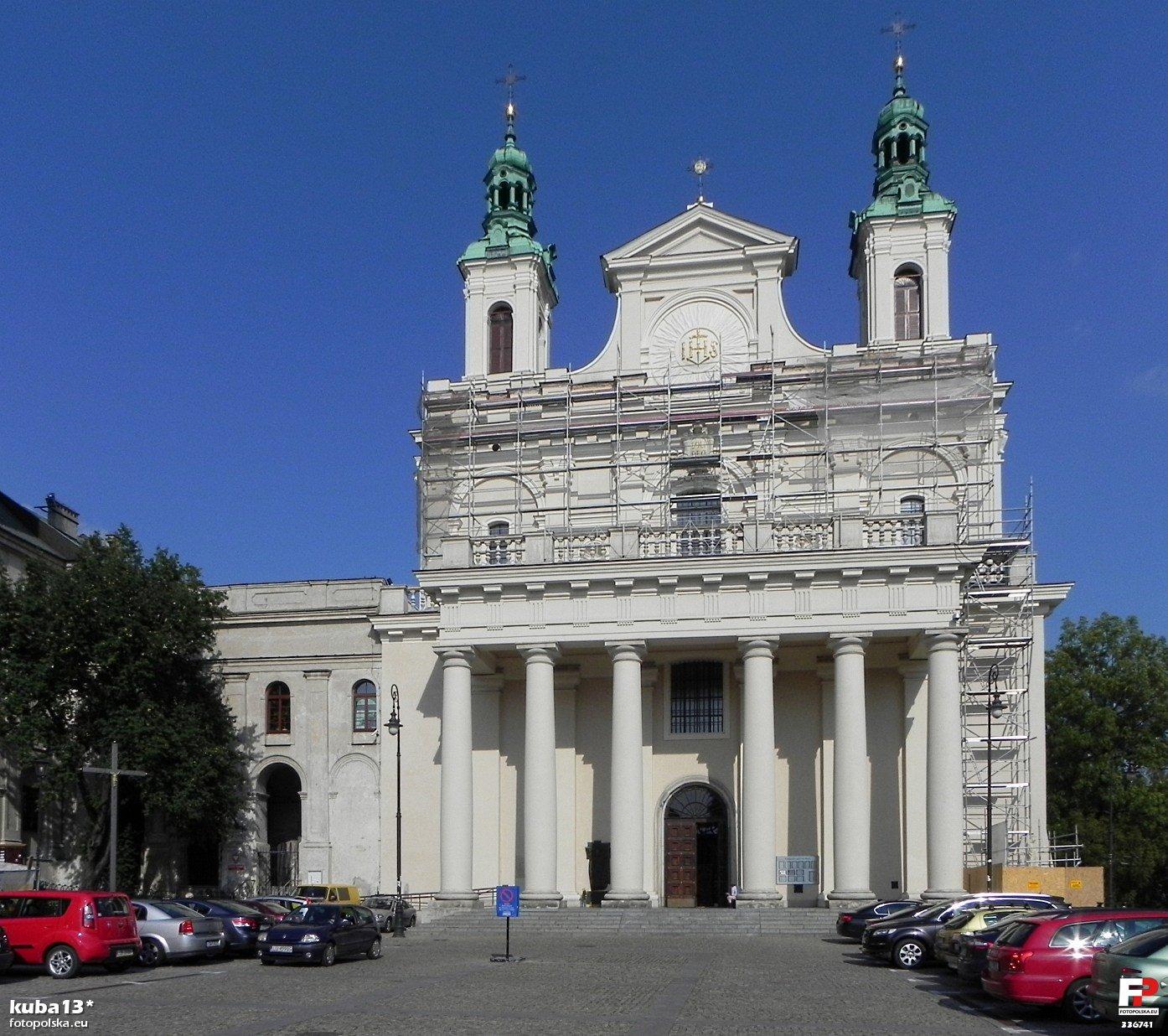
Photo: kuba13, CC BY-SA 3.0
St John's Co-Cathedral
out of 5 0 ratingsLublin’s Cathedral of St. John the Baptist and St. John the Evangelist is the kind of place that doesn’t reveal itself all at once. From the outside, it appears stern and unyielding—thick walls, a restrained facade, the kind of late Baroque simplicity that doesn’t invite lingering glances. But step inside, and the space unfolds in a way that feels almost private, as if you’ve entered a world governed by its own quiet rhythm. The high vaults stretch overhead, soft light filters through stained glass, and the only sound is the occasional echo of footsteps on stone. Time here moves differently, unhurried and deliberate.
The cathedral’s origins trace back to the early 17th century, when it was founded as part of a Jesuit college. The Jesuits arrived in Lublin during the Counter-Reformation, a period when the Catholic Church sought to reassert its influence across Europe. For them, the cathedral was more than a place of worship—it was a statement, a fortress of faith in a region where religious loyalties were often divided. Construction dragged on for nearly fifty years, a slow process interrupted by wars, fires, and outbreaks of disease. Perhaps that’s why the building feels so solid, as if it were designed to outlast not just decades, but centuries.
Inside, the contrast between the exterior’s austerity and the interior’s grandeur is striking. The main nave is adorned with frescoes painted in grisaille, a technique that mimics the depth of sculpted relief. Scenes from the lives of saints, allegories of virtue, and biblical stories cover the walls, rendered with such skill that the figures seem poised to step out of the plaster. The Chapel of the Holy Cross stands out, added in the 18th century with a more lavish, almost theatrical style. Its centerpiece is a relic—a fragment of the True Cross—housed in an intricately carved altar. The chapel’s opulence feels like a separate world within the cathedral, a space where devotion takes on a more dramatic form.
The cathedral’s organ is another marvel, installed in the mid-18th century and still considered one of the finest in Poland. Its sound fills the space during services and concerts, rich and resonant, capable of stirring even those who don’t usually seek out sacred music. The instrument has been restored multiple times, but craftsmen have taken care to preserve its original voice, ensuring it sounds much as it did three hundred years ago. In the summer, the cathedral hosts organ evenings, drawing music lovers from across the city. The acoustics here are exceptional, the notes lingering in the air long after the last chord fades.
Beneath the cathedral lies its crypt, a hidden layer of history where the remains of priests, benefactors, and prominent townspeople rest. The crypt isn’t open to the public regularly, but guided tours occasionally offer a glimpse into its narrow passageways and low vaults. The atmosphere is a stark contrast to the grandeur above—no gilded altars or frescoes, just cold stone and silence. It’s a place that feels closer to the earth, a reminder of the passage of time and the inevitability of endings. The names on the sarcophagi are mostly forgotten now, but their presence lingers in the quiet.
The cathedral has been a silent witness to Lublin’s history, standing through centuries of change. Monarchs were crowned here, alliances forged, and funerals held for those who shaped the city’s fate. During World War II, when much of Lublin was reduced to rubble, the cathedral survived, though not unscathed. After the war, it was restored, but not to its original state—traces of its past were left visible, as if to acknowledge that history isn’t something to be erased, only understood. Today, it remains an active place of worship, but also a space where visitors can sense the weight of the centuries that have passed within its walls.
Beyond the cathedral, Lublin’s Old Town unfolds in a tangle of narrow streets and hidden courtyards, each with its own stories. The cathedral sits on a slight rise, and from its steps, you can look out over the rooftops, the spires of other churches, and the green hills beyond the city. In the evening, when the streetlights flicker on and the day’s noise fades, the view takes on a different quality. It’s easy to imagine the generations of people who have walked through these doors, the prayers whispered under these vaults, the lives that intersected here. The cathedral isn’t just a monument—it’s a living part of the city, a thread in the fabric of its memory.
There’s something about Lublin’s cathedral that resists easy categorization. It’s not the most famous or the most ornate in Poland, but that might be its strength. It doesn’t demand attention; it earns it, slowly, through the quiet accumulation of history. Whether you come for the art, the music, or simply the chance to sit in silence, the cathedral offers a space where the past feels present, not as a relic, but as something still breathing, still shaping the city around it.