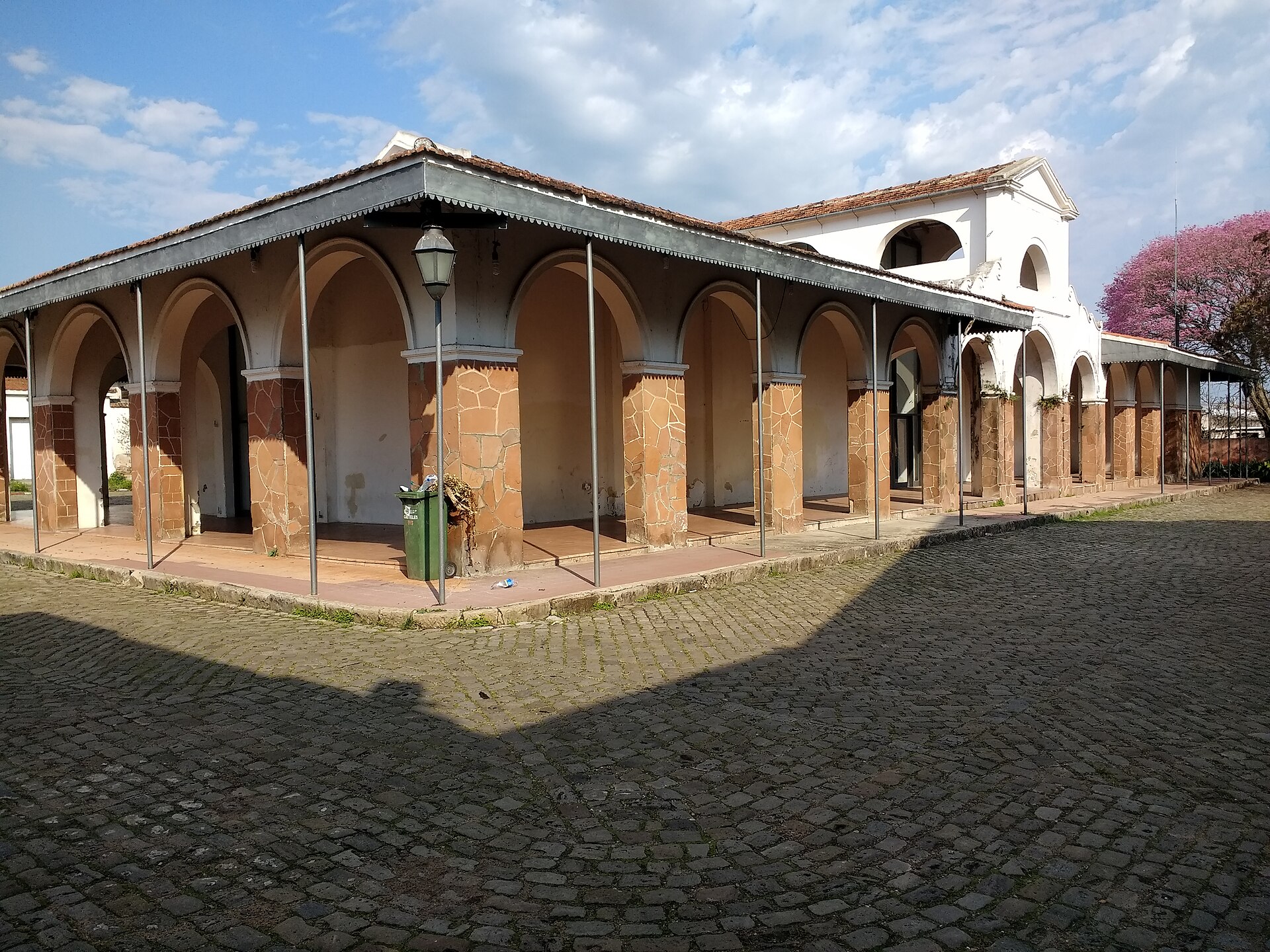
Photo: Mx, CC0
St. John the Baptist Cathedral
out of 5 0 ratingsSalto’s Cathedral of Saint John the Baptist doesn’t announce itself with towering spires or ornate facades. It sits quietly on the main square, a modest presence among the low-slung buildings and leafy trees that shade the pavement in the afternoon heat. The city itself, stretched along the Uruguay River, moves at a different pace than the capital or the coastal resorts—less hurried, more intimate. The cathedral mirrors that rhythm. Its whitewashed walls and simple neoclassical lines blend into the surroundings, making it easy to overlook at first glance. Yet that unassuming quality is precisely what makes it feel like a natural part of life here. People come not just for mass, but to escape the sun, meet a friend, or simply sit for a while on one of the benches out front.
Construction began in the mid-1800s, a time when Uruguay was still finding its footing as an independent nation. Salto, then a key trading post and military outpost near the Argentine border, was growing rapidly. European immigrants, merchants, and laborers arrived by the river, which served as the region’s lifeline. The cathedral was meant to be more than a place of worship—it was a symbol of permanence in a city, and a country, still taking shape. Progress was slow. Funds ran short, political upheavals disrupted plans, and the building took decades to complete. Even then, finishing touches like interior details were added gradually, long after the structure itself was done.
The architecture reflects the tastes of the era, a mix of neoclassical restraint and the lingering influence of baroque flourishes common in Latin America. The facade is marked by pilasters and a pediment bearing a relief of Christ’s baptism, a nod to the cathedral’s patron saint. Inside, the space feels larger than it is, with high ceilings and pale walls that amplify the light filtering through the stained glass. The pews form a gentle curve around the altar, which is carved from marble. The organ, one of the few surviving 19th-century instruments in the region, fills the space with a deep, slightly raspy sound during services, its notes lingering in the air long after the last chord.
For Salto’s residents, the cathedral is more than a religious site—it’s a repository of shared memories. Generations have been baptized here, married under its vaulted ceilings, and mourned in its pews. In the 20th century, as Uruguay weathered political turmoil and economic instability, the cathedral remained a constant. During the dictatorship of the 1970s and 80s, when public life was tightly controlled, it continued to hold services, though under watchful eyes. Today, its doors stay open to everyone, whether for prayer, curiosity, or a moment of quiet.
Salto isn’t a city of grand boulevards or luxury resorts. It’s a place where life unfolds in small, familiar ways. The square in front of the cathedral is where that happens—where neighbors chat, children play, and the occasional street musician sets up on a Sunday afternoon. The cathedral doesn’t dominate the scene; it’s simply there, a backdrop to the everyday. On market days, stalls spill out onto the pavement, selling fresh bread, fruit, and handmade crafts. The scent of empanadas mixes with the sound of laughter and the strum of a guitar. The building watches over it all, unobtrusive but unmistakably present.
Inside, the cathedral’s history is written in small details. Plaques list the names of priests who served here over the decades. Donations from parishioners—an antique chandelier, restored frescoes—hint at the community’s investment in the place. A painting of Saint John the Baptist hangs on one wall, its artist unknown but the care in its execution evident. The confessional in the corner still sees use, its wooden door occasionally creaking open as someone steps inside. There’s no grandeur here, just the quiet hum of a place that has seen countless ordinary moments.
What makes the Cathedral of Saint John the Baptist special isn’t its size or its ornamentation. It’s the way it has settled into the fabric of the city, becoming part of the rhythm of life in Salto. Most visitors don’t come here intentionally—it reveals itself during a walk through the center, a chance discovery. And that’s when its quiet significance becomes clear. It doesn’t demand attention or awe. It simply endures, a witness to the passage of time, reminding those who notice that history isn’t just made in moments of upheaval, but in the small, unremarkable ones too.
Day around this place
Where else to go on the same day
Building the day…
Where it is
-31.38877, -57.95926