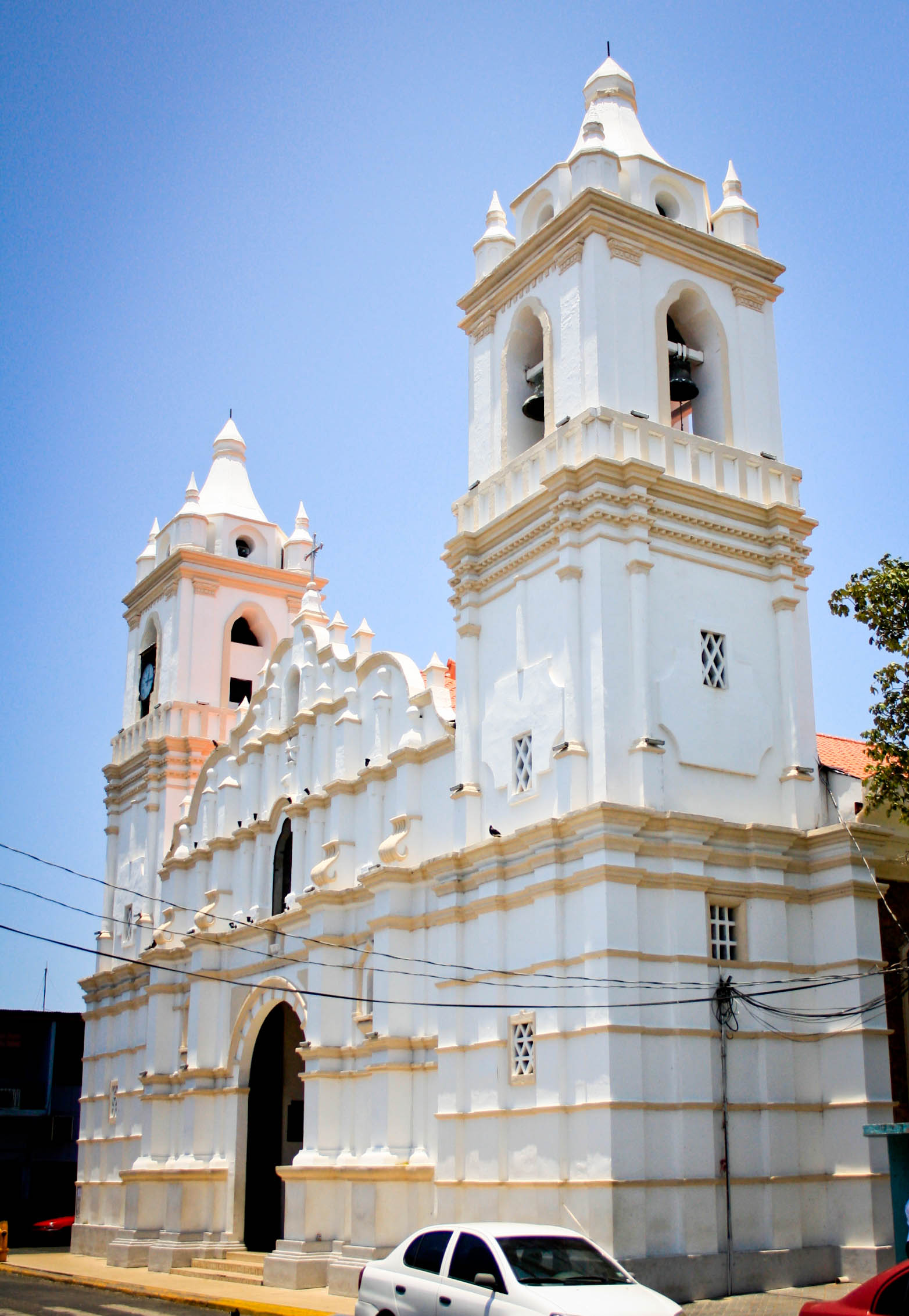
Photo: Pabloalcides, CC BY-SA 3.0
St. John the Baptist Cathedral
out of 5 0 ratingsChitré’s Cathedral of San Juan Bautista isn’t the kind of place that demands attention at first glance. It doesn’t dominate the skyline like grander churches in more tourist-heavy cities, nor does it overwhelm with ornate details. Instead, it sits quietly on the central square, blending into the rhythm of everyday life—a whitewashed building among low-slung houses with peeling paint, where locals linger over coffee in nearby cafés, debating the day’s news. There’s nothing performative about it. This is a church for the people who live here, not for visitors passing through.
Built in the late 19th century, the cathedral reflects a moment when Chitré had outgrown its colonial roots but hadn’t yet become the town it is today. Its architecture is unassuming: two modest towers flanking a simple façade, a classic pediment above the entrance, and white walls that have weathered decades of sun and rain. Inside, the space feels lived-in rather than preserved. Wooden pews, exposed ceiling beams, and a handful of aged icons create an atmosphere that’s worn but not neglected. There’s no attempt at museum-like perfection, and that’s part of its charm. The cathedral breathes because it’s still in use, not frozen in time.
San Juan Bautista wasn’t always Chitré’s main church. For years, another parish held that role until a fire in the mid-1800s forced the community to reconsider. The decision to build a new cathedral came slowly, funded by local donations and materials hauled in from nearby towns. Stories persist about disagreements during construction—some wanted grandeur, others argued for simplicity. In the end, moderation won out. The result is a building that feels just right: dignified without pretension, sturdy without excess.
The altar inside is the heart of the cathedral, though it’s not particularly grand. Wooden saints stand in quiet vigil, their paint slightly faded, while old candlesticks and murals darkened by time add to the sense of reverence. The space isn’t designed to impress; it’s meant to comfort. Even on Sundays, the pews aren’t packed. People come for the rhythm of the place—for the chance to light a candle, say a prayer, or exchange a few words with a neighbor. It’s less about spectacle and more about the small, familiar rituals that anchor daily life.
Outside, the cathedral is framed by a small park where life unfolds in its own unhurried way. Under the shade of sprawling trees, elderly men play dominoes, children kick soccer balls, and vendors sell fresh fruit from carts. On festival days, the square transforms. Music spills from speakers, dancers take to the pavement, and impromptu markets spring up. The cathedral, usually so quiet, becomes the backdrop for celebration, a gathering point for the neighborhood.
For all its modesty, San Juan Bautista has played a steady role in Chitré’s history. During political upheavals and economic hardships, it remained a symbol of continuity. Generations have marked their milestones here—weddings, baptisms, funerals. Families keep photographs of loved ones standing in front of its doors, and stories of the cathedral are woven into the town’s collective memory. It’s not just a building; it’s a witness to time.
Today, the cathedral carries on as it always has, its doors open to anyone who wishes to step inside. There’s no pressure, no expectation—just the quiet invitation to sit, reflect, or simply listen to the birds in the square. Sunlight filters through the stained glass, casting soft patterns on the floor. In a world that often demands more, San Juan Bautista offers something rare: a place that asks for nothing in return, where beauty lies in the ordinary.
Day around this place
Where else to go on the same day
Building the day…
Where it is
7.96257, -80.42831