- Home
- Brazil
- Bela Vista District
- São Paulo Cathedral
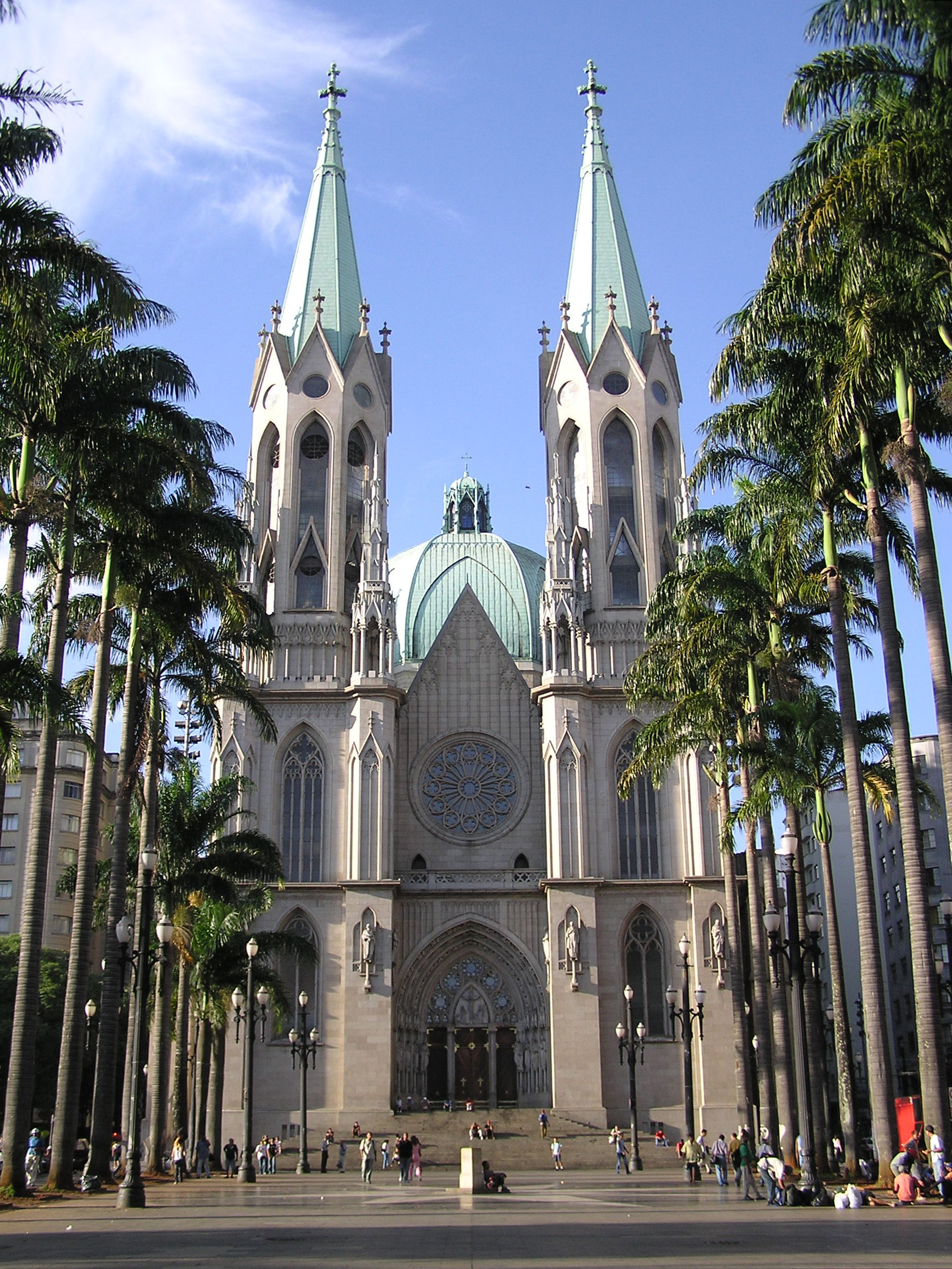
Photo: Morio, CC BY-SA 3.0
São Paulo Cathedral
out of 5 0 ratingsThe Catedral da Sé, as it’s known in Portuguese, stands at the heart of São Paulo not just as a place of worship, but as a quiet witness to the city’s evolution. Its construction began in 1913, a time when São Paulo was transforming from a provincial town into a bustling metropolis. The project was ambitious, reflecting both the city’s growing confidence and its desire to create a landmark that could rival the great cathedrals of Europe. Yet the building took decades to complete, its progress interrupted by world wars and economic upheavals. When it finally opened in 1954, it was already more than just a church—it had become a symbol of resilience, a structure that had weathered the storms of history alongside the city itself.
The architect behind the cathedral was Maximilian Emil Hehl, a German who drew inspiration from the Gothic revival style that had swept through Europe in the 19th century. But while the pointed arches, ribbed vaults, and towering spires evoke the grandeur of Notre-Dame or Cologne Cathedral, the design also carries distinct Brazilian touches. The facade is adorned with statues of saints and biblical figures, their expressions softened by the tropical light, and the interior feels less austere than its European counterparts. The use of local materials and the adaptation to the climate give the cathedral a warmth that sets it apart from its Gothic predecessors.
Stepping inside, the first thing that strikes you is the scale. The nave stretches upward, its high ceilings supported by massive columns that seem to dissolve into the shadows. Light filters through the stained-glass windows, casting shifting patterns across the stone floors. There are over eighty of these windows, each telling a different story—some depict scenes from the Bible, while others reflect more modern artistic sensibilities. The effect is mesmerizing, especially in the late afternoon when the sun angles through the glass, bathing the interior in a kaleidoscope of colors.
At the far end of the nave, the main altar commands attention. Crafted from marble and gilded in gold, it’s a masterpiece of craftsmanship, its central figure of the Virgin Mary surrounded by intricate carvings. Flanking the altar are the cathedral’s organs, including one of the largest in Latin America. The sound of the pipes fills the space during services, its deep resonance adding a layer of solemnity to the rituals. Even outside of mass, the cathedral hums with activity—people lighting candles, sitting in quiet contemplation, or simply admiring the architecture. It’s a place where the sacred and the everyday coexist, where the act of prayer feels as natural as the act of pausing to take a photograph.
Beyond its religious significance, the Catedral da Sé has long served as a cultural hub for São Paulo. Concerts of classical music echo through its halls, art exhibitions are held in its side chapels, and lectures on history and theology draw curious audiences. During major holidays like Christmas and Easter, the cathedral becomes a focal point for the city, its steps crowded with families and visitors. The Christmas Eve mass is particularly moving, with the building illuminated by thousands of lights and the choir’s voices rising in harmony. These moments remind you that the cathedral isn’t just a relic of the past—it’s a living part of São Paulo’s identity.
The area around the cathedral, known as Sé, is one of the city’s most dynamic. The plaza in front of the cathedral is always bustling, filled with street vendors, musicians, and people rushing to or from the nearby metro station. The contrast between the cathedral’s Gothic grandeur and the modern life swirling around it is striking. Just a short walk away, you’ll find colonial-era buildings rubbing shoulders with glass-and-steel office towers, a reminder of how São Paulo constantly reinvents itself while holding onto its history. The cathedral, with its timeless presence, anchors the neighborhood, offering a sense of continuity amid the city’s relentless pace.
What makes the Catedral da Sé special isn’t just its architecture or its history, but the way it feels like a part of the city’s daily rhythm. Locals don’t treat it as a museum piece; it’s a place they visit regularly, whether for prayer, reflection, or simply to escape the noise of the streets. On any given day, you’ll see a mix of people—elderly parishioners attending mass, tourists snapping photos, students sketching the arches, and office workers taking a moment to sit on the steps. The cathedral doesn’t demand reverence; it invites it, its doors always open to those who seek quiet or connection.
Visiting the Catedral da Sé is less about ticking off a tourist attraction and more about experiencing São Paulo in a different light. Here, the city’s energy slows down, if only for a moment. The play of light through the stained glass, the echo of footsteps on the stone floors, the distant hum of the organ—all of it creates a space where time seems to stretch. It’s a place where you can sit and watch the world go by, or look up at the vaulted ceilings and feel the weight of centuries. In a city that never stops moving, the cathedral offers a rare stillness, a reminder that some things endure.
Day around this place
Where else to go on the same day
Building the day…
Where it is
-23.55127, -46.63437