- Home
- Italy
- Valley of the Temples
- Agrigento Cathedral
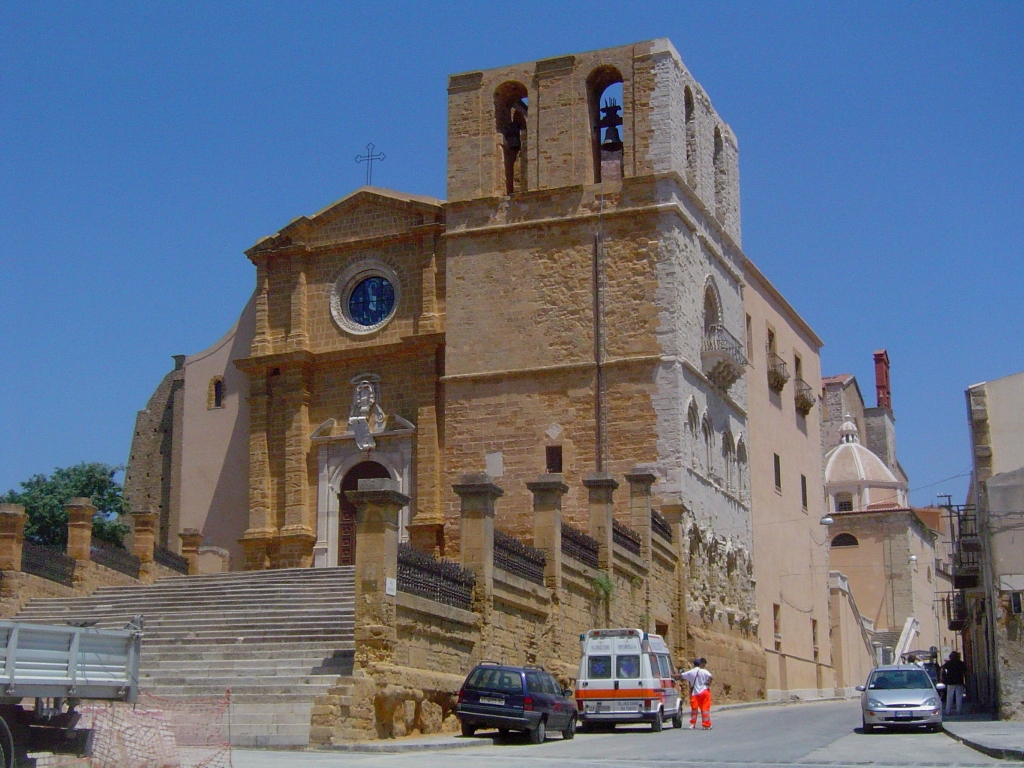
Photo: Pitichinaccio, Public domain
Agrigento Cathedral
out of 5 0 ratingsThe Cathedral of San Gerlando in Agrigento is one of those rare places where history isn’t just preserved in stone—it breathes, shifts, and speaks to anyone willing to listen. Perched on the highest point of the old city, the cathedral overlooks the Valley of the Temples and the distant sea, its silhouette a familiar landmark against the Sicilian sky. Agrigento itself feels like an open-air museum, its streets layered with centuries of life, but the cathedral stands apart, not just for its grandeur, but for the quiet weight of its presence.
Construction began in the 11th century, shortly after the Norman conquest of Sicily, and like the island itself, the cathedral has been reshaped by every era that followed. What started as a modest church built atop the ruins of an ancient Greek acropolis grew into the city’s spiritual heart. Each period left its mark: the Normans brought their robust Romanesque solidity, the Arabs contributed delicate arches and intricate geometric patterns, and later, the Baroque era added the ornate flourishes that define so much of Sicilian architecture. Inside, the layers are visible—sturdy medieval columns stand beside gilded altars, while frescoes and mosaics blend Christian iconography with the flowing lines of Islamic design.
The cathedral’s facade is deceptively understated, facing the square with a quiet dignity rather than ostentatious display. The portal is adorned with reliefs, including a depiction of Saint Gerland, Agrigento’s patron, whose legend says he saved the city from siege in the 12th century. Above it, a rose window filters soft light into the nave, its circular form a subtle echo of the architectural harmony within. Flanking the entrance are two towers of unequal height, one left unfinished—a reminder that the cathedral, like the city around it, was never truly complete, but evolved alongside the people who built it.
Stepping inside, the space feels vast and luminous, the high vaults supported by massive columns, some believed to have been repurposed from the Greek temples that once stood on this site. The floor is a mosaic of intertwined Christian and Arab motifs, a testament to Sicily’s role as a crossroads of cultures. The Baroque high altar gleams with gold and marble, while behind it lies the chapel housing the relics of Saint Gerland. Nearby, the Chapel of the Holy Sacraments holds one of the cathedral’s most treasured pieces: a 14th-century crucifix attributed to the Sicilian school, its delicate craftsmanship making the figures appear almost lifelike. The frescoes here carry a quiet melancholy, their saints gazing down as if privy to some unspoken truth.
Beyond its religious significance, the cathedral is a living archive of Agrigento’s past. Services are still held here, the sound of the organ filling the nave, and on feast days, the square outside buzzes with locals and visitors alike. Yet even on ordinary days, the cathedral offers moments of stillness. A small terrace behind the building provides a sweeping view of the valley and the sea beyond, where the modern city sprawls toward the horizon. It’s easy to see why this spot was chosen for a place of worship—the way the land meets the sky, the way the past lingers in the present.
Agrigento often slips under the radar for travelers, overshadowed by more famous Sicilian destinations like Palermo or Taormina. That’s part of its charm. The streets of the old city are narrow and winding, lined with small cafés where the scent of cannoli and espresso mingles with the salt air. There are no crowds here, just the quiet rhythm of daily life. The cathedral isn’t just a monument; it’s woven into the fabric of the city, a place where history feels tangible without being overwhelming.
What makes San Gerlando so compelling isn’t its size or opulence, but the way it carries the weight of time without trying to impress. It doesn’t demand attention—it earns it, through the stories etched into its walls, the light filtering through its windows, and the sense that here, more than anywhere else, the past isn’t just remembered; it’s still alive.
Day around this place
Where else to go on the same day
Building the day…
Where it is
37.31400, 13.57638