Photo: Dr, CC BY-SA 4.0
Riobamba Cathedral
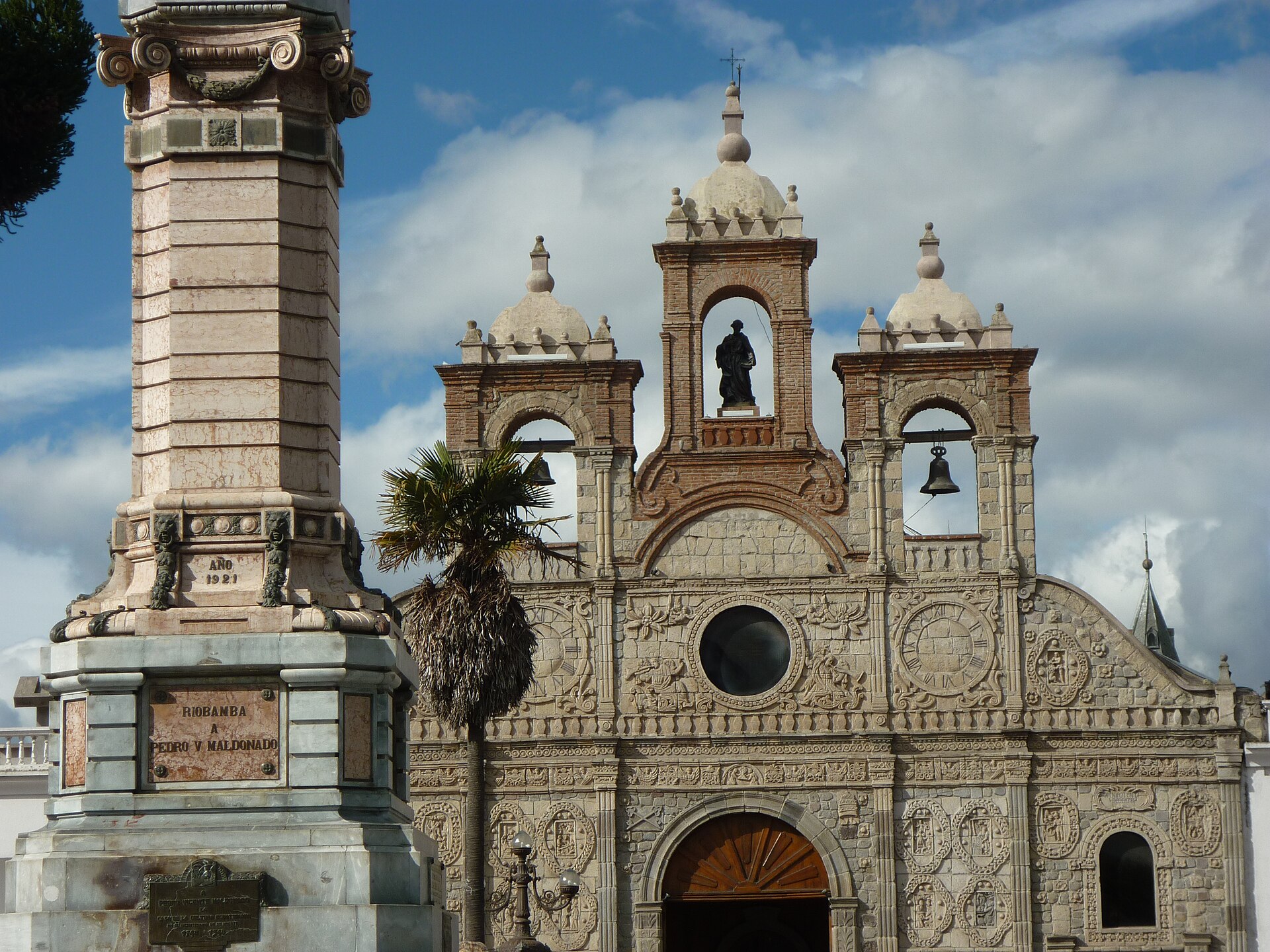
out of 5 0 ratingsRiobamba’s cathedral is the kind of place that quietly anchors a city without demanding attention. It stands on the main square as if it has always been there, though its current form is the result of centuries of change. The first church on this site appeared soon after the Spanish founded Riobamba in the 16th century, a modest structure of wood and clay meant to establish a foothold in the Andes. Even then, it carried the weight of a new order, blending European traditions with the realities of the region.
The building you see today is the product of multiple reconstructions, the last completed in the mid-20th century. Earthquakes, common in this part of Ecuador, have repeatedly damaged the structure, forcing the city to rebuild it time and again. As a result, the cathedral’s architecture reflects different eras. The neoclassical facade, with its columns and pediment, speaks to 19th-century influences, while the interior retains elements from earlier periods. There’s no grandiosity here, just a quiet harmony that feels more connected to the city’s daily life than to any monumental ambition.
Inside, the cathedral is small but airy. High vaulted ceilings are supported by wooden beams, and light filters through stained glass, casting warm hues across the walls. The baroque altar is the most striking feature, richly decorated with gilding and intricate carvings that contrast with the simplicity of the rest of the space. Niches hold statues of saints, many of them tied to local traditions—images of the Virgin Mary in Ecuadorian dress or figures venerated in the region. These details reveal how Catholicism, brought by the Spanish, gradually absorbed local customs, becoming part of the Andean cultural fabric.
Riobamba has long been a crossroads. Nestled in a valley between two mountain ranges, it was an important trade and administrative hub even before the Spanish arrived. The Incas, and later the conquistadors, recognized its strategic value, and the cathedral became a symbol of this cultural intersection. Today, the square in front of it remains a lively part of the city. Locals hurry past on errands, others pause on benches to rest, and on weekends, street musicians gather. The cathedral isn’t a museum; it’s a living space where history and everyday life coexist.
The cathedral also played a role in Ecuador’s struggle for independence. In the early 19th century, Riobamba became a center of the liberation movement, and the building often served as a meeting place and refuge for revolutionaries. After the Spanish were defeated, the first celebrations of independence were held here. Today, memorial plaques and a small museum attached to the cathedral preserve artifacts from that era—documents, personal items, and other remnants of the past.
The architecture tells a story not just of changing styles but of the city’s evolution. The earliest structures were meant to assert Spanish authority, while later reconstructions reflected the spirit of a nation finding its identity. By the 19th century, as Ecuador gained independence, the cathedral became a symbol of a new era—less about religion and more about national identity. Its design shifted from colonial austerity to more expressive forms, mirroring the country’s growing sense of self.
For visitors, the cathedral offers a rare chance to step into the past without the distraction of crowds. You can sit on one of the wooden pews, listening to the quiet broken only by the occasional footsteps or whispered prayers. In those moments, it’s easy to see why the cathedral still matters to the people of Riobamba. It’s not just a historical monument; it’s a place where personal and collective memories intertwine.
Riobamba isn’t a city that draws tourists with flashy attractions. It moves at its own pace, and the cathedral is one of the places that helps define its character. There’s nothing performative about it—just an authenticity that comes through in the worn steps leading to the altar, the faint frescoes on the walls, and the way locals interact with the space. The cathedral doesn’t try to impress; it simply endures, as much a part of the city as the people who pass through its doors.
Day around this place
Where else to go on the same day
Building the day…
Where it is
-1.67225, -78.64783