- Home
- Chile
- Puerto Montt
- Puerto Montt Cathedral
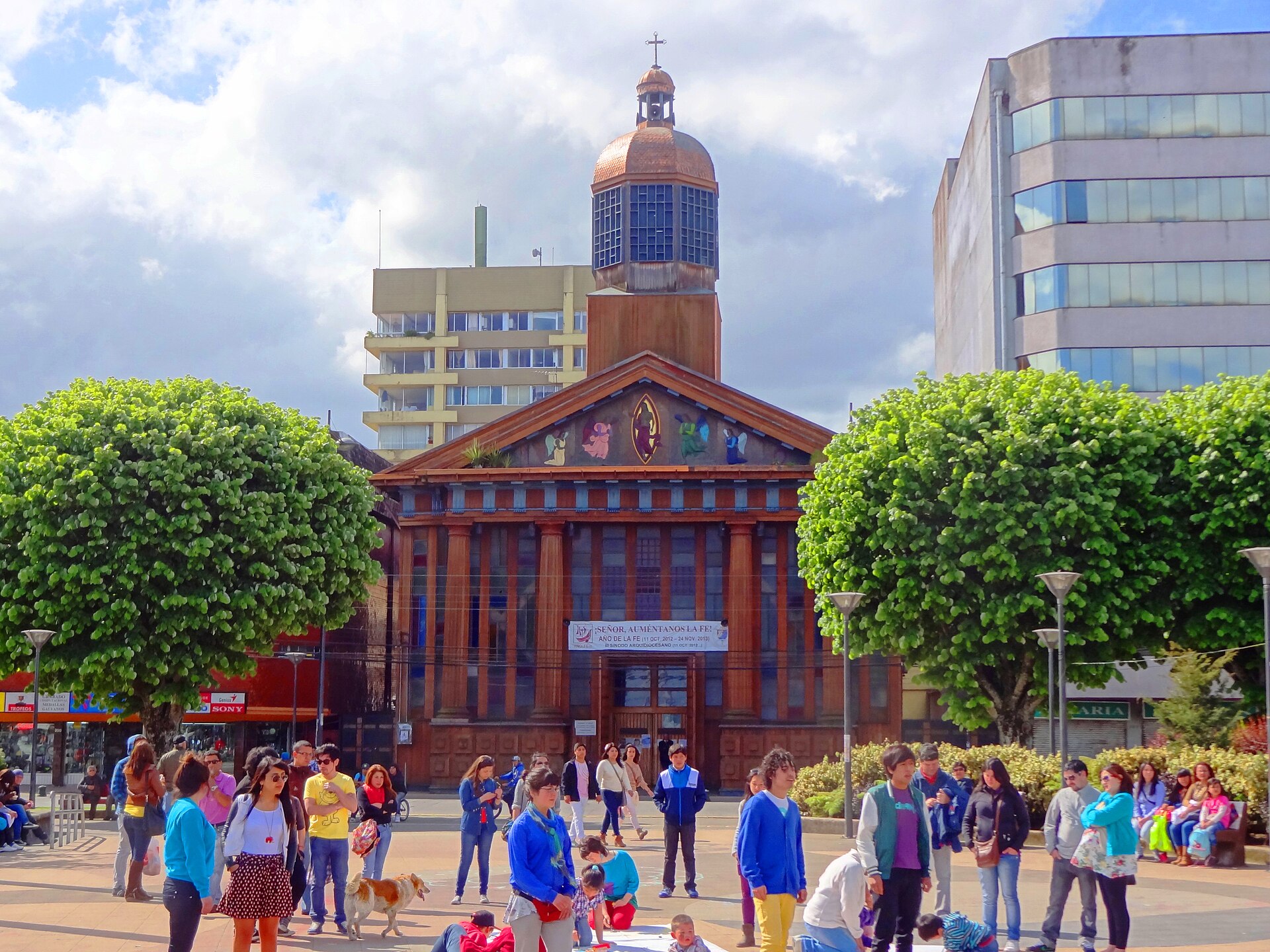
Photo: Rodolfo Ditzel Lacoa, CC BY-SA 3.0
Puerto Montt Cathedral
out of 5 0 ratingsPuerto Montt’s cathedral is the kind of place that doesn’t announce itself with fanfare. It stands quietly in the heart of the city, on the main square, surrounded by low-slung buildings with weathered, colorful facades and the unhurried rhythm of southern Chile. There’s nothing imposing about it—no soaring spires or gilded interiors—but that’s precisely what makes it feel real. It doesn’t demand attention; it simply exists, as much a part of the city’s fabric as the salt-tinged air or the distant hum of fishing boats in the harbor.
The story of the cathedral begins in the late 19th century, when Puerto Montt was still finding its footing as a port town. The first wooden church was built in 1856, but as the community grew, it became clear that something more permanent was needed. By 1892, plans were underway for a new structure, one that would serve as both a spiritual anchor and a symbol of unity for the city’s residents. The task fell to Italian architect Eduardo Provensal, and by 1895, the cathedral was consecrated. Over the years, it has been repaired and restored, but its essence remains unchanged—a building shaped by the land and the people who call this place home.
The architecture is practical, almost unassuming, which makes sense in a region where the weather dictates so much. Like many of Puerto Montt’s older buildings, the cathedral is made of wood, a material that’s both abundant and resilient. The facade is a modest take on Gothic style, with tall, narrow windows and a simple arched entrance topped by a small bell tower. Inside, the space feels airy and light, the high ceilings supported by wooden beams that give the impression of a ship’s hull. The stained glass isn’t elaborate, but it softens the daylight, casting a gentle glow over the pews and the worn stone floor.
The interior is spare but intentional. The main altar, carved from wood, is adorned with figures of saints and angels, their expressions serene rather than dramatic. Flanking it are small chapels dedicated to various saints, each with its own quiet presence. The most revered figure here is the Virgin Mary, the city’s patroness, whose statue occupies a place of honor. The cathedral also holds a few colonial-era relics—icons and artifacts brought here when Puerto Montt was still a fledgling settlement. These aren’t museum pieces; they’re living connections to the past, treated with quiet reverence by those who come to pray.
Beyond its religious role, the cathedral is a gathering place, a thread in the city’s social fabric. It hosts not just services but organ concerts, community fairs, and meetings that bring people together. On holidays like Christmas and Easter, the pews fill with families, the air thick with the scent of candles and incense. On ordinary days, the cathedral is nearly empty, the silence broken only by the occasional creak of a floorboard or the distant toll of the bell. It’s a place where time moves differently, where the outside world feels far away.
Puerto Montt is a city where nature and human life intertwine, and the cathedral reflects that balance. It doesn’t fight against its surroundings; it settles into them. The wooden walls darken with rain, the roof gathers moss, and in the mist, the building almost disappears into the landscape. On clear days, sunlight filters through the windows, making the wood glow as if lit from within. This harmony is why the cathedral feels so deeply rooted here—it doesn’t stand apart from the city but grows from it, shaped by the same forces that shape everything else.
For visitors, the cathedral is often an afterthought. Most come to Puerto Montt for its natural beauty—volcanoes, lakes, the wild coastline—and the cathedral doesn’t compete with that. But those who linger in the city for more than a day usually find their way inside. There are no crowds, no guided tours, no pressure to perform awe. Just a quiet space where you can sit on a wooden bench, listen to the echoes of footsteps, and feel the weight of time. It’s not a place for grand gestures or Instagram moments; it’s a place for stillness.
This isn’t a cathedral that overwhelms with grandeur. It doesn’t tell you how to feel or what to think. It waits, patiently, for those who are willing to listen. And those who come not for spectacle but for something deeper often leave with the sense that they’ve found more than they expected—not just a building, but a quiet revelation. That, perhaps, is its real purpose: to be a mirror, reflecting back whatever you bring to it.