- Home
- Italy
- Piazza Armerina
- Piazza Armerina Cathedral
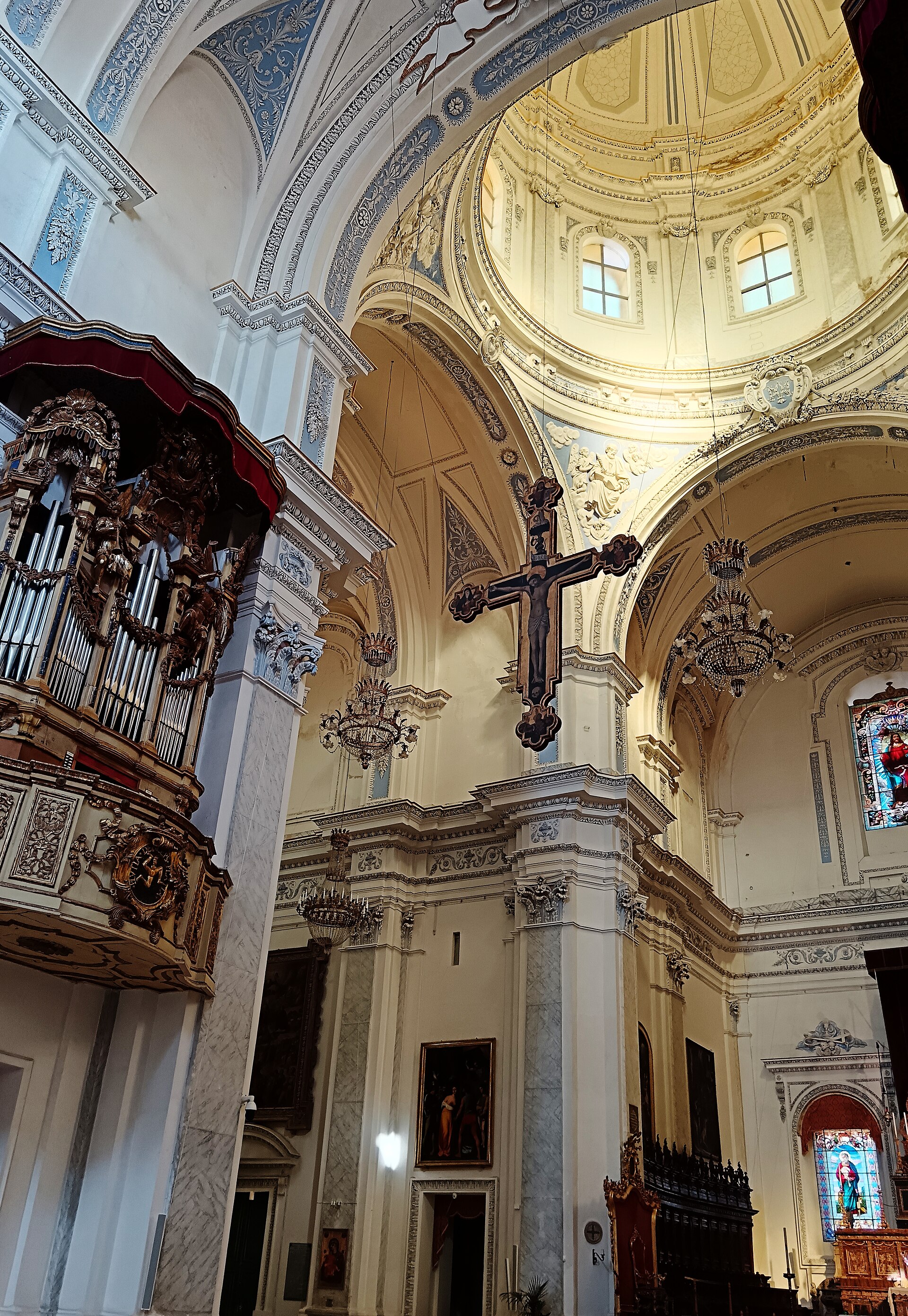
Photo: Paulacastelli, CC BY-SA 4.0
Piazza Armerina Cathedral
out of 5 0 ratingsPerched on a gentle rise in the heart of Piazza Armerina, the cathedral has watched over this Sicilian hilltown for centuries, its massive dome rising above the terracotta rooftops like a silent guardian. The building’s austere lines stand in quiet contrast to the winding alleys of the old quarter, where laundry still flaps between balconies and elderly men gather on benches to play cards. For locals, the cathedral isn’t just a landmark—it’s a living part of their daily rhythm, a place where they light candles before work, meet friends after mass, or simply escape the midday sun beneath its thick stone walls.
The story of the cathedral begins in the 17th century, when the town decided to replace an older church with something grander. Construction stretched over decades, and the result is a building that feels like a conversation between different eras. The original design came from Orazio Torriani, but later architects left their mark, blending Baroque flourishes with classical proportions. Inside, the layers of history are even more visible—frescoes fade into gilded altarpieces, and the marble floors bear the scuffs of generations of worshippers. It’s a place where the past isn’t preserved behind glass but woven into the fabric of the present.
The façade is imposing without being overwhelming. Tall columns frame the entrance, their shadows shifting with the sun, while niches house weathered statues of saints. The triangular pediment above gives the building a sense of balance, though the real drama lies in the details—the intricate carvings around the main portal, for instance, which depict scenes from the life of Christ in a style that’s both solemn and strangely intimate. Above the door, a bishop’s coat of arms serves as a quiet reminder of the power struggles that shaped the cathedral’s construction. This wasn’t just a house of worship; it was a statement.
Step inside, and the first thing you notice is the light. It pours through high windows, illuminating the pale stone columns and the delicate tracery of the vaulted ceilings. The main altar, a masterpiece of marble and gilded bronze, draws the eye immediately, its layers of ornamentation telling a story of devotion and craftsmanship. But the real heart of the cathedral lies in the chapel of Saint Ignatius, the town’s patron saint. Pilgrims still come here to pray before his relics, leaving behind small offerings—a rosary, a handwritten note—tucked into the corners of the altar. The side aisles hold other treasures: a 16th-century painting of the Madonna, its colors still vibrant after centuries, and a wooden crucifix worn smooth by the touch of countless hands.
One of the cathedral’s most remarkable features is its 18th-century choir stalls. The woodwork is astonishing—every panel carved with scenes from the Old Testament, each figure rendered with such care that you can almost feel the grain of the wood beneath your fingertips. The organ above, though restored, still fills the space with music during services, its deep notes resonating through the nave. Locals say that on quiet evenings, when the last of the worshippers have gone home, the sound lingers in the empty streets like an echo of the past.
Beyond its religious role, the cathedral is a cultural hub. Concerts of sacred music are held here, their melodies bouncing off the stone walls, and during the festival of Saint Ignatius in late July, the entire town seems to spill into the square outside. The cathedral’s steps become a stage for impromptu performances, while vendors sell everything from handmade lace to sweet almond pastries. Inside, the air is thick with the scent of incense and fresh flowers, and the usual hush of the nave gives way to laughter and chatter. It’s a rare kind of celebration—one that feels both ancient and spontaneous.
What makes the cathedral special, though, isn’t just its art or its history. It’s the way it fits into the life of Piazza Armerina, a town that moves at its own unhurried pace. Here, the cathedral isn’t a monument to be admired from a distance; it’s a place where old women stop to rest on their way to the market, where children chase each other around the columns, and where a stray cat might nap in a sunlit corner. The locals treat it with familiarity, not reverence—it’s their church, after all, not some relic of a bygone era. Even visitors pick up on this ease, lingering longer than they planned, wandering the nearby streets or ducking into the tiny café across the square for an espresso.
Piazza Armerina isn’t the kind of place that draws crowds. It’s too small, too quiet, too far from the well-trodden paths of Sicilian tourism. But that’s precisely why the cathedral feels so alive. It hasn’t been polished for tourists or turned into a museum piece. The cracks in the plaster, the slightly uneven floor, the way the light slants through the windows in the late afternoon—all of it speaks to a place that’s still in use, still evolving. The cathedral doesn’t demand attention; it simply is, a steady presence in a town where time seems to move just a little slower.
Perhaps that’s why people return. Not for the grand architecture or the centuries-old relics, but for the sense of stillness that settles over you when you sit in one of the back pews, listening to the murmur of prayers and the distant clang of a church bell. It’s the kind of place that doesn’t reveal itself all at once. You have to come back, again and again, to notice the way the light changes with the seasons, or how the scent of orange blossoms drifts in from the square in spring. The cathedral isn’t just part of Piazza Armerina’s history—it’s part of its soul.
Day around this place
Where else to go on the same day
Building the day…
Where it is
37.38333, 14.36667