- Home
- Morocco
- Casablanca
- Notre-Dame-de-Lourdes Cathedral
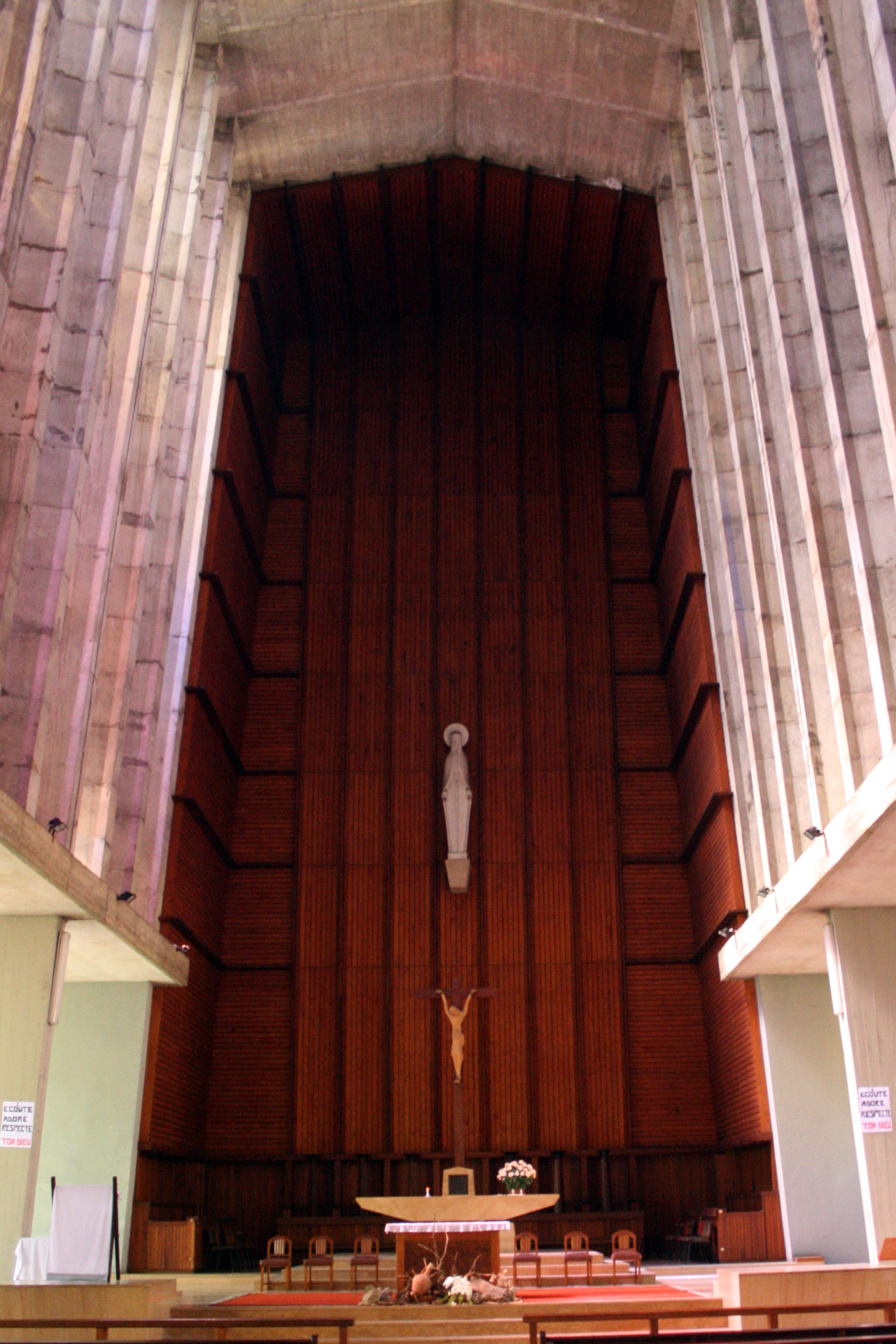
Photo: Remi Jouan, CC BY-SA 3.0
Notre-Dame-de-Lourdes Cathedral
out of 5 0 ratingsNotre-Dame-de-Lourdes Cathedral in Casablanca
Notre-Dame-de-Lourdes Cathedral is where history lingers in the details. Built in the early 1950s, just before Morocco regained independence, it stands as a quiet witness to the country’s colonial past. The cathedral was completed in 1954, a time when European influence was still strong in the city, yet its very existence reflects the complex layers of Casablanca’s identity. It was never just a place of worship—it was a symbol, a gathering point, and eventually, a bridge between cultures.
The architecture tells its own story. From the outside, the cathedral’s pointed arches and towering structure evoke Gothic design, but look closer, and you’ll notice Moroccan craftsmanship. The mosaics and reliefs on the facade, the way light filters through stained glass in soft, warm hues—these elements blend two worlds. Inside, the space feels vast, with acoustics that carry even the faintest sound clearly. The marble altar and tilework add to the sense of reverence, though the building no longer serves its original religious purpose.
Dedicated to Our Lady of Lourdes, the cathedral was more than a spiritual home for Casablanca’s Catholic community. In a predominantly Muslim country, its presence acknowledged the European settlers who sought familiarity in a foreign land. Yet it was never exclusive. Even during its active years, the cathedral welcomed those who simply wanted a moment of quiet, regardless of faith. That openness has endured. Today, it remains a place where people come to escape the city’s hustle, to sit in the cool stillness of its nave, or to admire the way sunlight paints the walls through the stained glass.
When Morocco gained independence in 1956, the cathedral’s role changed. Many Europeans left Casablanca, and the building was repurposed rather than demolished. For a time, it housed a cultural center, then a library and exhibition spaces. Now, it hosts concerts, art shows, and occasional performances, its high ceilings making it an ideal venue for classical music or contemporary installations. The transition from sacred space to cultural hub preserved the building’s relevance in a city that moves quickly forward.
Casablanca is a place of contrasts, and the cathedral embodies that. It’s not as famous as the Hassan II Mosque, nor does it draw the same crowds. That’s part of its appeal.
Tucked away in the city center, it’s easy to stumble upon during a walk, a quiet counterpoint to the energy of the medina or the modern skyline. The streets around it are unassuming—cafés, small shops, the occasional honk of a taxi—but the cathedral itself feels like a pause, a moment of reflection in a city that rarely slows down.
What makes Notre-Dame-de-Lourdes special is its atmosphere. There’s no grand spectacle here, no guided tours or souvenir stands. Instead, there’s the weight of history in the worn stone, the play of light on the walls, the occasional echo of footsteps in an empty hall. In the heat of the day, the thick walls offer respite from the sun, while in the evening, the illuminated facade casts a soft glow over the surrounding streets. It’s a place where locals and visitors alike come to sit on a wooden pew and listen to the silence, or to wander among the exhibits and imagine the voices that once filled the space.
The cathedral’s story is still being written. It’s no longer a place of worship, but it hasn’t been forgotten. Artists, musicians, and writers have claimed it as their own, using its space to create something new while honoring its past. The exhibitions change, the concerts come and go, but the building itself remains a constant, a reminder that Casablanca is more than just a port city or a business hub. It’s a place where history isn’t just preserved in museums—it’s alive in the streets, in the architecture, in the quiet corners where the past and present meet.
Visiting Notre-Dame-de-Lourdes is like stepping into another version of Casablanca. You can wander the aisles, admire the stained glass, or simply sit and watch the light shift across the floor. It’s a place where time feels different, where the noise of the city fades into the background. The cathedral may no longer echo with prayers, but its walls still hold stories—of those who built it, those who prayed here, and those who now come seeking something less tangible than a tourist attraction. In a city of constant motion, it offers stillness. And sometimes, that’s enough.
Day around this place
Where else to go on the same day
Building the day…
Where it is
33.58270, -7.61574