- Home
- Uruguay
- Montevideo
- Montevideo Metropolitan Cathedral
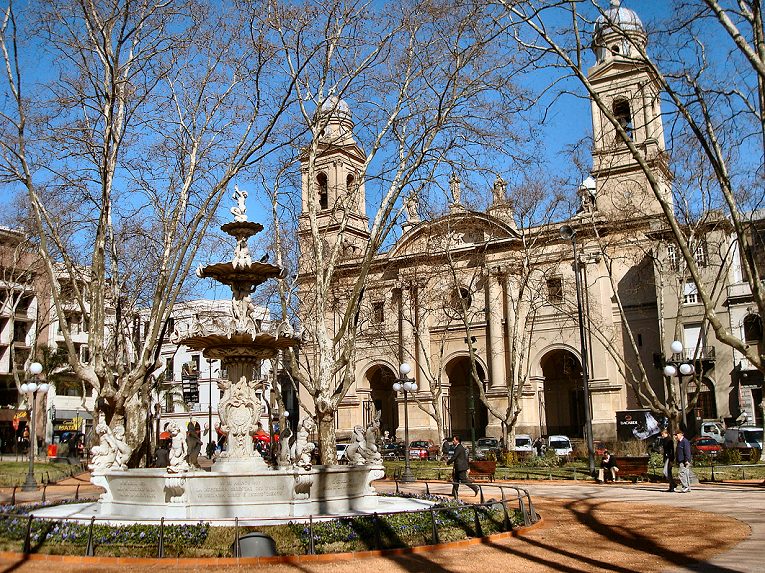
Photo: Hoverfish, CC BY 3.0
Montevideo Metropolitan Cathedral
out of 5 0 ratingsMontevideo’s Cathedral stands quietly at the heart of the city’s oldest square, Plaza Constitución, as if holding its breath through centuries of change. The building has witnessed the rise of a nation, from the days when Montevideo was little more than a fortified outpost on the Río de la Plata to its role as the capital of an independent Uruguay. It is not just a place of worship but a living record of the country’s past, where the weight of history lingers in the cool stone and the soft echo of footsteps on the worn floors.
Construction of the cathedral spanned generations, reflecting the slow evolution of the city itself. The first church on this site was a modest structure of wood and clay, built in the early 1700s when Montevideo was still a small colonial settlement. As the city grew, so did the need for a grander house of worship. The current building took shape in the late 18th century, though it wasn’t completed until the mid-1800s. Its architecture blends neoclassical symmetry with subtle baroque details—a nod to the Spanish colonial influence that shaped Uruguay’s early identity. The façade, with its twin towers and classical columns, gives little hint of the warmth inside, where sunlight filters through stained glass, casting shifting patterns across the marble floors.
Stepping through the heavy wooden doors, visitors are met with a sense of calm. The high vaulted ceilings and slender columns create an airy space, while the main altar, adorned with gilded bronze and white marble, draws the eye upward. The cathedral’s interior is less about opulence than about harmony—each element, from the carved wooden pews to the delicate frescoes, feels carefully considered. The organ, though not always playing, fills the space with a deep, resonant sound during services, its music weaving through the quiet murmurs of prayer.
Beyond its religious significance, the cathedral has played a central role in Uruguay’s civic life. It has hosted the weddings, funerals, and inaugurations of presidents, and during the turbulent years of the independence movement, its walls sheltered both revolutionaries and the wounded. In the 19th century, when the country was forging its identity, the cathedral was more than a place of worship—it was a gathering point for those shaping the nation’s future. Even today, its archives hold documents that trace Montevideo’s transformation from a colonial backwater to a modern capital.
The square outside is as much a part of the cathedral’s story as the building itself. Plaza Constitución, the oldest in Montevideo, has seen public executions, military parades, and political rallies. Now, it is a place where locals and visitors alike pause to rest. On any given day, you might find street musicians playing tango, elderly men playing chess on benches, or children chasing pigeons across the cobblestones. The cathedral, with its imposing yet unassuming presence, anchors the square, its bells marking the hours as they have for centuries.
Inside, the atmosphere is one of quiet reflection. There are no crowds jostling for the best photo, no guides rushing visitors along. Instead, people sit on the wooden pews, some in prayer, others simply lost in thought. The light changes with the time of day—soft and golden in the morning, cooler and more diffuse in the afternoon. During evening services, the flicker of candlelight adds a warmth that contrasts with the stone’s austerity. It’s a place where time seems to slow, where the outside world fades into the background.
For those who take the time to look closer, the cathedral offers glimpses into Uruguay’s past. The tomb of Archbishop Juan Francisco Larrobla, a key figure in the country’s independence, lies in one of the side chapels. Nearby, old parish records tell stories of Montevideo’s early days—births, marriages, and deaths that shaped the city’s growth. The cathedral’s museum, though small, displays religious artifacts that span centuries, from intricately embroidered vestments to faded manuscripts. Each piece is a thread in the larger tapestry of Uruguayan history.
What makes the cathedral special, though, is not just its age or its architecture, but the way it fits into the rhythm of daily life. Locals don’t just come for mass—they stop by to sit in silence, to meet a friend, or to escape the noise of the city. Tourists often wander in by accident, drawn by the quiet grandeur of the building, only to find themselves lingering longer than expected. There’s no pressure to perform, no script to follow. The cathedral simply exists, as it has for centuries, offering a moment of stillness in a city that moves at its own unhurried pace.
In a world where so much feels temporary, the cathedral is a reminder of endurance. Its stones have absorbed the heat of summer suns and the damp of winter rains, its walls have heard whispered confessions and joyful hymns. It doesn’t demand attention, nor does it need to. Its strength lies in its quiet persistence, in the way it has become a part of Montevideo’s identity without ever trying to be anything more than what it is—a place of faith, history, and quiet reflection.
Day around this place
Where else to go on the same day
Building the day…
Where it is
-34.90700, -56.20411