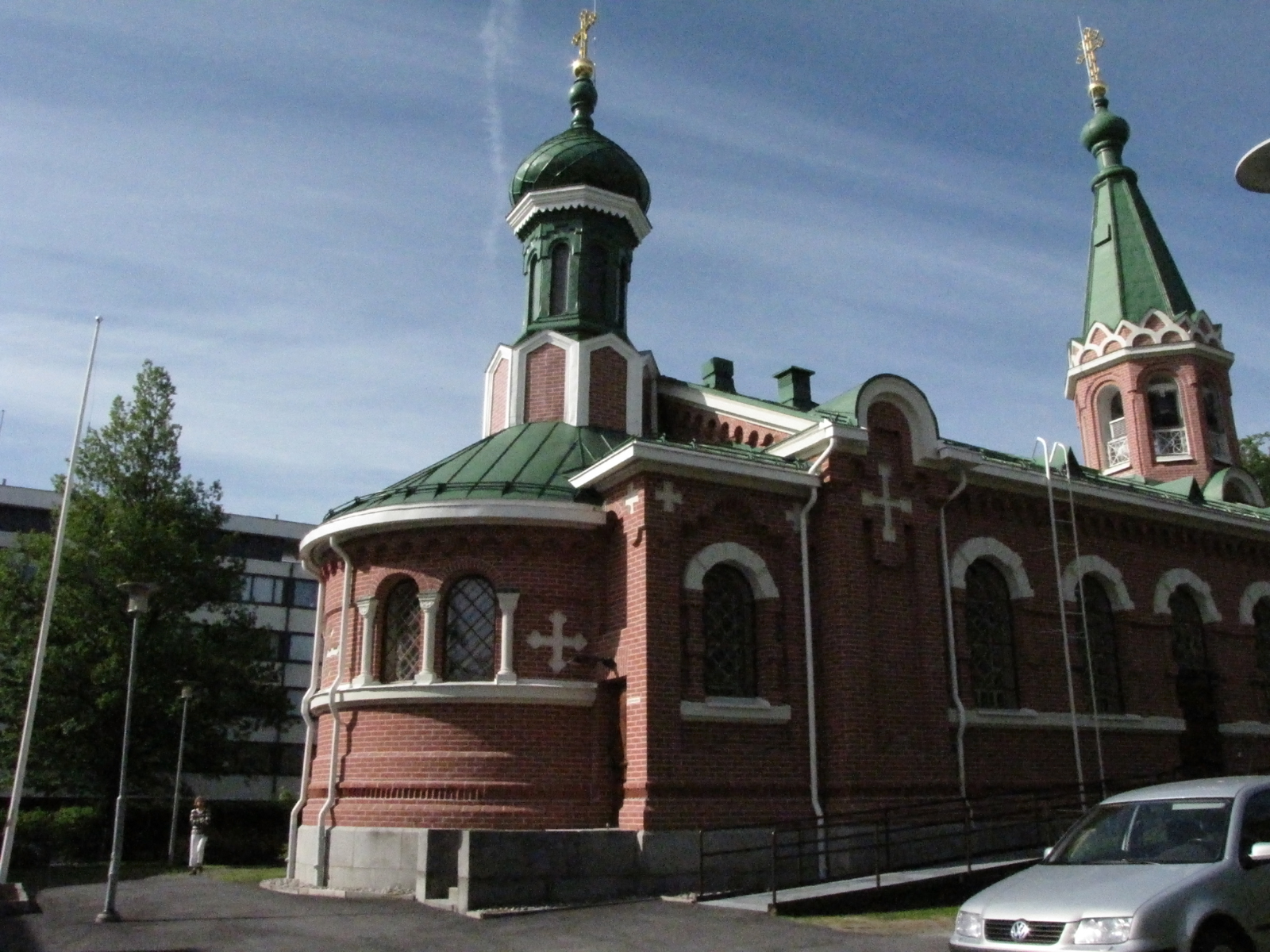
Photo: Petritap, CC BY-SA 3.0
Kuopio Cathedral
out of 5 0 ratingsKuopio Cathedral
Kuopio Cathedral stands on a hill in the city center, its walls holding the stories of the region. Built in the early 1800s, it blends into the landscape without fanfare. The building’s quiet presence feels distinctly Finnish—no grand gestures, just a steady, unassuming dignity.
The architecture follows classicism but adapts to the north. Clean lines, a symmetrical facade, and a modest bell tower create a familiar silhouette. Yet the local touch is clear: granite foundation, gray stone walls, and a copper roof patinated by time. Inside, the space is just as restrained. White walls, tall windows softening the northern light, and wooden pews worn smooth by use. The altar holds Pekka Halonen’s painting of the crucifixion, while the organ, installed in the 1950s, still fills the space during services.
Construction started in 1806, when Kuopio was growing from a small settlement into an administrative hub. Architect Pekka Gullichsen designed it, but wars and funding delays stretched the project for years. The cathedral was finished in 1815 and consecrated the next year. Though Finland was then part of the Russian Empire, the building avoided heavy imperial influence, keeping its local character.
Renovations came in waves. Side chapels were added in the 1800s, and the interior was updated in the early 1900s with national romanticism elements. Bombings during the Winter War damaged it, but restoration was completed by 1941. Today, it’s both an active church and a protected monument. Visitors can see memorial plaques for notable residents, historic records, and artifacts.
The cathedral is part of daily life here. Weddings, baptisms, funerals, and concerts take place within its walls. At Christmas, it becomes the city’s heart—bells ring, choirs sing, and the air smells of pine and candles. In summer, the light nights make its pale walls glow at sunset, shadows stretching long across the pavement.
A small park surrounds the cathedral. Locals walk here, looking out over Lake Kallavesi, one of Finland’s largest. On clear days, distant islands appear, and in winter, the frozen lake makes the cathedral seem to hover above snow.
This isn’t a church that demands attention. Its beauty is quiet—the play of light, the stories in its walls. No crowds rush for photos, and that’s part of its appeal. It remains a place where anyone can find something: a moment of peace, a link to history, or a view of the lake.
Day around this place
Where else to go on the same day
Building the day…
Where it is
62.88833, 27.69028