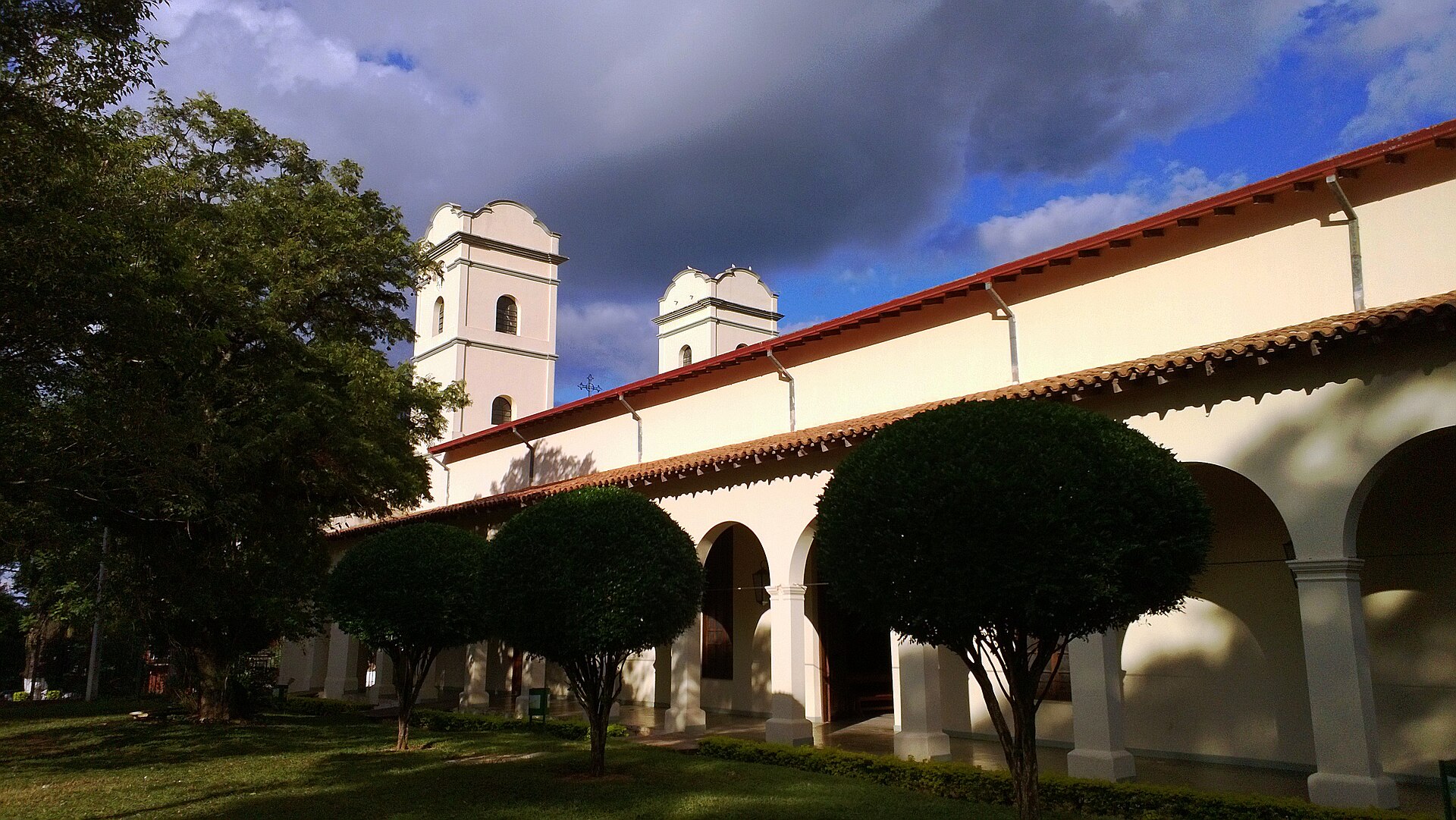
Photo: Cmasi, CC BY-SA 4.0
Karapeguá Cathedral
out of 5 0 ratingsKarapeguá’s cathedral stands quietly at the heart of this small Paraguayan town, a place where time seems to move a little slower than elsewhere. Built in the late 19th century, it has watched over the streets for generations, its whitewashed walls and simple bell tower becoming as much a part of the landscape as the red earth and the ceibo trees that line the roads. Unlike the grand, ornate cathedrals of Europe or even Asunción, this one carries a different kind of weight—not of imperial ambition or baroque excess, but of everyday faith and the steady rhythm of life in the Paraguayan countryside.
The architecture is modest, almost unassuming at first glance. The façade is clean and symmetrical, with two slender towers framing a central entrance. Inside, the space opens up into a single nave, its high ceiling supported by simple arches. The walls are mostly bare, save for a few religious paintings and the occasional flicker of candlelight. There’s no gold leaf, no intricate frescoes, just the quiet dignity of a place built to serve rather than impress. The floor is cool tile, worn smooth by decades of footsteps, and the wooden pews creak under the weight of those who come to sit, pray, or simply escape the midday heat.
What makes the cathedral significant isn’t its size or its artistry, but its role in the community. Karapeguá is a town where life revolves around agriculture—sugar cane, cotton, and soybeans—and the cathedral has long been a gathering point. It’s where people come for Sunday mass, of course, but also for weddings, funerals, and the occasional festival. On feast days, the plaza outside fills with vendors selling chipa, tereré, and fresh fruit, while children run between the stalls and the church steps. The cathedral isn’t just a building; it’s a backdrop to the rituals that hold the town together.
The history of the cathedral is tied to the broader story of Paraguay itself. The country has seen its share of upheaval—wars, dictatorships, economic booms and busts—and Karapeguá, like many small towns, has weathered these changes with a kind of stubborn resilience. The cathedral was built during a period of relative stability in the late 1800s, when Paraguay was rebuilding after the devastating War of the Triple Alliance. It wasn’t a time of great wealth, but of quiet recovery, and the cathedral reflects that. There’s no record of a grand opening or a famous architect; it was likely built by local craftsmen using materials at hand, a practical solution to a practical need.
Over the years, the cathedral has seen its share of repairs and renovations, though none have altered its essential character. The original structure was made of adobe, a common building material in Paraguay, but later updates replaced some of the walls with brick. The roof, once thatched, is now corrugated metal, a nod to modern durability. Inside, the altar has been updated a few times, but the basic layout remains the same. These changes were made not to modernize the space, but to keep it standing, to ensure that it could continue to serve its purpose.
For visitors, the cathedral offers a glimpse into a side of Paraguay that isn’t often seen in guidebooks. There are no crowds here, no tour groups snapping photos. Most days, the doors are open, and you can step inside to find a handful of locals lighting candles or sitting in quiet reflection. The air is cool and still, the only sounds the occasional creak of a pew or the distant hum of a motorbike passing outside. It’s a place where you can sit for a while and watch the light shift through the windows, casting long shadows on the walls.
The plaza in front of the cathedral is just as much a part of the experience. It’s a typical Paraguayan plaza—shaded by trees, with benches where old men play chess and women sell homemade sweets. On weekends, it’s lively with music and conversation, while on weekdays, it’s a quiet spot to rest. The cathedral and the plaza together form the heart of Karapeguá, a place where the past and present coexist without fanfare.
If you’re passing through Karapeguá, the cathedral is worth a stop, not because it’s spectacular, but because it’s real. It’s a place that has seen generations come and go, that has stood through good times and bad, and that continues to be a part of the town’s daily life. There’s no need to dress up or speak the language to appreciate it; you can simply walk in, take a seat, and let the quiet settle around you. In a world that often feels rushed and disconnected, places like this remind you of the value of stillness, of community, and of the simple act of being present.
Day around this place
Where else to go on the same day
Building the day…
Where it is
-25.76711, -57.24363