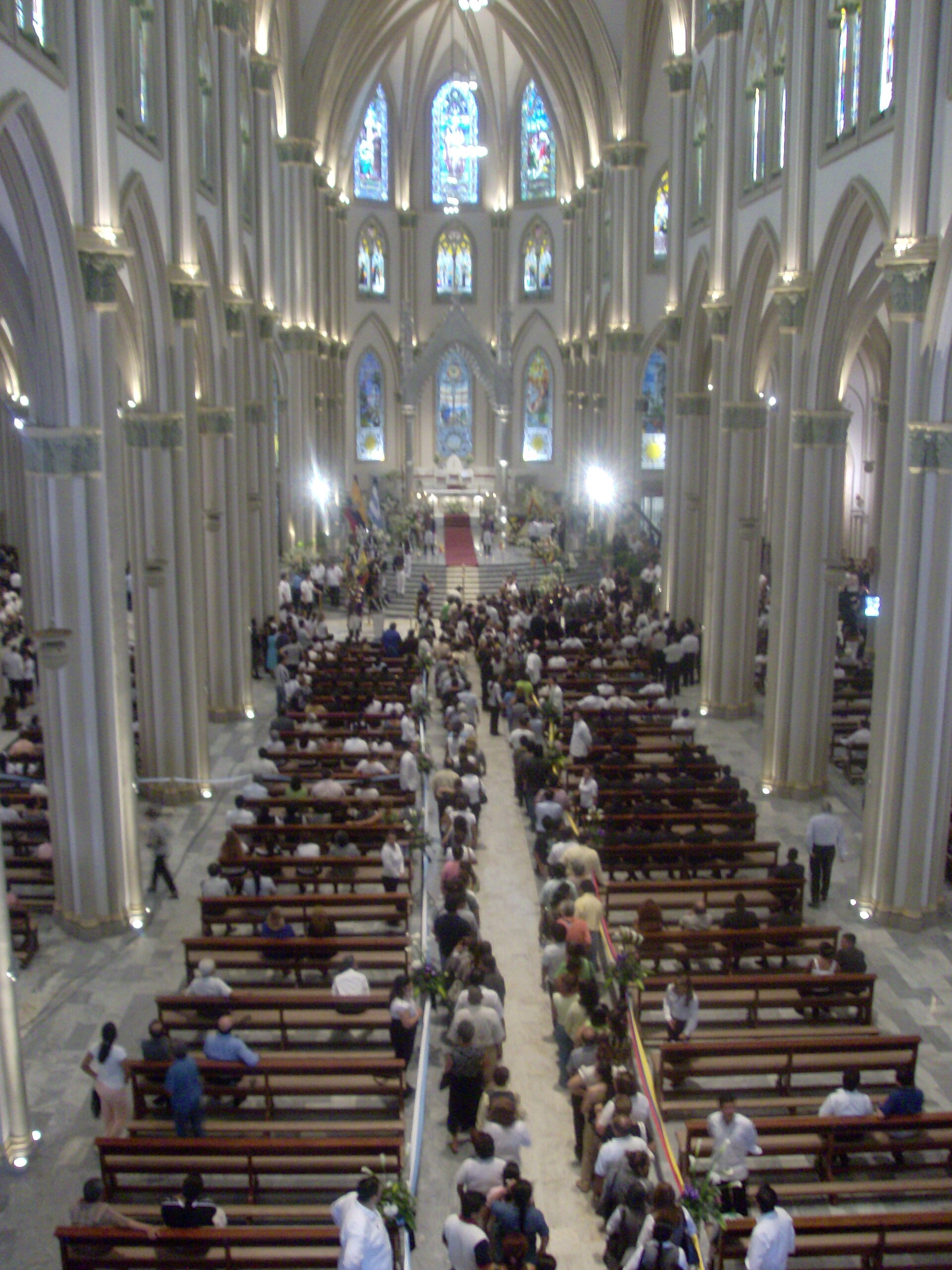
Photo: Alfredo Molina, CC BY-SA 3.0
Guayaquil Metropolitan Cathedral
out of 5 0 ratingsGuayaquil’s Cathedral is one of those places that doesn’t immediately demand attention but slowly reveals its quiet significance. Tucked away in the heart of the city on Plaza de la Merced, it stands where colonial Guayaquil once thrived, its modest architecture offering a contrast to the grander cathedrals found elsewhere in Latin America. The whitewashed walls, low towers, and classical façade with its simple columns give it an understated charm rather than imposing grandeur. There are no gilded altars or marble statues here—just a space where history and everyday life have quietly intertwined over centuries.
The cathedral’s origins trace back to the mid-16th century, when Guayaquil was little more than a small Spanish settlement. The first church on this site was wooden, repeatedly damaged by fires that were all too common in the city. By the 19th century, after Ecuador had gained independence, plans were made to rebuild it in stone—a symbol of a new era. Construction dragged on, interrupted by political upheavals and financial constraints, and the cathedral only took its final form in the early 20th century. By then, Guayaquil had grown from a colonial port into one of the country’s most important cities, and the cathedral had become its spiritual anchor.
Architecturally, the building blends neoclassical and colonial influences. The façade features pilasters and a pediment, while inside, the spacious nave with its high vaulted ceilings creates an airy, uncluttered feel. The main altar, crafted from wood and gilded, is one of the few ornate elements, though the overall interior remains restrained. Instead of elaborate frescoes or stained glass, the cathedral houses a handful of old paintings and sculptures that reflect the city’s religious traditions. The organ, installed in the early 1900s, is one of the few surviving instruments of its kind in Ecuador and still fills the space with music during services.
Beyond its religious role, the cathedral is a witness to Guayaquil’s turbulent history. Its walls have seen services held in celebration of independence victories, gatherings of townspeople seeking solace in difficult times, and the ideological battles between conservatives and liberals that divided the nation in the 19th century. Even the 1942 earthquake, which caused significant damage, couldn’t diminish its place in the city’s life. After repairs, it continued to serve as both a place of worship and a silent chronicler of the city’s evolution.
Today, the cathedral remains a living part of Guayaquil’s rhythm. Mornings are quiet, with only the occasional footsteps of parishioners or the distant notes of the organ breaking the stillness. By midday, the square outside comes alive—vendors sell fruit and souvenirs, children play, and visitors pause to photograph the façade. On feast days, the cathedral overflows with music and song, while the plaza hosts fairs and performances. Unlike the crowded tourist hubs of other cities, this is a place where life unfolds at its own pace, unhurried and unscripted.
For locals, the cathedral is more than a landmark; it’s woven into the fabric of daily existence. People come not just for mass but to sit in quiet reflection, meet friends, or simply escape the city’s bustle. The steps outside are often occupied by elderly men discussing the news, while nearby cafés serve coffee and traditional Ecuadorian sweets. There’s no sense of a museum here—just a place that has grown and adapted alongside the city, its history palpable but never overbearing.
Guayaquil itself is a city of contrasts, where sleek modern skyscrapers stand beside colonial-era buildings and noisy markets give way to quiet side streets. The cathedral acts as a bridge between these worlds, a reminder that the city’s roots run deep even as it continues to change. Its walls hold echoes of different eras—from colonial rule to the present day—and though it may not draw the same crowds as more famous sites, those who visit often leave with a sense of its quiet warmth.
If you find yourself in Guayaquil, the cathedral is worth a visit not just for its architecture but for the chance to experience the city’s soul. There are no rigid rules here, no guided tours insisting on a particular way to see it. You can sit on a pew and listen to the silence, wander the plaza, or watch life unfold around you. The cathedral asks only for respect—for its history, its traditions, and the people who have shaped it. In that simplicity lies its enduring appeal.
Day around this place
Where else to go on the same day
Building the day…
Where it is
-2.19459, -79.88397