- Home
- North Korea
- Pyongyang
- Changchun Cathedral
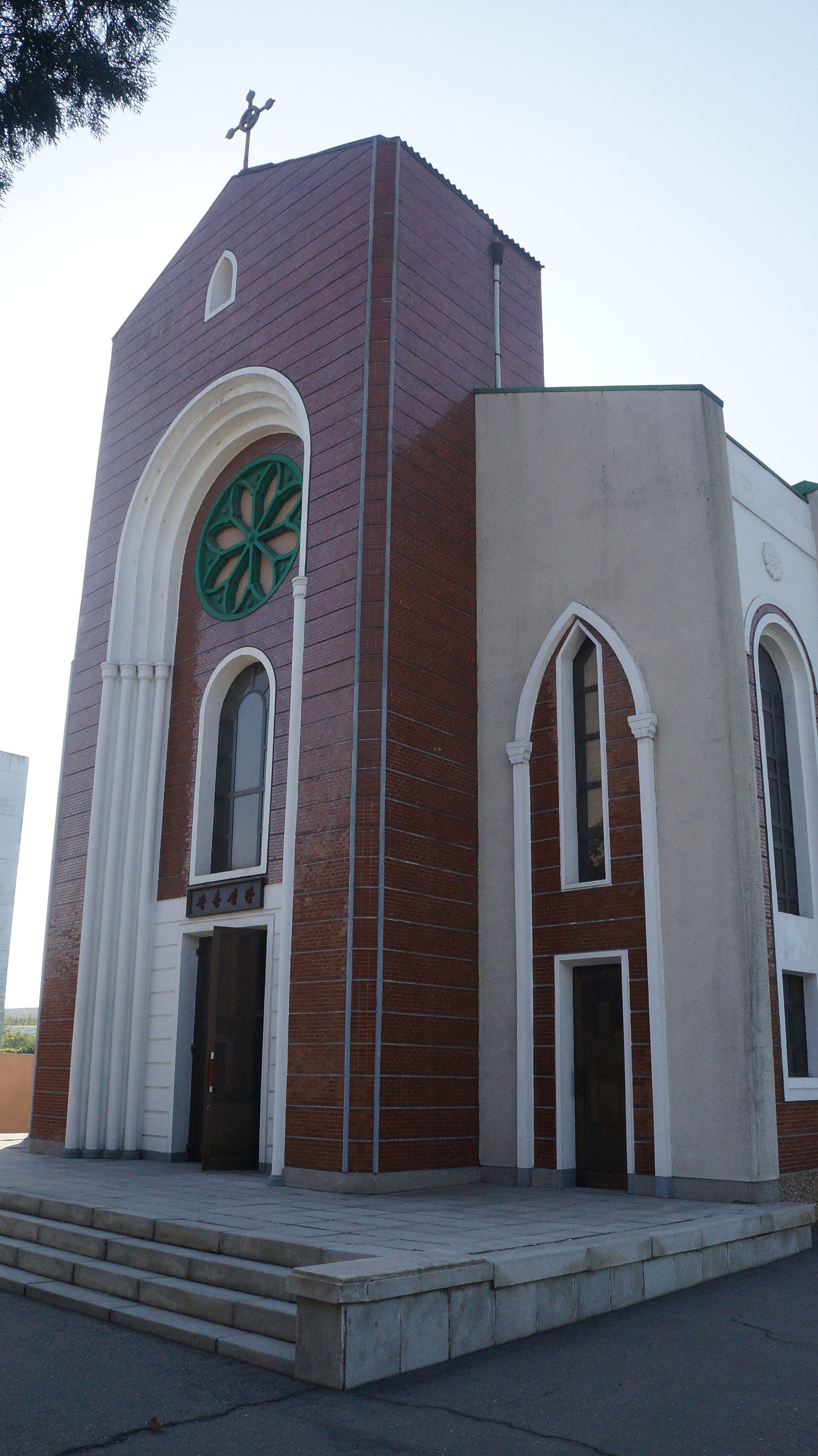
Photo: Uri Tours, CC BY-SA 2.0
Changchun Cathedral
out of 5 0 ratingsChangchung Cathedral in Pyongyang
The Changchung Cathedral feels out of place in North Korea. Built in the early 20th century, it reminds us of a time when Christianity was more visible here. Constructed in the 1930s under Japanese colonial rule, the cathedral has witnessed decades of upheaval. Yet it remains an active place of worship and an architectural relic in a city dominated by socialist design.
From the outside, the cathedral’s Gothic Revival style stands apart among Pyongyang’s wide boulevards and concrete structures. Its pointed arches, tall stained-glass windows, and stone facade would fit better in a European city. Inside, the space is airy, with high ceilings and natural light. The simplicity—wooden pews, a modest altar, and a few religious icons—creates calm that contrasts with the streets outside.
The cathedral survived the Korean War, when much of Pyongyang was destroyed. Why it was spared remains unclear.
The cathedral’s history is tied to Korea’s religious past. In the early 1900s, Pyongyang was called the "Jerusalem of the East" due to its Christian communities. After Korea’s division and the rise of a communist regime in the North, religion was suppressed. Many believers faced persecution. The Changchung Cathedral became one of the few surviving symbols of that era. Today, it links to a past the country’s leadership has largely erased.
The cathedral remains an active church, but its congregation is small. North Koreans need official permission to attend services. Foreign visitors can enter only as part of a guided tour, with strict rules. Inside, the atmosphere is quiet, with murmurs of prayers or soft hymns. It’s a place where time slows, offering reflection in a country where such spaces are rare.
The cathedral is part of a small Catholic enclave in Pyongyang. The surrounding buildings are modest. There are no large ceremonies here—just a few structures that have endured. Why was it spared during the war? How has it survived decades of state atheism? The answers likely lie in the regime’s selective tolerance, preserving symbols as controlled relics of the past.
For visitors, the Changchung Cathedral offers a different view of Pyongyang. There’s no propaganda here, no attempt to impress. Instead, it stands as a modest building telling its own story. It doesn’t demand attention, but those who step inside often leave with the sense they’ve seen something real.
The area around the cathedral is quiet. There are no souvenir stalls or cafes. This isn’t a place for crowds. It’s for those who seek stillness or a connection beyond the present. Perhaps that’s why it has endured—because it was never turned into a spectacle.
In a country where history is often rewritten, the Changchung Cathedral is an exception. It doesn’t conform to the official narrative. Instead, it exists as a silent witness to a past the regime would prefer to forget. For visitors, it offers authenticity in a place where so much is staged. It may not be the most dramatic site in Pyongyang, but in its own way, it is revealing.
Day around this place
Where else to go on the same day
Building the day…
Where it is
39.00694, 125.77778