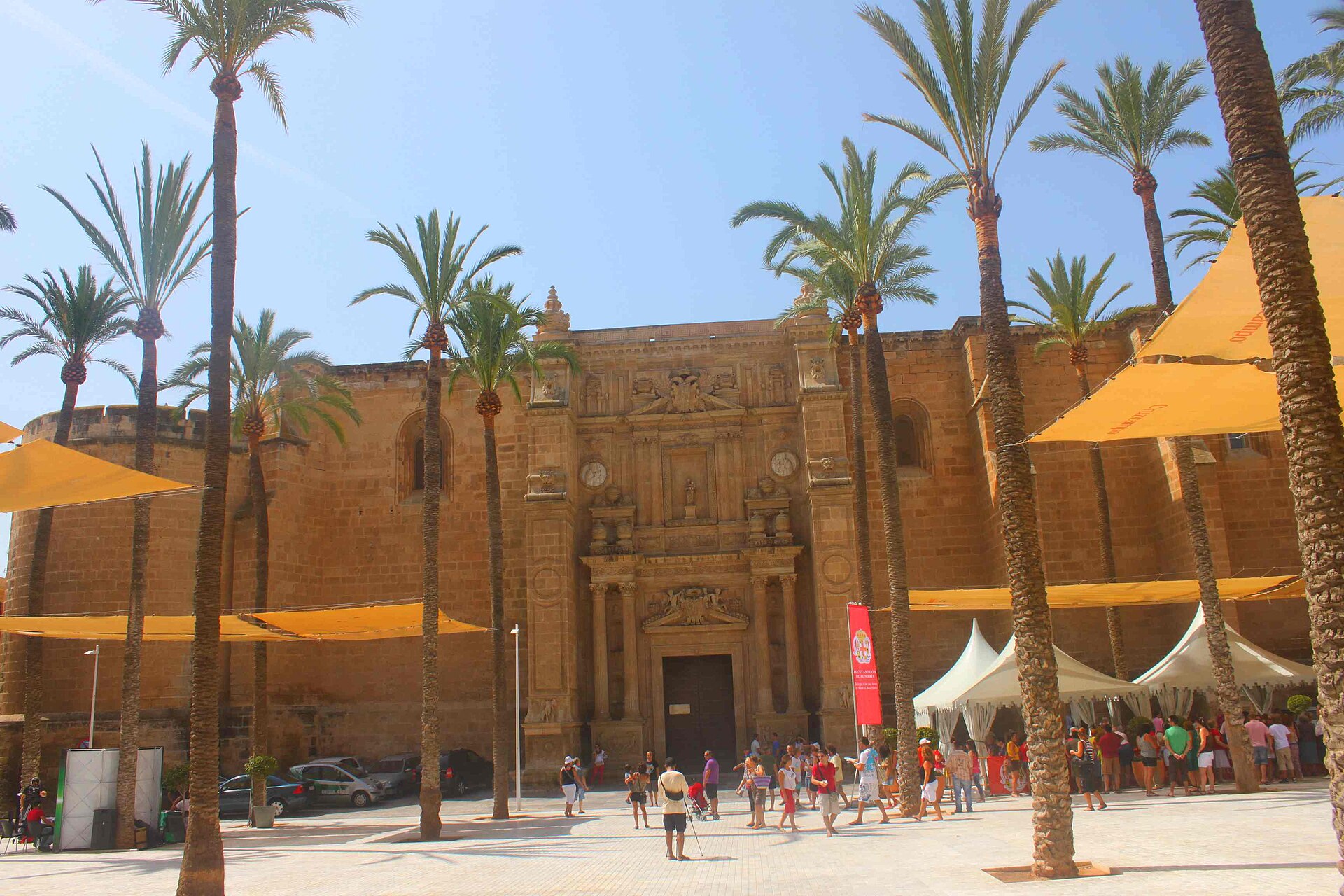
Photo: Benreis, CC BY-SA 3.0
Almería Cathedral
out of 5 0 ratingsAlmería’s Cathedral is one of those rare places where history isn’t just preserved in stone—it breathes, shifts, and endures alongside the city itself. Built in the mid-16th century, its origins were born from tragedy. The devastating earthquake of 1522 had leveled the previous cathedral, along with much of Almería, leaving the city vulnerable. The solution was a structure unlike any other: a cathedral-fortress, designed not only to serve as a place of worship but to withstand future disasters. Rising from the ruins of an old mosque, it became a striking fusion of sacred and military architecture, a dual identity that still defines it today.
The building’s design tells a story of contrasts. Gothic vaults and Renaissance details coexist with the unmistakable features of a fortress—thick walls, narrow slit windows, and sturdy buttresses built to repel pirate raids and enemy attacks. Inside, the atmosphere softens. Soaring arches, intricate carvings, and the play of light through stained glass create a space meant for contemplation. The Baroque high altar, with its gilded figures and dramatic shadows, draws the eye upward, as if lifting the soul along with it. Yet even here, the fortress origins linger in the solidity of the structure, a reminder that this was never just a church.
The interior holds quiet traces of the past. Ancient bishop’s tombs lie beneath the floor, their inscriptions worn away by time, their occupants long forgotten. The wooden choir stalls, once filled with the voices of singers, now echo only with footsteps. In one of the chapels, a revered image of the Virgin Mary draws pilgrims who leave candles and written prayers, seeking solace or miracles. The sacristy, rarely open to the public, guards its treasures—a 16th-century silver cross set with precious stones, among other relics that hint at the cathedral’s long history of devotion and defense.
From the outside, the cathedral appears imposing, its walls built to intimidate. But climb to the roof, and the view transforms. The old city unfolds below, its whitewashed houses cascading toward the sea, where the port once bustled with ships carrying silver and silk. On clear days, the faint outline of the African coast shimmers on the horizon, a reminder of how close this land is to another continent. The rooftop isn’t just a vantage point; it’s a testament to the cathedral’s past role as a watchtower, scanning the sea for danger while serving as the city’s spiritual heart.
Almería’s history is written into the cathedral’s stones. During the Peninsular War in the early 1800s, it sheltered townspeople from invasion. Later, in the Spanish Civil War, its thick walls offered refuge from bombings. Today, it remains both a working church and a living museum, where the past isn’t locked away but woven into daily life. Visitors come for services, concerts, or simply to sit in the quiet, listening to the hollow sound of footsteps beneath the vaulted ceilings. The stained glass, catching the light at different angles, turns the interior into a shifting tapestry of color and shadow.
Almería itself is a city of contrasts—where desert landscapes meet the sea, and medieval fortresses stand beside modern neighborhoods. The cathedral mirrors this duality. It’s a monument to history, yet it’s also part of the everyday. Weddings, organ recitals, and exhibitions take place within its walls, while locals treat it with familiarity, stopping by to chat with neighbors or escape the midday sun. There’s no reverence for the sake of reverence here; it’s a place that belongs to the city, as much as the city belongs to it.
Time has left its mark. Gilding has flaked, plaster has cracked, and some sculptures have lost their sharpness. But these imperfections make the cathedral feel alive, not like a relic behind glass. It doesn’t pretend to be flawless—it simply is, with all its scars and wear. That authenticity is what draws people in. There’s no sterile perfection here, just the sense that history hasn’t ended, but paused, allowing us a glimpse into the lives of those who came before.
The real reason to visit isn’t just the architecture or the artifacts, but the atmosphere. It’s easy to imagine the fear of 16th-century townspeople rushing inside to escape pirates, or the quiet devotion of families gathering for Sunday mass. Today, the cathedral offers a moment of stillness in a busy world. Sitting on a wooden pew in the dim light of the nave, you can almost hear the echoes of centuries of footsteps, voices, and prayers. Almería’s Cathedral isn’t just a building—it’s the city’s living memory, its soul carved into stone.
Day around this place
Where else to go on the same day
Building the day…
Where it is
36.83803, -2.46721