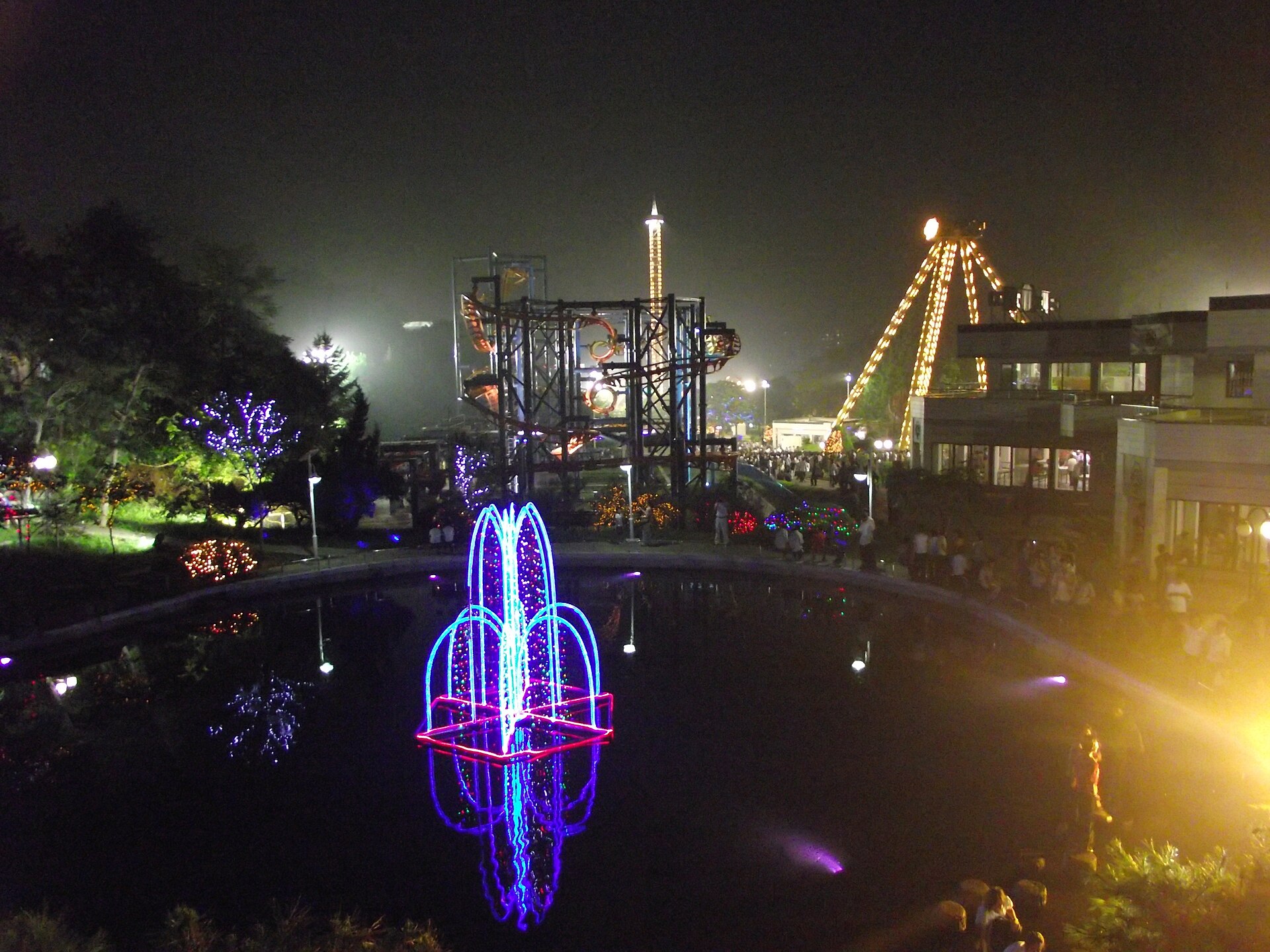
Kaeson Youth Park sits quietly in the heart of Pyongyang, a place where the city reveals itself not just as a political hub, but as a space where people—especially the young and families—come to unwind. Unlike the grand monuments and solemn memorials that dominate the capital’s skyline, this park offers something simpler: a stretch of green where life moves at its own pace. The paths are neat, the lawns carefully tended, and the sculptures scattered throughout carry the weight of history, though not in a way that feels imposing. Instead, they blend into the surroundings, as if reminding visitors that this is a place for ordinary moments, not just grand gestures.
The park was born in the decades after the Korean War, when Pyongyang was rebuilding itself from the ground up. The city wasn’t just reconstructing buildings; it was trying to rebuild a sense of normalcy, creating spaces where people could gather, relax, and imagine a future beyond the ruins. Kaeson Youth Park was one of those spaces, designed to embody optimism in a country still healing from conflict. Over time, it became a fixture of the city, though it never achieved the same symbolic weight as landmarks like Kim Il Sung Square or the Revolutionary Martyrs’ Cemetery. Instead, it remained a place for everyday life, a backdrop to the small rituals of daily existence.
There’s nothing flashy about the park’s design. The architecture is straightforward, almost utilitarian, with none of the grandeur that defines other parts of Pyongyang. The entrance arch, decorated with bas-reliefs of young people engaged in sports and labor, is one of the few elements that stand out. These images aren’t just decoration; they’re part of a larger narrative, one that portrays youth as both the future of the nation and a force capable of overcoming any challenge. It’s a theme that runs through many public spaces in North Korea, but here it feels less like propaganda and more like a quiet affirmation of purpose.
The park’s attractions are modest, more reminiscent of mid-20th-century Soviet designs than anything modern. The Ferris wheel isn’t particularly tall, but it offers a decent view of the city—wide boulevards that seem almost empty on weekdays, orderly residential blocks, and patches of green that stretch toward the horizon. On clear days, you can see the edges of Pyongyang where the urban landscape gives way to countryside. The rides themselves—swings, a small roller coaster, a few carousel horses—are simple, even a little worn, but that only adds to the park’s charm. For locals, this isn’t a place for thrill-seeking; it’s where families come to stroll, where students spread out blankets for picnics, and where older residents take their time walking the paths, enjoying the quiet.
Weekends bring a different energy to the park. Families arrive with children in tow, groups of young people gather on the grass, and the air fills with the sounds of conversation and laughter. It’s not the kind of place where people come to be seen; it’s where they come to be, to spend time with one another without the pressure of spectacle. The atmosphere is relaxed, almost subdued, but there’s a warmth to it that’s hard to miss. For outsiders, it can feel like stepping into a different rhythm of life, one that moves slower and values presence over performance.
The park also serves as a venue for events, particularly during national holidays. On these days, the usual calm gives way to organized celebrations—concerts, sports competitions, and mass gatherings that fill the space with music and movement. For visitors, it can be a striking experience, not because it’s chaotic, but because it’s so carefully orchestrated. There’s no spontaneity in the way people gather or participate; everything follows a script, from the timing of performances to the way crowds disperse. Yet for locals, this is just another way to mark time, a familiar part of life that doesn’t feel forced, even if it is.
What makes Kaeson Youth Park special isn’t its size or its attractions, but the way it reflects the everyday in Pyongyang. It’s not a place that demands attention, nor is it trying to impress. Instead, it offers a glimpse into the quieter side of the city, where people come not for photos or stories to tell later, but simply to be outside, to breathe, to exist. In that sense, it’s less a tourist destination and more a living part of the city’s fabric, one that doesn’t always reveal itself to outsiders but is deeply woven into the lives of those who call Pyongyang home.
For travelers, visiting the park can be an unexpected highlight. There are no souvenir stands, no crowds jostling for the best view, no pressure to document every moment. Instead, there’s the chance to see the city through a different lens—not as a stage for politics, but as a place where people live, work, and find small joys in the spaces between. Walking the paths, watching families share meals on the grass, or simply sitting on a bench as the sun sets over the city can be as memorable as any visit to a more famous landmark. Sometimes, it’s the unremarkable places that leave the deepest impression.