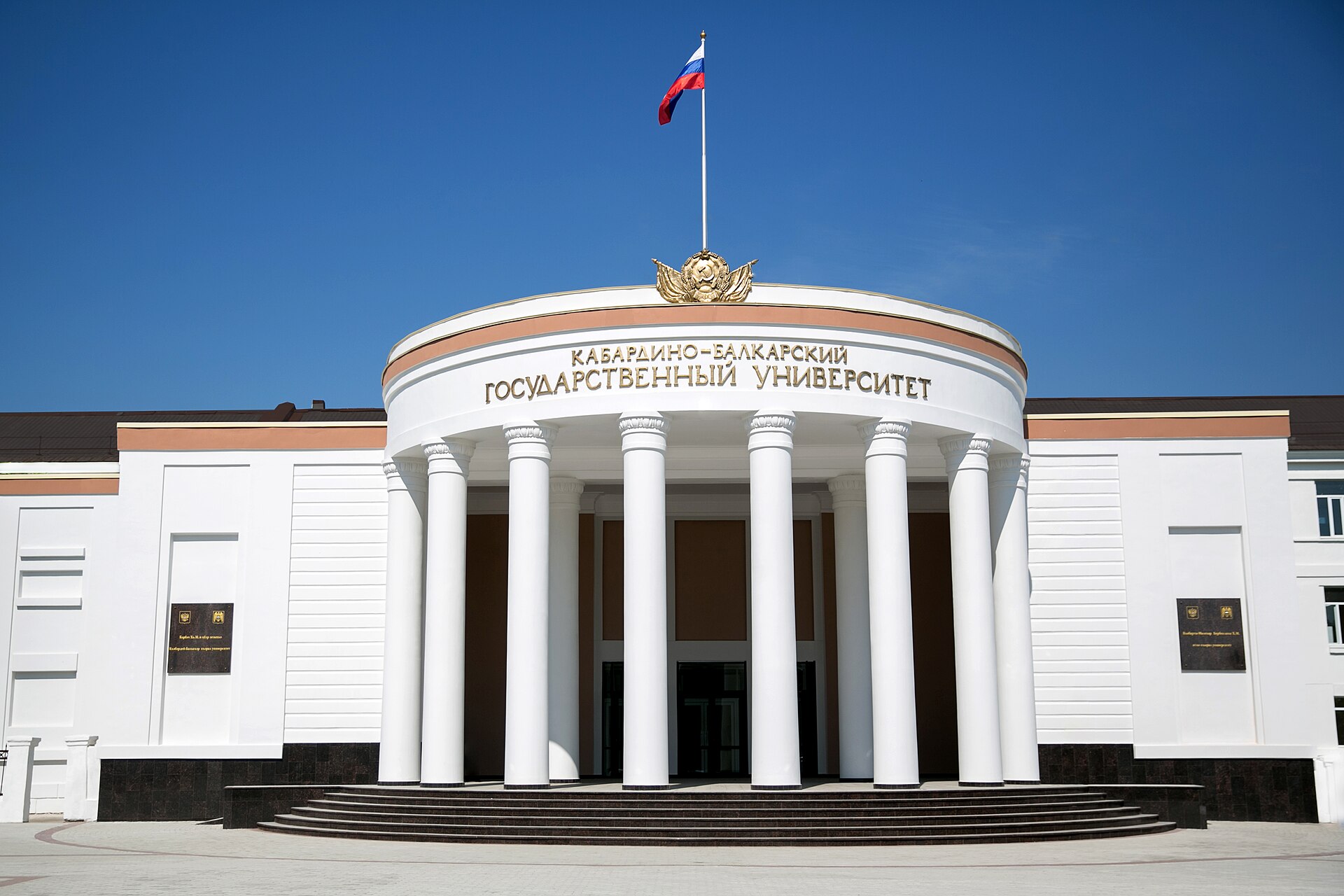
Nalchik’s Kabardino-Balkarian State University isn’t the kind of place that demands attention at first glance. Tucked along Lenin Prospect in the heart of the city, its buildings blend into the urban fabric without the grand facades or towering columns of more famous institutions. Yet behind these unassuming walls, the university has quietly shaped the intellectual life of the republic for nearly seventy years. The campus is a mix of different eras—older structures with high ceilings and long corridors, newer additions with modern finishes—all arranged around a leafy courtyard where students gather between classes. There’s a distinctly Soviet-era feel here, not oppressive but grounded, a place where generations have come to study, debate, and grow.
Founded in 1957, the university marked a turning point for Kabardino-Balkaria. Before its establishment, higher education in the region was limited to scattered faculties or branches of institutions from elsewhere in the country. The creation of a local university wasn’t just about academics; it symbolized the republic’s growing autonomy, its ability to cultivate its own intellectual and cultural identity. The first rector, Hamid Mashevich Berbekov, after whom the university is now named, was more than an administrator. He assembled a faculty from across the Soviet Union, ensuring that young people in the republic could pursue education without leaving home. His legacy is still felt in the institution’s ethos—a commitment to accessibility, regional development, and the belief that knowledge should serve the community.
The architecture of the university tells its own quiet story. The main building, constructed in the 1960s, is a classic example of Soviet modernism: clean lines, large windows, and a lack of ornamentation that reflects the era’s functionalist ideals. Inside, the spaces are utilitarian but not unwelcoming—wide hallways, lecture halls with ample natural light, and staircases worn smooth by decades of use. Over time, the campus expanded, with new wings added in different architectural styles. Some structures bear the marks of the Brezhnev era, others the more experimental approaches of the post-Soviet period. Yet despite these differences, the buildings function as a cohesive whole, each serving a role in the university’s daily life.
Beyond its academic function, the university is a hub of cultural and scientific activity. It hosts conferences, research projects, and public lectures, while its museums and exhibition spaces offer glimpses into the institution’s past. The university history museum is particularly compelling, housing documents, photographs, and personal artifacts that trace the evolution of both the school and the republic. Old textbooks, graduation certificates, and faculty publications reveal how education here has mirrored broader social changes. For many locals, the university is more than an alma mater—it’s a living archive of family histories, a place where parents, grandparents, and even great-grandparents once studied.
Student life here has a rhythm all its own. Nalchik isn’t a bustling metropolis, but it’s far from sleepy. The university fosters a vibrant campus culture, with student-run clubs, sports teams, and artistic groups. There’s a university theater, a choir, and dance ensembles that perform both locally and beyond. Traditional Kabardinian and Balkarian dances are especially cherished, preserved and practiced by students who see them as part of their cultural heritage. During the warmer months, the courtyard often transforms into an open-air venue for concerts and festivals, drawing crowds from across the city. The atmosphere is familial—professors know students by name, upperclassmen mentor freshmen, and the sense of community extends beyond the classroom.
The university’s influence stretches far beyond its campus. It trains teachers, doctors, engineers, and economists who go on to work in Kabardino-Balkaria and beyond. Many graduates remain in the region, becoming part of the local intelligentsia, contributing to science, education, and public life. The institution maintains ties with universities across Russia and participates in international programs, bringing in visiting professors and offering students exposure to global perspectives. This outward-looking approach helps bridge the gap between the republic and the wider world, ensuring that education here isn’t insular but connected to broader ideas and innovations.
Walking through the university grounds, it’s impossible not to reflect on the countless lives shaped within these walls. Politicians, scientists, writers, and doctors—all began their journeys here. For many, the university was more than a place of learning; it was a starting point, a place where ambitions took root. Even those who left Nalchik often return for reunions, sharing stories of how their time here influenced their paths. The university has become a symbol of youth, of first steps into adulthood, of the choices that define a life.
Today, the university continues to evolve. New programs are introduced, laboratories are updated, and teaching methods adapt to modern demands. Yet amid these changes, the institution retains what makes it unique: a spirit of openness, a respect for tradition, and an enduring commitment to knowledge. It’s a place where the past and future intersect daily—in lecture halls, in research discussions, in the casual conversations of students lounging in the courtyard. For anyone visiting Nalchik, the university offers more than just a glimpse into local history or architecture. It’s a chance to understand the pulse of the city, to see how education, culture, and community intertwine in a place that has quietly shaped generations.