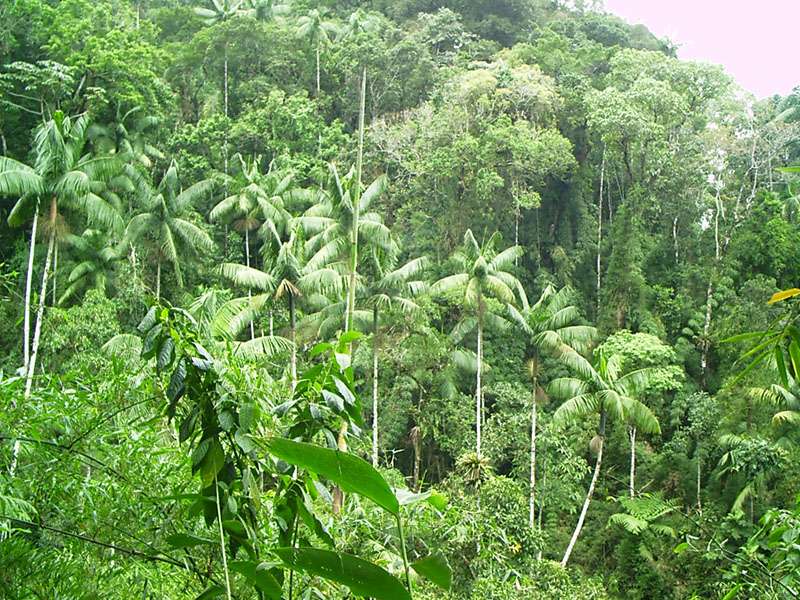
Itatiaia isn’t just a mountain—it’s a world unto itself, folded into the green contours of Brazil’s landscape. Straddling the border between Rio de Janeiro and Minas Gerais, it rises above the surrounding terrain like an ancient sentinel, watching over the passage of time. The name, derived from the Tupi language, translates to "the singing stone," though few today would claim to hear its melody. Still, the place carries an echo of distant eras, a quiet reminder of something older than memory. As the highest point in Rio de Janeiro state and one of Brazil’s oldest national parks, established in 1937, Itatiaia is a place where nature isn’t just beautiful—it’s vast, untamed, and strangely fragile.
Climbing Itatiaia feels like stepping into another dimension. The lower slopes are draped in dense Atlantic Forest, where centuries-old trees shelter waterfalls, crystal-clear streams, and rare plants found nowhere else on Earth. Higher up, around two thousand meters, the forest gives way to rocky plateaus, where mist swirls in the wind and hardy shrubs cling to life in the thin air. At the summit, 2,892 meters above sea level, the reward for the effort is a view that stretches beyond the horizon—endless valleys, winding rivers, and distant ridges dissolving into the haze. The air up here is cooler, sharper, as if the world itself has shifted.
The history of Itatiaia is woven into the story of Brazil’s exploration. Portuguese colonizers first documented the mountain in the 16th century as they pushed inland, but Indigenous tribes had long revered it as sacred ground. By the 19th century, Itatiaia became a magnet for scientists—botanists, geologists, and naturalists drawn to its unique ecosystems. Among them was the German researcher Carl Friedrich Philipp von Martius, whose work laid the foundation for the national park. Today, the area remains a hub for ecological study, particularly in conservation, as researchers monitor its delicate balance of life.
The park itself is more than just the mountain. It sprawls across valleys, gorges, and plateaus, home to over three hundred bird species, from vibrant toucans and hummingbirds to rare parrots. The forests shelter monkeys, sloths, tapirs, and even the elusive jaguar, though sightings are rare. For hikers, Itatiaia offers trails of every difficulty, from gentle walks through the lowlands to multi-day treks up the peak. One of the most popular routes leads to the Véu da Noiva waterfall, where water plunges from a height of nearly fifty meters, creating a shimmering curtain of spray.
The mood of Itatiaia shifts with the seasons and the time of day. Mornings are shrouded in mist, the mountains looming like silent guardians. By midday, the sun burns through, filling the air with the calls of birds and the scent of blooming flowers. As evening falls, the light softens into hues of orange and violet, and the temperature drops, leaving a quiet that feels almost sacred. On clear nights, the sky becomes a spectacle—stars so bright they seem within reach, the Milky Way a luminous river across the darkness.
Itatiaia has a way of making you feel small in the best possible sense. Here, the noise of daily life fades, replaced by the rhythms of the natural world. Yet the park also serves as a reminder of how precarious these places can be. Despite its protected status, Itatiaia faces threats: illegal logging, poaching, and climate change all endanger its fragile ecosystems. Still, the efforts of scientists, conservationists, and local communities offer hope that this landscape will endure for generations to come.
A visit to Itatiaia isn’t just a trip—it’s an experience that lingers long after you leave. There are no crowds, no neon signs, no manufactured attractions, just the raw beauty of the land. For some, it’s a test of endurance; for others, a refuge from the chaos of modern life. For many, it becomes a place of quiet revelation, a reminder that nature isn’t just something we pass through—it’s something we’re part of. And in a world that often feels too fast, too loud, Itatiaia offers a rare chance to slow down and remember what it means to simply be.