Nestled among the quiet streets of Simferopol’s old quarter, the Crimean Karaite Historical and Ethnographic Museum feels like a place where time moves at its own unhurried pace. It isn’t just a collection of artifacts—it’s a living record of a people who, for centuries, called Crimea home. The Crimean Karaites, or Krymchaks, are a small ethnic group whose history is deeply woven into the fabric of the peninsula. Their culture carries echoes of different eras, shaped by ancient traditions and the influences of neighboring peoples. The museum exists as an attempt to preserve what could still be saved after the upheavals of the twentieth century, when the Krymchak population dwindled dramatically.
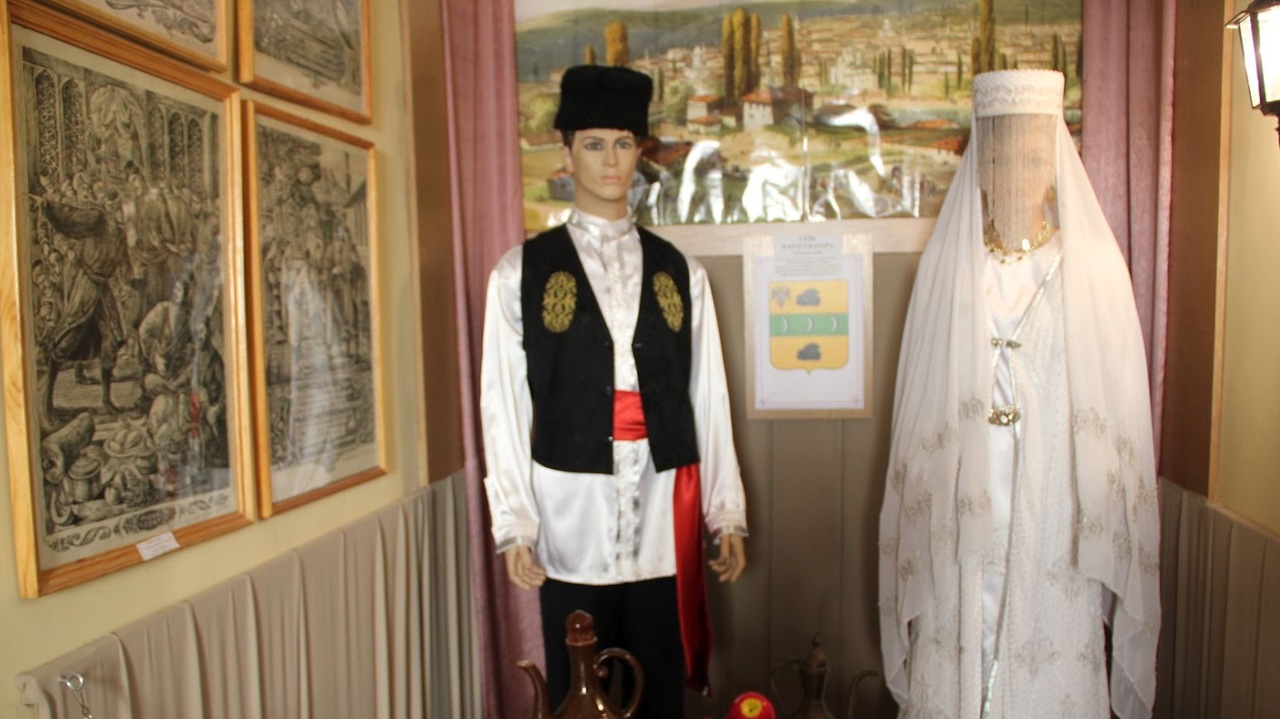
The building itself doesn’t stand out at first glance. It’s an unassuming two-story house, much like many others in Simferopol, but inside, it holds objects that tell the story of everyday Krymchak life. The exhibits include traditional embroidered costumes, household items, old photographs, and documents. A special place is reserved for religious artifacts, as the Krymchaks practiced Judaism with unique traditions that set them apart from other Jewish communities. For instance, the museum displays Torah scrolls written in Hebrew but incorporating elements of the Krymchak dialect, a language that once filled the streets of Simferopol and other Crimean towns.
The history of the Krymchaks stretches back centuries. Some scholars suggest their ancestors arrived in Crimea during antiquity, blending with the local population and adopting Judaism. Others link their origins to the Khazars or medieval Jewish settlers from Byzantium. By the time Crimea became part of the Russian Empire, the Krymchaks had already formed a distinct ethnic group with their own language, customs, and crafts. They lived primarily in cities like Simferopol, Karasubazar (now Belogorsk), and Feodosia, working in trade, crafts, and agriculture. Though their communities were small, they were tightly knit, and even during the Soviet era, they made efforts to preserve their identity.
The museum opened in the late twentieth century, when it became clear that Krymchak culture was at risk of disappearing. By then, many traditions had faded, and the number of native speakers had dwindled to just a handful. The exhibits were gathered piece by piece—family heirlooms, personal memories, and reconstructed details of daily life. Today, visitors can see more than just historical objects; they can hear stories of how the Krymchaks lived through different periods. One room recreates the interior of a traditional home, complete with low couches, copper cookware, and embroidered tablecloths. It’s not just a display but an attempt to show what life was like for people who considered Crimea not just a place to live, but a homeland.
The museum also acknowledges the darker chapters of Krymchak history. During World War II, many perished under Nazi occupation, and those who survived later faced repression and forced relocation. The community never fully recovered from these losses. While the museum doesn’t shy away from these events, it doesn’t dwell on them either. Instead, it focuses on life—how people preserved their traditions even in the hardest times. The exhibits include photographs of weddings and celebrations from the mid-twentieth century, moments when Krymchak culture seemed on the brink of extinction but still endured.
Today, the museum serves not only as a destination for visitors but also as a gathering place for those who remember the Krymchak language or want to learn more about it. Lectures, meetings with descendants, and workshops on traditional crafts are held here. Occasionally, Krymchak songs fill the halls, briefly bringing the past to life. The museum can’t restore what’s been lost, but it helps keep the memory of a people who were once an integral part of Crimea’s cultural landscape alive.
A visit here leaves a mixed impression. On one hand, it’s a reminder of how fragile human memory is and how easily entire cultures can vanish. On the other, there’s a sense of genuine interest in history, a determination not to let it fade away. The Krymchaks may never have been a large community, but their contribution to Crimea’s history is undeniable. This museum in Simferopol is a modest yet meaningful effort to tell their story, to show that even a small group can leave a lasting mark.
If you find yourself in Simferopol, it’s worth stopping by, if only for an hour. Not for grand exhibits or lavish halls, but to touch a history that rarely makes it into textbooks. There are no crowds, no rush—just quiet and the feeling that behind every object lies a life, a fate. That’s why the museum lingers in the memory longer than many other city attractions. It doesn’t aim to impress or entertain; it simply tells its story—honestly and without embellishment.