Perched on a gentle rise overlooking Sevastopol’s Southern Bay, Historical Boulevard is one of those rare places where the past doesn’t just linger—it breathes. The city’s layered history is etched into every path, every cannon, every gnarled tree that has stood here since the mid-19th century. Originally conceived as a leisurely promenade for the city’s residents, the boulevard was soon swept up in the turmoil of the Crimean War, becoming a frontline in the brutal siege of 1854–1855. Today, it remains a living monument, where the echoes of battle coexist with the quiet rhythms of daily life.
The boulevard’s strategic importance was clear from the moment the first fortifications were dug into its slopes. During the siege, this was no ordinary park but a critical defensive position, part of the network of bastions and earthworks that held back the combined forces of Britain and France. The names of the surrounding streets—Fourth Bastion, Malakhov Kurgan—still carry the weight of those months of relentless fighting. Walking along the tree-lined paths, it’s easy to imagine the scene: soldiers taking cover behind the same oaks that now provide shade for strollers, the distant boom of artillery echoing across the hills.
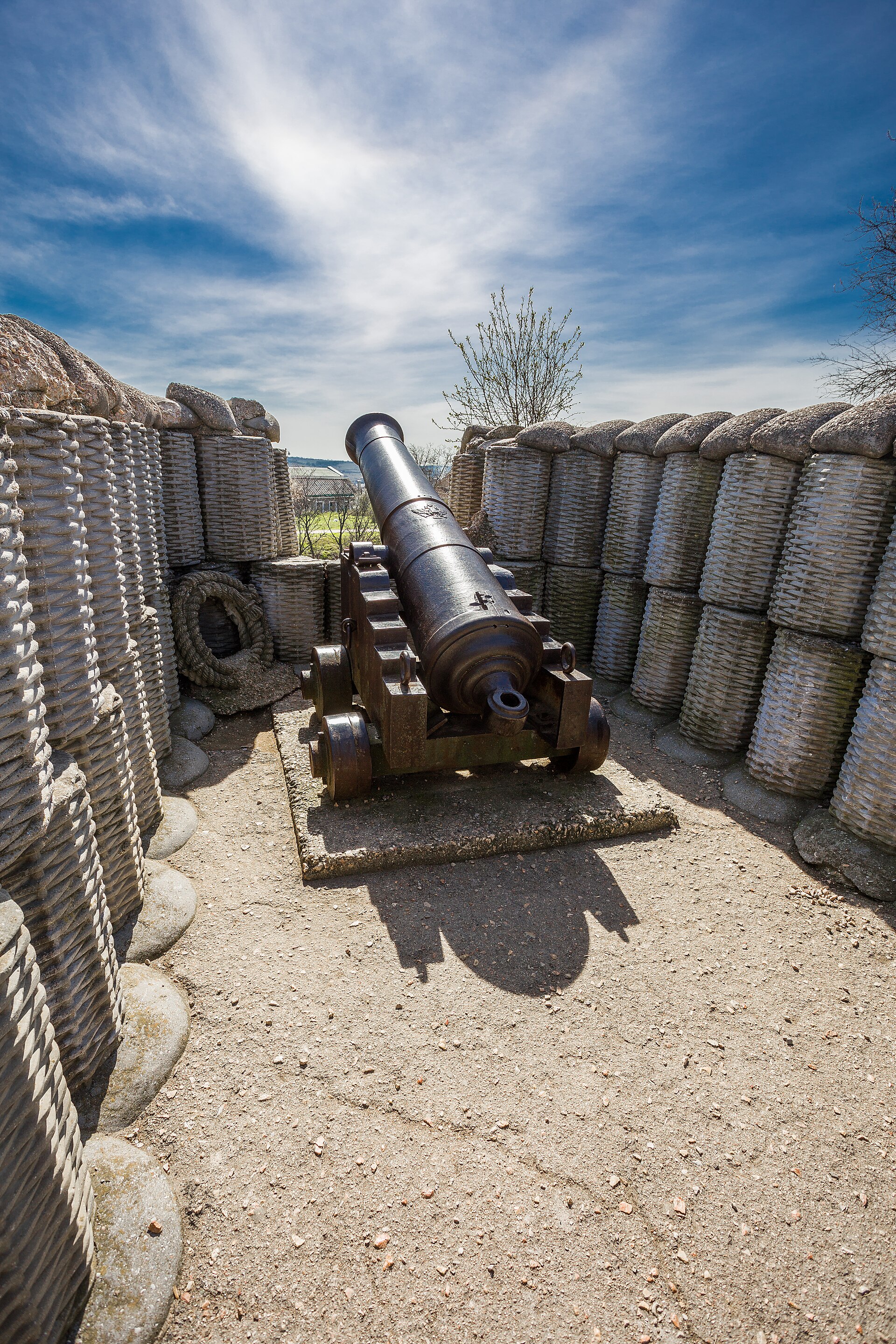
At the heart of the boulevard stands a memorial complex dedicated to the defenders of Sevastopol. The centerpiece is a solemn monument to the fallen, its stone surfaces worn smooth by time and weather. Nearby, the remnants of earthen fortifications snake through the greenery, their uneven contours a stark reminder of the hand-dug trenches that once crisscrossed the area. Scattered among the trees are the cannons, their rusted barrels pointing toward the bay as if still guarding the city. These are not replicas but the original guns that fired upon the enemy fleets, their presence lending the place an unsettling immediacy.
The architecture here is unassuming, almost austere, reflecting the boulevard’s dual role as both a public space and a military stronghold. The buildings that do exist—like the rotunda housing Franz Roubaud’s famous panorama—were designed with function in mind, their simple lines blending into the landscape rather than dominating it. The panorama itself is a marvel of 19th-century artistry, a massive circular painting that immerses viewers in the chaos of the Battle of Malakhov Kurgan. Roubaud spent years researching the scene, interviewing survivors and studying military records to recreate the moment with almost cinematic precision. Standing in the center of the rotunda, surrounded by the 360-degree canvas, it’s impossible not to feel the heat of the battle, the smoke, the desperate cries of the wounded.
Beyond its historical significance, the boulevard has long been a favorite retreat for Sevastopol’s residents. In the evenings, locals gather on the benches, watching the sun dip below the horizon as the lights of the city begin to twinkle across the bay. Children play near the cannons, their laughter mingling with the rustle of leaves in the breeze. The contrast is striking: a place of war transformed into a space of quiet reflection, where the past and present coexist without tension. The trees, some of which have stood here since the 1850s, bear silent witness to this shift, their roots tangled in soil that once ran red with blood.
What makes Historical Boulevard so compelling is its ability to hold these contradictions. It is both a battlefield and a park, a site of memory and a place of everyday life. The views from the top are breathtaking—on clear days, the entire sweep of Sevastopol’s harbor unfolds below, a mix of modern ships and historic landmarks. Yet even as you take in the scenery, the weight of history is never far away. The cannons, the trenches, the names on the monuments—all serve as reminders of the sacrifices made here. But the boulevard is not a place of gloom. Instead, it feels like a conversation between eras, a space where the stories of the past are not just remembered but lived alongside the present.
For visitors, the boulevard offers more than just a history lesson. It’s a place to wander, to sit, to let the mind drift between the grandeur of the panorama and the simplicity of a bench under a tree. The paths wind through the greenery, leading to quiet corners where the noise of the city fades into the background. There’s no rush here, no agenda—just the slow unspooling of time, the way it must have felt for the soldiers who once stood guard on these same hills. The air carries the scent of pine and saltwater, a reminder that Sevastopol has always been a city shaped by the sea.
In the end, Historical Boulevard is more than a collection of monuments or a scenic viewpoint. It’s a testament to the resilience of a city that has been rebuilt time and again, each layer of its history leaving its mark. The boulevard doesn’t just commemorate the past—it carries it forward, allowing each new generation to walk the same paths, to touch the same stones, to feel the same connection to a story much larger than themselves. Whether you come for the history or simply for the view, the place has a way of staying with you long after you’ve left.