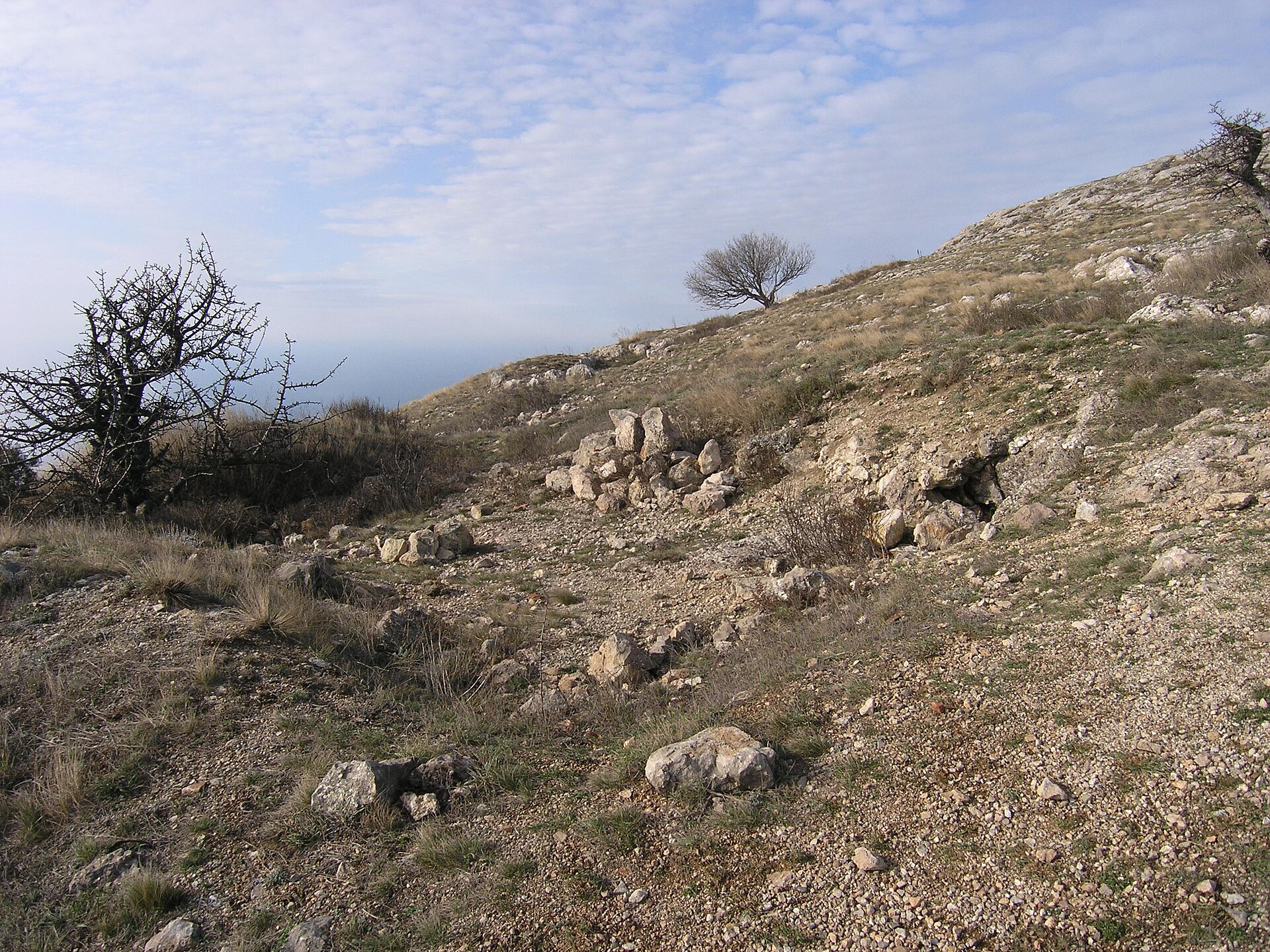
Ilyas-Kaya is one of those places where the Crimean landscape doesn’t just meet the sea—it holds a conversation with it. The mountain rises above Sevastopol like a silent sentinel, its slopes watching over the bays where ships have come and gone for centuries. From the top, the view isn’t just vast; it’s layered with history. The same winds that once guided ancient sailors now brush against the faces of modern travelers, and the rocks beneath your feet have seen empires rise and fall. There’s something humbling about standing where so many others have stood before, looking out at the same horizon.
The mountain itself is modest in height, but its steep, sun-scorched slopes give it a rugged presence. Low shrubs and dry grasses cling to the rock, bleached golden by the summer sun. Locals call it different names—Ilyas-Kaya, the rock, or simply "that hill by the sea"—but whatever you call it, the place speaks for itself. There are no grand palaces or crowded beaches here, just the quiet rhythm of waves below and the occasional cry of gulls overhead. The silence isn’t empty; it’s full of the kind of space that lets you hear your own thoughts.
Ilyas-Kaya has always been tied to Sevastopol’s story. Long before the city existed, the Tauri people lived in these hills, followed by Greeks, Genoese traders, and later Russian sailors. The mountain served as a landmark for ships navigating the coast, and its summit likely doubled as a lookout point. By the 19th century, when Sevastopol became the heart of the Black Sea Fleet, Ilyas-Kaya took on a strategic role. During the Crimean War, its heights may have been used for artillery positions, watching over the approaches to the city. The past here isn’t preserved in monuments or museums—it’s etched into the land itself.
What makes Ilyas-Kaya special is what it lacks. There are no man-made structures to distract from the raw beauty of the place. The absence of buildings or tourist infrastructure means you’re not just looking at a view—you’re part of it. From the summit, the sea stretches endlessly, merging with the sky at the horizon. On clear days, distant capes and bays come into focus, and in the evening, the setting sun turns the rocks into shades of amber and rose. The city below looks small, almost toy-like, a reminder of how vast the landscape really is.
The climb up isn’t difficult, but it’s not a casual stroll either. The paths are narrow and uneven, sometimes slippery after rain. It’s best to wear sturdy shoes and bring water, though the effort is worth it. Most people come for the view, but there’s more to it than that. The air feels different up here—cleaner, lighter—and the quiet makes it easy to slow down. Sitting on a rock, watching the sea, you might find yourself lost in thought or simply content to do nothing at all.
Locals rarely make the trip without a reason, but for visitors, Ilyas-Kaya is one of those places that feels like a secret. Unlike the crowded quays of Grafskaya Pier or the ancient ruins of Chersonesus, it’s rarely busy. You can come at dawn, when mist still clings to the water, or in the late afternoon, when the light softens and the shadows lengthen. Either way, time moves differently here. There’s no rush, no agenda—just the wind, the sea, and the weight of centuries pressing gently against the rocks.
The area around Ilyas-Kaya has its own attractions. Nearby Balaklava Bay, once home to a secret submarine base, now offers a quiet waterfront and a small museum. But even if you don’t venture into town, the walk itself is enough. The key is to take your time. Ilyas-Kaya doesn’t reward those in a hurry. It’s the kind of place where you might stop to watch a lizard dart across the path or pause to listen to the sound of waves crashing against the shore below.
In winter, the mountain transforms. Frost dusts the rocks, and the sea turns a cold, steely gray. The crowds disappear, leaving only the wind and the occasional hiker. It’s a stark, beautiful time to visit, when the landscape feels even more exposed. Summer brings a different kind of life—wildflowers bloom on the slopes, and the air is thick with the scent of sage and salt. The heat can be intense, but the reward is the way the light plays across the water, turning it into a shifting canvas of blues and greens.
If you come to Sevastopol and want to see more than just the usual sights, Ilyas-Kaya is worth the trip. There’s no luxury here, no entertainment, nothing to distract from the land itself. What it offers instead is something rare in travel: a chance to step back, to breathe, and to realize that sometimes the most memorable moments aren’t the ones you plan. They’re the ones that find you when you’re standing still, looking out at the sea, with the wind in your face and the weight of history beneath your feet.