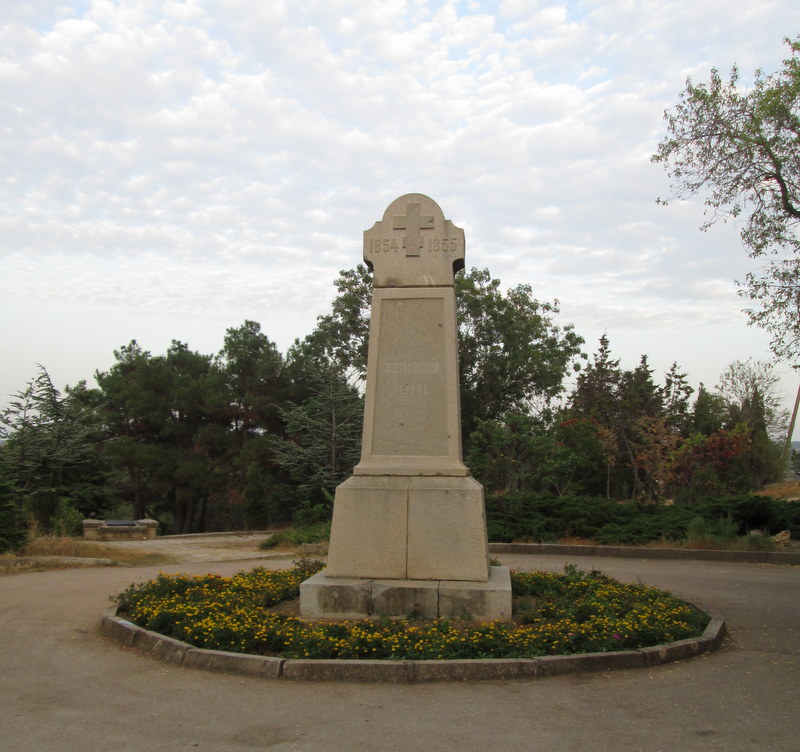
Yazonovsky Redoubt is one of those places in Sevastopol where history doesn’t just linger—it presses against you. Tucked away on the city’s northern side, it’s far less visited than Malakhov Kurgan or Grafskaya Wharf, yet for anyone tracing the footsteps of Sevastopol’s defenders during the Crimean War, it’s a quiet but essential landmark. The redoubt was part of a network of fortifications hurriedly built in the mid-19th century to shield the city from land and sea attacks. Today, it feels more like a forgotten corner of the past, where the earthen ramparts still stand as silent witnesses to the siege that once raged here.
The construction of Yazonovsky Redoubt began in 1854, when it became clear that Sevastopol would be the primary target of the Anglo-French forces. The fortifications were thrown up in haste, yet designed to withstand a prolonged assault. Unlike the stone forts that dotted the coastline, this was an earthwork structure—cheaper and faster to build, but no less formidable in a siege. It took its name from the engineer Yazonov, who oversaw the work. The redoubt’s design was purely functional: earthen walls, ditches, and artillery positions arranged to maximize defense. There was no grandeur here, only the grim efficiency of war.
During the defense of Sevastopol, the redoubt played a crucial role in protecting the city’s northern approaches. Cannons were positioned along its ramparts, firing on enemy lines, while troops stood ready to repel any assault. In 1855, when the allies launched their final offensive, Yazonovsky Redoubt found itself at the heart of the fighting. Though battered by artillery and infantry charges, it held—one of the many small but stubborn defenses that made Sevastopol’s fall so costly. After the war, most of the city’s fortifications were dismantled or left to decay, but the redoubt endured, its earthen walls slowly settling back into the landscape.
What remains today is a shadow of its former self—just the outlines of ramparts and ditches, worn by time and weather. There are no tourist signs, no gift shops, no carefully curated exhibits. This isn’t a place for selfies or guided tours; it’s a spot for those who prefer their history unvarnished. Walking along the old earthworks, you can still sense the lay of the land as it was in the 1850s. To the north, the hills rise where the allied armies once camped; to the south, the bay stretches out, its waters once patrolled by enemy ships. The redoubt sits in the middle, a quiet interruption in the modern city.
The architecture of the redoubt is as straightforward as its purpose. There are no ornate facades or decorative flourishes—just raw earth shaped into walls and gun emplacements. Over the decades, nature has begun to reclaim it, softening the edges of the ditches and covering the ramparts with grass and wildflowers. Yet the structure’s original intent is still visible. The low walls, the sloping embankments, the way the land dips and rises—all of it speaks to the urgency of its construction and the brutal realities of siege warfare. Occasionally, you might see locals walking their dogs or sitting on the grass, unaware of the history beneath their feet.
Yazonovsky Redoubt isn’t the kind of place that draws crowds. There are no dramatic vistas or Instagram-worthy backdrops, just the quiet weight of the past. It’s a place for reflection, for considering the cost of war and the way it reshapes cities. Sevastopol is full of such sites, where history isn’t confined to textbooks but is literally underfoot. The redoubt serves as a reminder that even in the darkest moments, people found the strength to defend what was theirs. It’s a fragment of a larger story, one that’s easy to overlook but impossible to forget once you’ve stood there.
The area around the redoubt is a mix of the old and the new. Modern apartment blocks rise nearby, their bright facades contrasting with the weathered earthworks. It’s a strange juxtaposition—the remnants of 19th-century warfare sitting alongside 21st-century life. Yet the redoubt itself remains untouched by the bustle of the city, a pocket of stillness where the noise of traffic fades and the wind carries only the sound of rustling leaves. There’s something almost meditative about the place, a sense of stepping outside of time.
If you find yourself in Sevastopol and want to see something beyond the usual tourist spots, Yazonovsky Redoubt is worth seeking out. It’s not a museum, not a polished monument, but a raw piece of history that demands to be experienced rather than observed. Walk along the ramparts, listen to the silence, and look out over the bay. You might not hear the echoes of cannon fire or the shouts of soldiers, but the land itself carries their memory. Sevastopol’s history isn’t just in its grand memorials—it’s in these quiet, overlooked places where the past refuses to be erased.