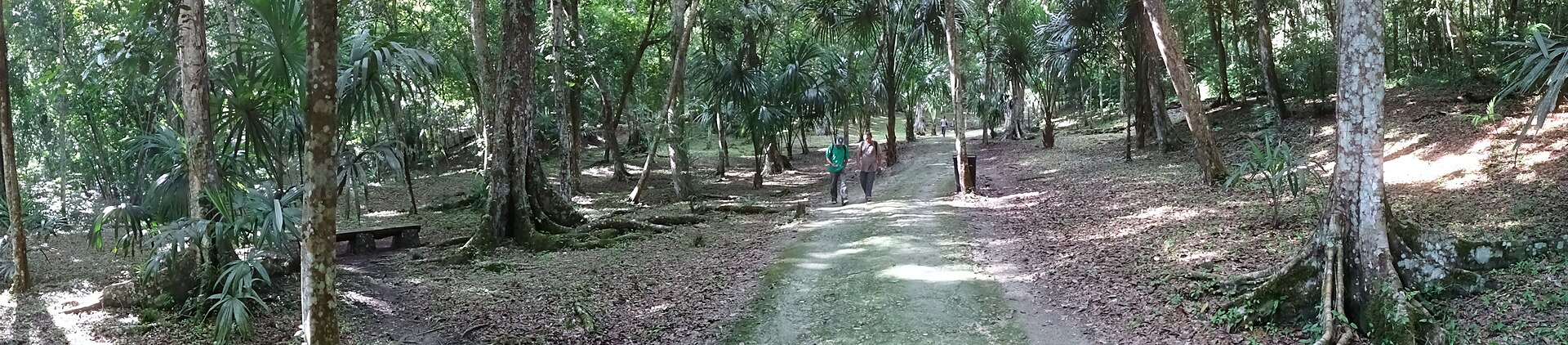
Yaxha is one of those rare places that feels untouched by time, hidden deep within the Petén jungle in northern Guatemala. Far from the well-trodden paths leading to Tikal or Uxmal, this ancient Maya city lingers in quiet solitude, its ruins draped in thick vegetation. The name itself means "green water," a nod to the nearby lake that shimmers with an emerald hue, reflecting the dense forest around it. There are no crowds here, no tour buses—just the distant calls of parrots and the rustle of leaves in the wind. Yaxha isn’t just an archaeological site; it’s a living fragment of history, where every stone whispers of a civilization that thrived over a thousand years ago.
The city’s origins trace back to around 600 BCE, but its golden age came during the Maya Classic period, between 250 and 900 CE. At its peak, Yaxha was a powerful political and religious hub, rivaling neighboring city-states. Archaeologists have uncovered more than five hundred structures here, from towering temples and grand palaces to ball courts and sprawling residential areas. The central plaza, framed by imposing pyramids, was once the heart of ceremonial life, where rituals and gatherings unfolded under the watchful eyes of the gods. Even now, standing in that vast open space, it’s easy to imagine the echoes of ancient chants and the scent of burning copal resin lingering in the air.
Among the most striking landmarks is Temple 216, also known as the Temple of the Red Jaguar. The name comes from a carved relief on its facade, depicting the sacred feline—a symbol of power and divinity in Maya culture. The pyramid rises thirty meters above the jungle floor, and from its summit, the view stretches across the treetops to Lake Yaxha. The water’s greenish tint, caused by the surrounding foliage, gives the lake an almost mystical quality, reinforcing the city’s name. On clear days, the reflection of the sky in the lake creates a mirror-like effect, blurring the line between earth and heaven.
Yaxha’s connection to the cosmos is perhaps most evident in its astronomical observatory, perched atop one of the pyramids. The Maya were master astronomers, and many of their structures were aligned with celestial events. During solstices and equinoxes, sunlight streams through carefully positioned openings, casting dramatic patterns on the stone. These moments serve as a reminder of how deeply the Maya understood the rhythms of the sky, integrating them into their architecture and daily life. Even today, visitors who time their visit right can witness these light displays, a fleeting but powerful glimpse into the past.
For centuries, Yaxha lay forgotten beneath the jungle’s embrace. The first written records of the site appeared only in the late 19th century, when explorers began venturing into Guatemala’s remote interior. Serious excavations didn’t begin until the 1970s, and even now, much of the city remains buried under layers of earth and vegetation. This sense of incompleteness adds to Yaxha’s allure—it feels like a place still holding its secrets, waiting to be uncovered. Unlike more famous ruins, where every corner has been meticulously restored, Yaxha retains a raw, unpolished quality, as if the jungle itself is slowly reclaiming it.
Reaching Yaxha isn’t a simple journey. From the nearest town, Melchor de Mencos, it’s a thirty-kilometer drive along a rough dirt road that winds through dense forest. The trip can take hours, especially during the rainy season, when the path turns to mud and becomes nearly impassable. But that remoteness is part of what makes Yaxha special. There are no souvenir stands, no guided tours with loudspeakers—just the quiet hum of the jungle and the occasional sound of howler monkeys in the distance. The lack of modern distractions allows visitors to experience the site on its own terms, without the usual tourist trappings.
Walking through Yaxha is like stepping into another era. The stone staircases, worn smooth by centuries of footsteps, lead upward toward the pyramids, where the air feels thinner and the past feels closer. It’s impossible not to wonder about the people who once stood in these same spots—what they believed, what they feared, what rituals they performed on these very platforms. The site has a way of slowing time, of making the present feel distant. Even the wind seems to carry whispers, as if the jungle itself is sharing stories that have been passed down through generations.
Lake Yaxha, just beyond the ruins, adds another layer of beauty to the place. Its calm waters mirror the sky and the surrounding trees, creating a sense of harmony between nature and human craftsmanship. Locals speak of spirits that dwell in the lake, their voices sometimes heard at night, drifting across the water. Whether or not those stories are true, there’s an undeniable magic to the place—a feeling that the boundary between the seen and unseen is thinner here than elsewhere.
Yaxha isn’t just a relic of the past; it’s a place where history is still being uncovered. Archaeologists from around the world continue to work here, carefully peeling back the layers of time. Their camps are visible near the ruins, and if you’re lucky, you might even strike up a conversation with one of the researchers. They’re often eager to share their latest findings, offering a glimpse into the ongoing effort to understand this ancient city. For those who want to linger, there are basic camping options or small guesthouses in Melchor de Mencos, where the nights are filled with the sounds of the jungle and the stars shine brighter than anywhere else.
If you’re looking for a place where history feels alive, where the modern world fades into the background, Yaxha is a destination unlike any other. It’s not just a collection of ruins; it’s a testament to a civilization that once shaped this land, leaving behind traces that still resonate today. Every stone, every pyramid, even the lake itself has a story to tell—if you’re willing to listen.