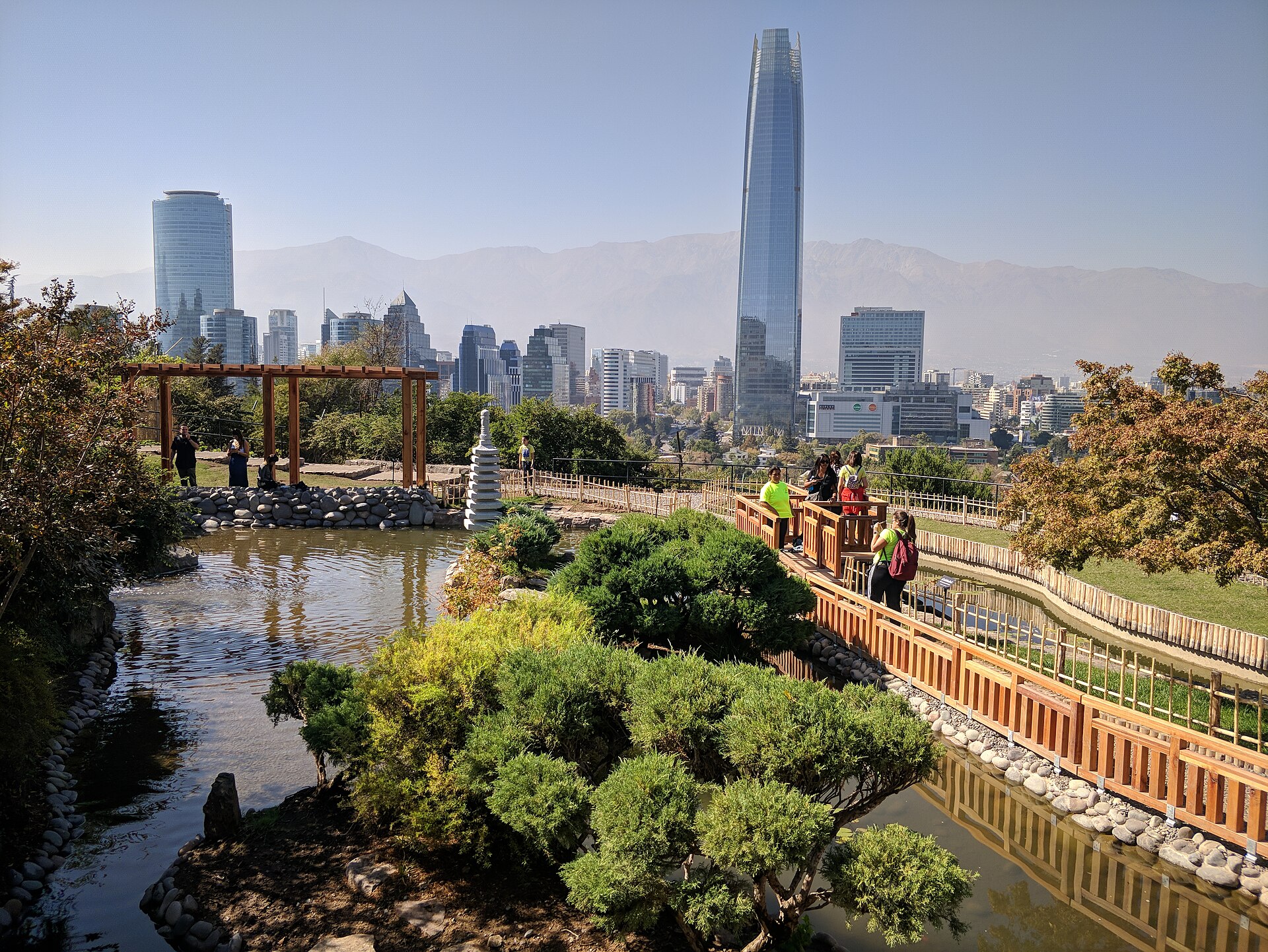
In the heart of Santiago, where the city’s relentless energy usually sets the pace, there’s a place where time seems to soften and the noise of daily life fades into the background. The Japanese Garden is one of those rare urban spaces that feels both apart from and deeply connected to the city around it. Created in the late 20th century as a gesture of friendship between Chile and Japan, it has since become a quiet refuge—a place where the careful arrangement of stones, water, and plants invites visitors to slow down and notice the small, often overlooked details of the world.
The garden is compact but meticulously designed, following the principles of traditional Japanese landscape architecture. Every element, from the winding gravel paths to the carefully placed lanterns, serves a purpose, whether practical or symbolic. The paths guide you past still ponds where koi glide beneath the surface, over arched bridges that seem to float just above the water, and beneath the shade of maples and pines that shift with the seasons. Water is central to the garden’s design, not just for its beauty but for what it represents—flow, renewal, and the passage of time. Small waterfalls trickle into pools, their surfaces mirroring the sky and trees, while the sound of moving water adds a layer of tranquility to the space.
The garden’s architecture carries its own quiet significance. Stone lanterns, reminiscent of those found in Shinto shrines, mark the transition from the ordinary to the sacred. Bridges, whether straight or gently curved, symbolize the journey toward understanding, their forms often echoing the fragility of life. Even the placement of rocks is deliberate, arranged to suggest mountains, islands, or animals, all while maintaining a sense of natural harmony. This attention to detail reflects the philosophy of wabi-sabi, which finds beauty in imperfection and the fleeting nature of existence.
What makes the garden so compelling is how it changes with the seasons and the time of day. In the early morning, the air is cool and still, broken only by the occasional call of a bird. By midday, sunlight filters through the leaves, casting shifting patterns on the ground. As evening falls, lanterns glow softly, transforming the garden into a place of quiet mystery. Winter brings a rare dusting of snow to Santiago, and the garden takes on a different character—bare branches and evergreens dusted with white evoke the serene landscapes of northern Japan. In summer, the shade offers respite from the city’s heat, and the sound of water becomes a soothing backdrop to the rustling leaves.
Despite its central location, the garden feels worlds away from the bustle of Santiago. There are no crowds, no blaring horns, no advertisements—just the occasional murmur of voices or the distant hum of the city, muffled as if heard through water. It’s a place people come to when they need a moment of stillness, whether to read, sketch, or simply sit and watch the koi circle beneath the surface. Occasionally, small cultural events take place here—calligraphy demonstrations, tea ceremonies, or workshops on ikebana—but these are always understated, never disrupting the garden’s peaceful atmosphere.
More than just a tourist attraction, the Japanese Garden is a space for reflection. It doesn’t demand attention with grand gestures or bold colors; instead, it offers subtlety and restraint. The beauty here lies in the details—the way a branch curves, the ripple of water over stone, the play of light and shadow. It’s a place that doesn’t try to impress but simply exists, allowing each visitor to find their own meaning in it. For some, it’s a glimpse into Japanese culture; for others, a reminder to pause and see the world differently.
The garden’s creation was a collaboration between Chilean and Japanese designers, a meeting of two landscapes and sensibilities. Chile is a country of dramatic contrasts—deserts, glaciers, and coastlines—while Japan is known for its refined aesthetics and ability to create harmony in small spaces. The garden in Santiago blends these influences seamlessly. There’s no forced exoticism here; instead, the design respects tradition while feeling entirely at home in its surroundings. The result is a space that feels both familiar and foreign, a quiet dialogue between two cultures.
You don’t need to know anything about Japanese gardens to appreciate this one. You can wander the paths, sit by the water, or photograph a particularly striking view without understanding the symbolism behind it. But if you look closely, you’ll start to notice the layers of meaning. The empty spaces between rocks or trees are just as important as the objects themselves, creating rhythm and allowing the eye to rest. The paths narrow and widen, subtly guiding your pace. These details aren’t accidental—they’re part of a design that encourages not just observation, but engagement.
The Japanese Garden doesn’t leave visitors indifferent. It doesn’t shout for attention, yet those who find their way here often return. Maybe it’s because the garden makes it easy to forget the rush of daily life, or because it offers a rare sense of connection—to nature, to history, to something larger than oneself. It doesn’t tell stories; it lets you experience them. And in that experience, everyone finds something different. Some come for the beauty, others for the quiet. But all leave with the sense that they’ve stepped into a place where time moves just a little slower.