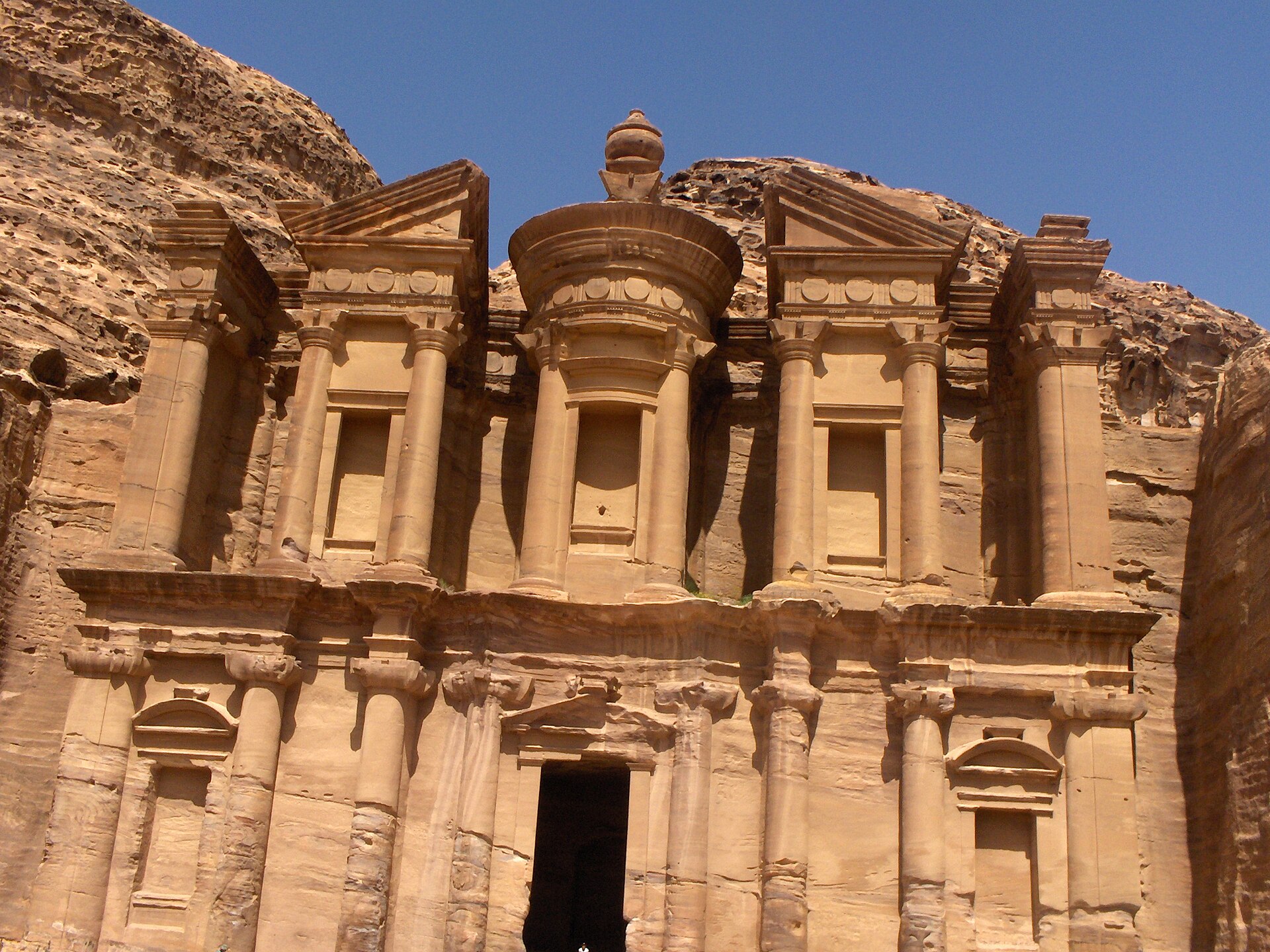
The Tomb of the Roman Soldier—or as it’s more poetically known, the Urn Tomb—stands as one of Petra’s quieter marvels, a place where the weight of history feels almost tangible. Carved into the rose-hued sandstone like so much of the ancient city, it doesn’t immediately command attention the way the Treasury or the Monastery do. Instead, it draws you in slowly, with a quiet dignity that lingers long after you’ve left. The facade is a study in balance, its columns and pediments arranged with a precision that suggests reverence rather than mere craftsmanship. There’s something almost sacred in the way the light plays across the stone at different times of day, softening the edges of time itself.
The name "Tomb of the Roman Soldier" is a modern invention, a label applied long after the Nabataeans had vanished from history. Like many of Petra’s structures, its true purpose remains a mystery. The Nabataeans, who flourished here from the 4th century BCE until their absorption into the Roman Empire, left no written records of who was interred within these walls. Some scholars suggest it may have been a royal burial site, while others propose it served a more ceremonial function. The absence of definitive answers only deepens the intrigue. What we do know is that the tomb’s grandeur reflects the importance of its occupant, whoever they may have been.
Architecturally, the tomb is a fascinating blend of influences, a testament to Petra’s role as a crossroads of cultures. The facade borrows heavily from Hellenistic design, with its Ionic columns and triangular pediment echoing the temples of Greece. Yet the interior tells a different story. Inside, the space opens into a vast chamber, its walls lined with niches that likely once held sarcophagi. The contrast between the ornate exterior and the austere interior is striking, as if the builders intended the tomb to be a public statement as much as a private resting place. Traces of plaster and paint hint at a once-vibrant interior, though centuries of wind and weather have worn them away to mere ghosts of their former selves.
Reaching the tomb requires a climb, a winding path that cuts through the rock and offers glimpses of Petra’s vastness below. The ascent isn’t strenuous, but it demands patience, especially under the midday sun. Each step feels like a deliberate act, a slow unraveling of the layers of time. When the facade finally comes into view, it’s not just the architecture that strikes you—it’s the silence. The wind carries the faintest whispers, and the occasional murmur of other visitors fades into the background. There’s a sense of stillness here, as if the tomb itself is holding its breath, waiting for the past to speak.
In the grand narrative of Petra, the Urn Tomb occupies a curious space. It’s not the most photographed or the most visited, yet it embodies the essence of the city in a way few other sites do. Petra was never just a trading hub or a fortress; it was a living, breathing civilization with its own rituals, beliefs, and artistry. The Nabataeans didn’t just build for utility—they built to endure, to leave a mark on the world that would outlast them. The tomb’s very existence is a reminder of that ambition, even if the names of those it was meant to honor have been lost to time.
The tomb’s story didn’t end with the Nabataeans. Like much of Petra, it was repurposed over the centuries. During the Byzantine era, it was converted into a church, as evidenced by the crosses etched into its walls. Later, it may have served as a shelter for Bedouin travelers or pilgrims passing through a city that had long since faded from its former glory. These layers of history are part of what makes the tomb so compelling. It’s not a static monument but a palimpsest, each era leaving its own faint imprint on the stone.
Standing before the tomb, it’s hard not to feel a mix of awe and melancholy. Awe for the skill and vision of the people who carved this place from the living rock, who shaped stone into something almost divine. Melancholy because, for all its grandeur, the tomb is a silent witness to a world we can never truly know. The Nabataeans left no diaries, no chronicles—only these stones, standing as mute testament to their existence. And yet, there’s a strange comfort in that silence. It invites speculation, imagination, the kind of quiet reflection that Petra seems designed to provoke.
If you find yourself in Petra, don’t rush past the Urn Tomb. Take a moment to sit on the steps, to listen to the wind moving through the canyon, to imagine the voices that once filled this space. It’s not a place for a quick snapshot or a hurried visit. It’s a place to pause, to let the weight of centuries settle around you. In doing so, you might just find that the tomb reveals itself not just as a relic of the past, but as a bridge to it—a fleeting connection to the people who once called this desert city home.