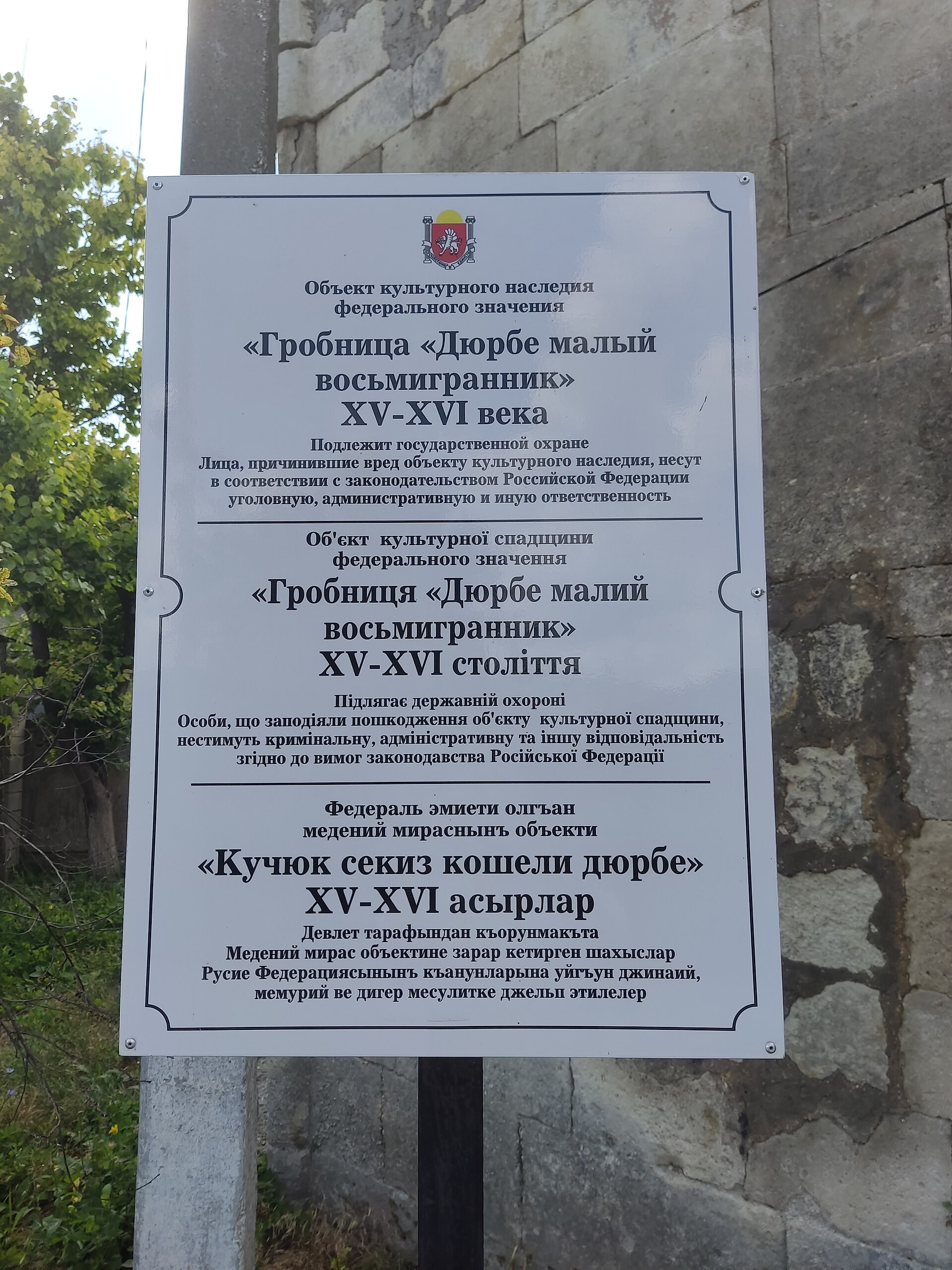
Perched on the quiet outskirts of Bakhchisaray, the Small Octagonal Türbe feels like a whisper from another era. It stands apart from the usual tourist paths, untouched by the bustle of the city center, where time moves at its own unhurried pace. There are no crowds here, no guided tours reciting rehearsed facts—just the stillness of centuries-old stone and the faint rustle of wind through the trees. The place doesn’t demand attention; it simply exists, as it has for hundreds of years, waiting for those who seek it out.
This modest mausoleum is a remnant of the Crimean Khanate, a period when Bakhchisaray flourished as the heart of a powerful Tatar state. Türbes—Islamic funerary monuments—were common in the region, though few have survived as intact as this one. Its eight-sided structure, crowned with a gently sloping dome, is a classic example of Crimean Tatar architecture, blending simplicity with an almost delicate elegance. The design is unassuming, yet the proportions feel deliberate, as if every angle was chosen to create a sense of harmony between the earth and the sky.
No one knows exactly when the Small Octagonal Türbe was built, though historians place it somewhere between the 16th and 17th centuries. This was a time of prosperity for Bakhchisaray, when the city served as the political and cultural capital of the Crimean Khanate. Türbes were erected not only for khans but also for nobles, scholars, and other prominent figures. The identity of the person buried here has been lost to time—perhaps a high-ranking official, a respected elder, or a member of the ruling family whose name never made it into the chronicles. The mystery only adds to the place’s quiet allure.
The structure itself is built from local limestone, its surface weathered into soft golden hues over the centuries. The entrance is marked by a simple arched portal, once adorned with inscriptions or decorative patterns that have long since faded. Inside, the space is sparse, with no elaborate carvings or colorful tiles—just a few niches in the walls, likely meant for lamps or offerings. The dome rises above, its curves creating a sense of shelter, as if the building itself is cradling the memory of those who rest beneath it.
Over the years, the türbe has undergone restorations, though care has been taken to preserve its original character. During the Soviet era, many such monuments were neglected, left to decay as the focus shifted to other historical narratives. Yet this one endured, even if its edges have softened with time. Today, it doesn’t look abandoned so much as patient—standing quietly, as if aware that its story isn’t over yet.
Bakhchisaray is a city where history lingers in the air, and the Small Octagonal Türbe is one of its most understated yet evocative landmarks. It doesn’t compete with the grandeur of the Khan’s Palace or the imposing presence of the old mosques, but that’s precisely what makes it special. There are no plaques explaining its significance, no signs pointing visitors toward it. Instead, it offers something rarer: a moment of stillness, a chance to step away from the well-trodden paths and simply be in a place where the past feels tangible.
If you find yourself in Bakhchisaray, it’s worth taking the short walk from the city center to find this türbe. It sits not far from the Khan’s Palace, yet most tourists pass it by, drawn to more famous sights. But those who do stop here often find that the real magic of the place lies in its quietness. There’s no need for explanations or guided narratives—just the weight of history in the stones, the play of light on the walls, and the sense that you’ve stumbled upon something that has been waiting for you all along.
The Small Octagonal Türbe isn’t a place for grand revelations or dramatic discoveries. It’s a place for reflection, for sitting on the low stone wall nearby and listening to the silence. In a region often defined by its tourist attractions, this unassuming mausoleum offers a different kind of experience—one that feels personal, almost intimate. It reminds you that history isn’t just about the big names and the grand events; sometimes, it’s about the quiet corners where the past lingers, undisturbed.