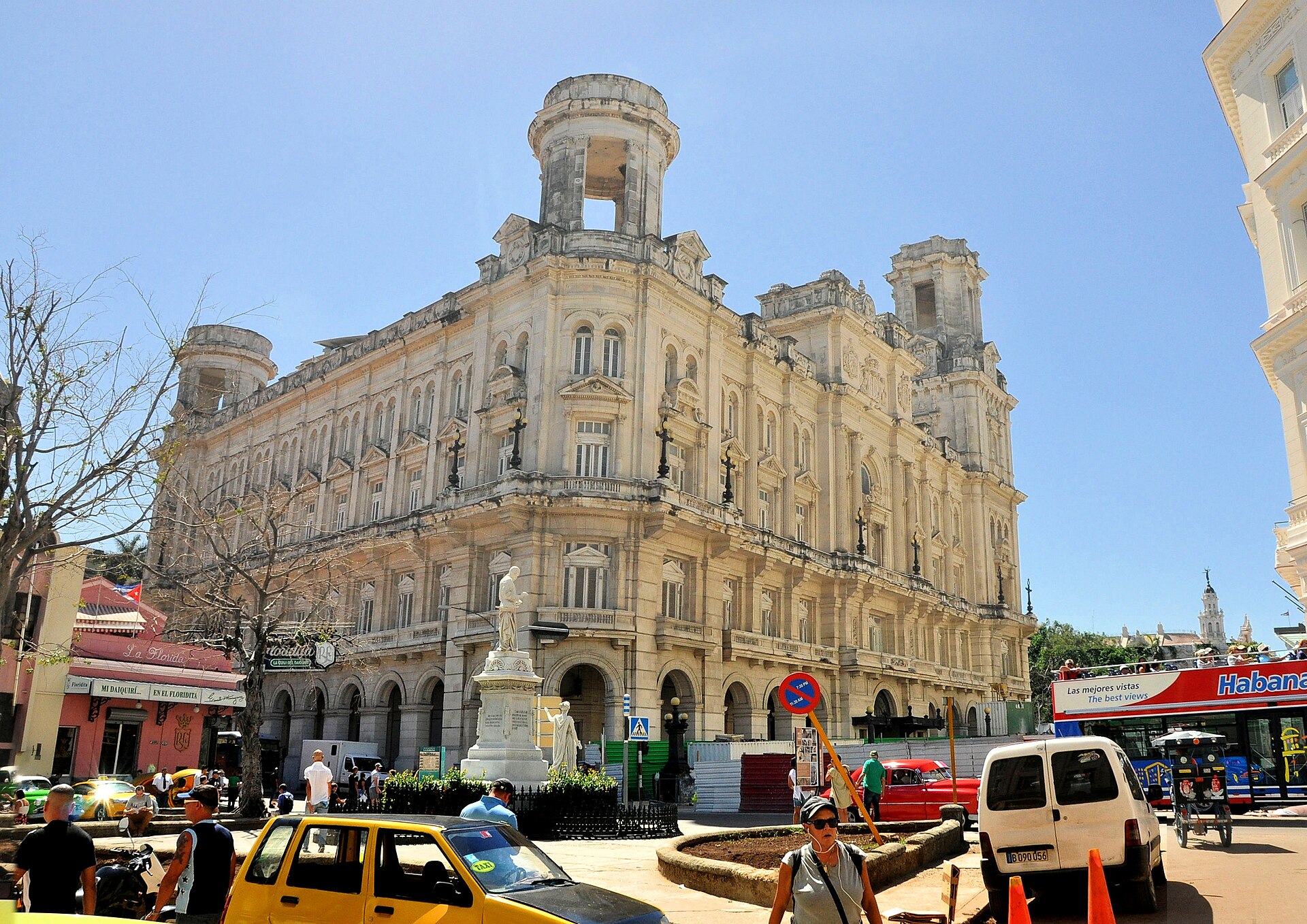
Havana is a city where art seeps into everything—the peeling facades of colonial buildings, the vibrant murals on crumbling walls, the way light falls across a plaza at dusk. But if you want to see Cuban culture in its full depth, where history and creativity collide, the National Museum of Fine Arts is the place to go. It isn’t just a gallery of paintings and sculptures; it’s a conversation across centuries, a story of the island told through the eyes of those who shaped it.
The museum occupies two distinct buildings in the heart of the city, each with its own character. The first, the former Palacio de Asturiana, is a grand structure from the early 20th century, blending eclectic and neoclassical styles. Its high ceilings, marble staircases, and stained-glass windows create an atmosphere of quiet elegance, as if the building itself is urging visitors to slow down and take in the art without hurry. The second building, more modern in design, is dedicated entirely to Cuban works, its clean lines and uncluttered spaces ensuring nothing distracts from the art on display.
The collection spans continents and eras, offering a glimpse into the broader artistic currents that have influenced Cuba. European masters are well represented, from Renaissance works to French Impressionism, with a particular emphasis on Spanish artists. This makes sense—Cuba was a Spanish colony for centuries, and the cultural ties between the two run deep. Paintings by Goya, Zurbarán, and El Greco hang alongside 19th-century Cuban landscapes and portraits, creating a dialogue between traditions. The European works feel familiar, almost expected, but the Cuban pieces beside them add layers of meaning, showing how local artists absorbed and reinterpreted those influences.
Yet the real heart of the museum lies in its Cuban collection. It begins with colonial-era works, where art was often tied to religion and power—elaborate church altarpieces, stiff portraits of governors and aristocrats, all rendered in the formal academic style of the time. But as Cuba moved into the 20th century, artists began to break away from those conventions. Figures like Victor Manuel García, whose bold, colorful canvases pulse with energy, and Amelia Peláez, one of Cuba’s first prominent female artists, blended avant-garde techniques with distinctly Cuban motifs. Their work feels alive, full of movement and personality, a far cry from the rigid compositions of earlier generations.
The mid-20th century was a turning point for Cuba, and the museum captures that turbulence. The 1959 Revolution didn’t just change politics—it reshaped art, too. A new wave of artists emerged, grappling with themes of freedom, identity, and social justice. Their work is often raw, sometimes satirical, always thought-provoking. Wifredo Lam’s abstract, myth-infused compositions stand out, their swirling forms and symbolic figures embodying the spirit of Cuban modernism. Then there’s René Portocarrero, whose paintings weave folk traditions with contemporary techniques, creating something entirely unique. These pieces don’t just reflect history—they challenge it, question it, and sometimes even mock it.
Beyond paintings and sculptures, the museum offers a broader view of Cuban creativity. Graphic art, photography, and installations share space with decorative arts—furniture, ceramics, and everyday objects that reveal how art intersects with daily life. A finely carved colonial-era chair tells a story of wealth and status, while a simple clay pot speaks to the resourcefulness of ordinary Cubans. These pieces ground the museum’s grander works in reality, reminding visitors that art isn’t just something to admire from a distance—it’s woven into the fabric of life.
Walking through the museum is like flipping through the pages of a history book, but one where the illustrations are vivid and the narrative is open to interpretation. There’s no single story here, no didactic voice telling you what to think. Instead, the art invites you to engage, to wonder, to feel. A quiet landscape might evoke the beauty of the Cuban countryside, while a sharp political cartoon could make you pause and reconsider what you thought you knew about the island’s past. The museum doesn’t just preserve art—it keeps the conversation going.
Havana is a city of contrasts—old and new, opulence and simplicity, joy and melancholy all coexisting in the same space. The National Museum of Fine Arts embodies that complexity. It’s not just a repository of the past; it’s a living institution, constantly evolving as new artists and ideas emerge. For anyone who wants to understand Cuba beyond the clichés of music, cigars, and vintage cars, this museum offers something deeper: a chance to see the island through the eyes of those who have loved it, questioned it, and reimagined it over generations.