- Home
- Democratic Republic of the Congo
- Lubumbashi
- Karavia Hotel
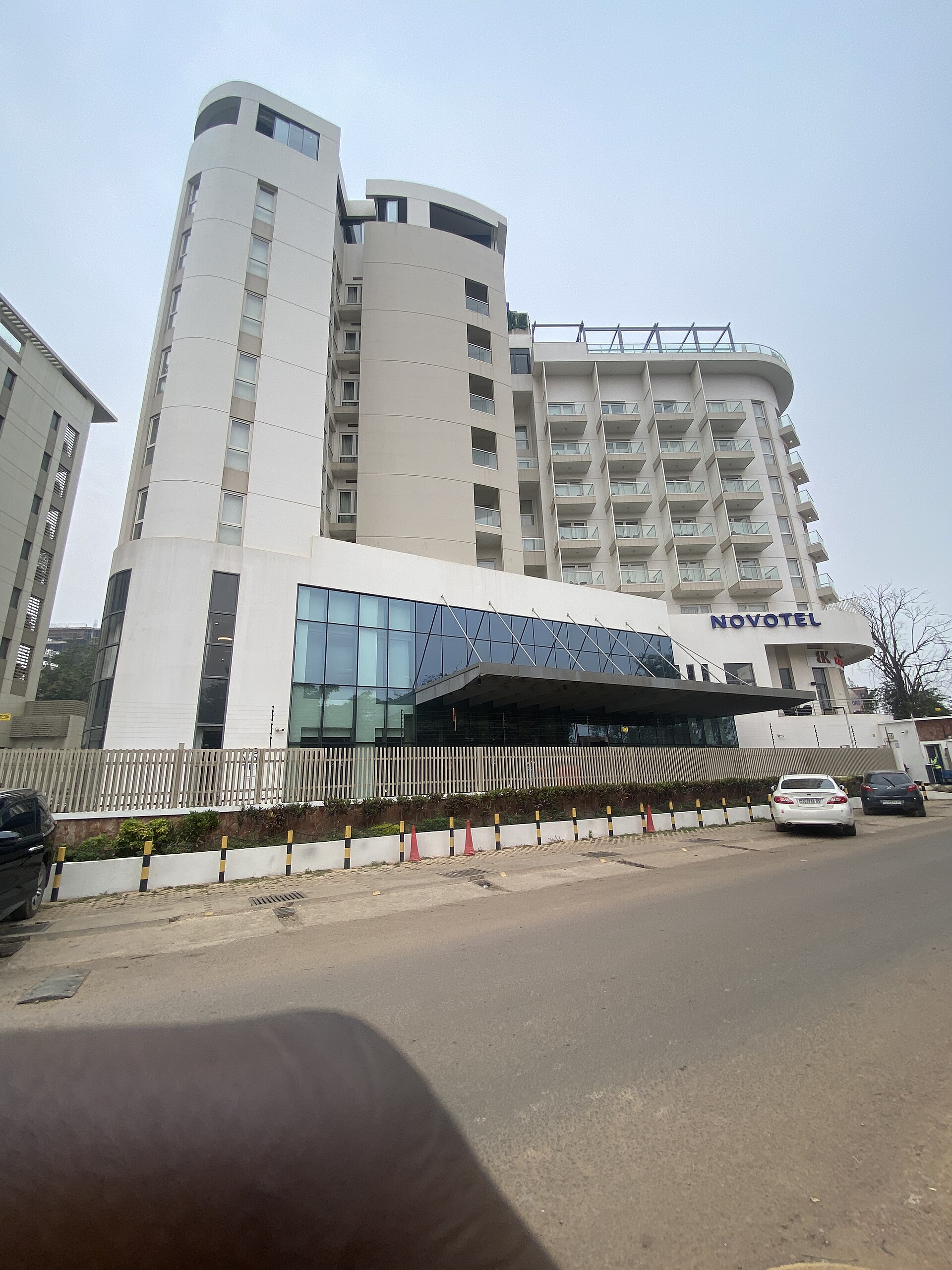
Photo: Guy GTK, CC BY 4.0
Karavia Hotel
out of 5 0 ratingsKaravia Hotel in Lubumbashi is one of those rare places that feels suspended in time, a quiet witness to an era when this city was the beating heart of Central Africa’s mining industry. Built in the mid-20th century, it was never just a hotel—it became a symbol of Lubumbashi itself, reflecting the city’s rapid rise as an industrial hub and its slower, more measured present. Engineers, diplomats, and business travelers once filled its halls, drawn by the promise of Katanga’s mineral wealth. Though the world around it has changed, the hotel remains a place where history and everyday life intersect, almost unnoticed.
The architecture is a blend of colonial grandeur and mid-century modernism, a style that defined much of Lubumbashi during its boom years. The building’s facade, with its high ceilings, wide verandas, and large windows, feels airy and expansive, as if inviting the outside in. Inside, the details tell their own story: marble staircases worn smooth by decades of use, dark wood paneling that absorbs the light, and chandeliers that flicker with the same soft glow they did half a century ago. It doesn’t feel like a museum piece, though. The hotel has aged naturally, its imperfections adding to its character rather than detracting from it.
The rooms are few but far from uniform. Unlike the standardized layouts of modern chain hotels, each one here has its own personality. Tall windows draped in heavy curtains let in just enough light to soften the edges of the space. The furniture, though showing signs of wear, carries a sense of permanence—solid wood dressers, writing desks with ink stains, and beds that creak in a way that feels reassuring rather than annoying. Some rooms still have their original door handles and window frames, their patina a reminder of all the hands that have passed through over the years. The bathrooms, with their freestanding tubs and old-fashioned fixtures, feel like a step back in time, though not in a way that feels inconvenient. There’s a sense of history here, but it’s lived-in history, not something preserved behind glass.
The hotel’s restaurant is a space that feels both grand and unpretentious. The high ceilings and large windows overlooking an inner courtyard give it an open, almost breezy atmosphere, even when the city outside is sweltering. The menu doesn’t try to impress with fusion cuisine or molecular gastronomy—it offers straightforward Congolese and European dishes, prepared the way they’ve been for decades. Breakfasts are simple but satisfying: fresh fruit, strong coffee, and thick slices of bread with local honey. In the evenings, the room fills with the murmur of conversation, the clink of glasses, and the occasional laughter of guests or regulars stopping by for a meal. It’s not a place for fine dining, but it doesn’t need to be. The food is honest, the service unhurried, and the atmosphere one of quiet camaraderie.
Lubumbashi moves at its own pace, and Karavia Hotel fits seamlessly into that rhythm. Located in the city center, close to government buildings and business districts, it’s still set back enough to feel removed from the hustle. The surrounding greenery—trees and gardens that have grown up alongside the hotel—creates a sense of seclusion, as if the place exists in its own small world. There are no tourist crowds here, no neon signs or loud nightlife. Instead, there’s a quiet dignity, the kind that comes from being a place that has seen decades of change but has chosen to remain itself.
The hotel’s story is intertwined with Lubumbashi’s own. In the mid-20th century, the city was booming, fueled by copper and cobalt mines that drew investors and workers from around the world. Karavia Hotel was where deals were made, where foreign engineers and local businessmen gathered to discuss projects over drinks in the bar. Back then, the city was a cosmopolitan crossroads, a place where French, English, and Swahili mixed in the air. Over time, the mining industry’s dominance faded, and Lubumbashi became quieter, less of a global hub and more of a city with its own identity. But the hotel endured, a silent keeper of memories from a time when the city was at the center of things.
Today, Karavia Hotel is more than just a place to stay—it’s a living archive of Lubumbashi’s evolution. Walking through its halls, you can almost sense the layers of history: the excitement of the mining boom, the slower years that followed, and the city’s gradual reinvention. There’s no touristy sheen here, no attempt to package the past for visitors. Instead, the hotel offers something rarer—a chance to see Lubumbashi as it truly is, without filters or exaggerations. For travelers who come not just for business but to understand the city’s soul, it’s the perfect starting point.
The atmosphere at Karavia is a mix of nostalgia and everyday life. Mornings start with the smell of coffee and toast drifting through the halls. During the day, the lobby hums with quiet conversations, the occasional ringing of an old telephone, or the sound of footsteps on the marble stairs. In the evening, the bar becomes a gathering spot, where guests can order a local beer or a glass of wine and watch the city through the large windows. Time seems to move slower here, as if the hotel has its own internal clock, one that isn’t in a hurry to keep up with the outside world. That’s part of its appeal—it doesn’t try to be anything other than what it is.
Karavia Hotel isn’t about luxury or cutting-edge design. It’s about authenticity, the kind that’s hard to find in an age of mass tourism and Instagram-perfect destinations. There’s no forced charm here, no scripted hospitality. Instead, there’s a sense of place, a quiet confidence that comes from having been part of Lubumbashi’s story for so long. For those who appreciate such things, the hotel isn’t just a place to sleep—it’s a small revelation, a reminder that the best travel experiences often come from places that don’t try too hard to impress. In a city that’s still finding its way in the world, Karavia Hotel stands as a steady, unassuming presence, a link between past and present.
Day around this place
Where else to go on the same day
Building the day…
Where it is
-11.65226, 27.45513