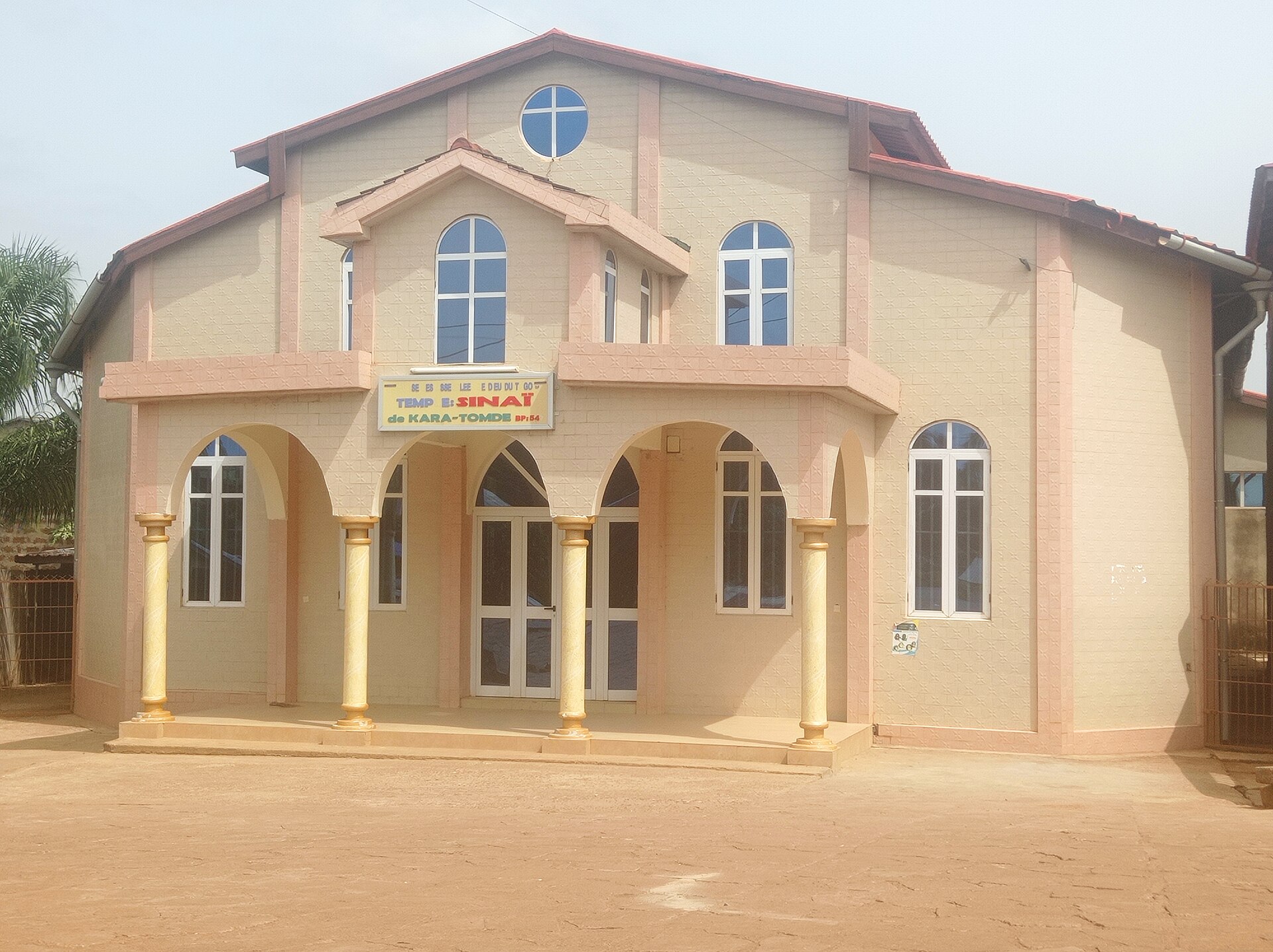
Photo: Essohanambenedicte, CC BY-SA 4.0
Kara Palace Hotel
out of 5 0 ratingsKara Palace sits quietly in the heart of Kara, Togo’s second-largest city, a place where the rhythm of northern life unfolds without the haste of the capital. The hotel isn’t just a place to stay—it’s a quiet witness to the city’s layered history, where the past lingers in the details and the present moves at its own unhurried pace. Kara itself often escapes the notice of travelers drawn to Lomé’s coastal buzz, but those who venture here find a different Togo: one of dusty streets, open-air markets, and a slow, steady pulse that feels more like an invitation than a spectacle.
The building itself tells a story of transition. Its architecture blends the solid, airy forms of colonial-era structures—high ceilings, wide verandas, heavy wooden doors—with the warmth of local craftsmanship. These elements hint at Kara’s past as a trading hub, a stopover between the coast and the Sahel, where goods and cultures once mingled. Inside, the hotel balances this history with modern comforts, offering a refuge for travelers weary from long journeys across the savanna. The spaces feel lived-in without being worn, as if the walls have absorbed the stories of those who’ve passed through over the decades.
Location is part of what makes Kara Palace special. It stands just a short walk from the city’s central market, where the scent of spices and grilled meat mixes with the hum of bargaining voices. Here, vendors sell everything from brightly patterned fabrics to hand-carved wooden stools, their stalls a snapshot of daily life in northern Togo. Nearby, the Catholic cathedral, built in the mid-20th century, stands as a reminder of the region’s colonial ties, while a small museum offers glimpses into the traditions of the Kabye and Tem peoples. The hotel doesn’t just sit in the city—it feels like a natural extension of it, a place where guests can step out and immediately be part of the flow of local life.
Inside, the rooms are simple but thoughtfully designed. Large windows let in the soft, golden light of the Sahel, while furniture made from local wood and textiles woven with traditional patterns add a sense of place. The restaurant serves dishes that reflect Togo’s culinary roots: rich peanut stews, grilled fish, and fresh vegetables, all paired with the crisp, slightly sweet taste of local beer. There’s no pretension here—just good food, served without fuss, the way it might be in a family home.
The heart of the hotel is its inner courtyard, a quiet space where guests gather in the evenings. It’s the kind of place where conversations start easily, whether between travelers swapping stories or locals celebrating a birthday with laughter and music. The atmosphere is relaxed but never dull, much like Kara itself. Business travelers, backpackers, and families all find their way here, each drawn by the promise of a place that feels both welcoming and unassuming.
Kara Palace has also become a kind of cultural hub, hosting occasional art exhibitions or performances of traditional music. For those curious about the region, the staff can arrange visits to nearby villages, where life still follows rhythms set centuries ago. The Kabye highlands, with their terraced fields carved into the hillsides, are a short trip away, as are festivals celebrating everything from harvests to ancestral rites. The hotel doesn’t just offer a bed for the night—it opens doors to experiences that might otherwise go unnoticed.
Over the years, Kara Palace has seen the region change. It stood through Togo’s colonial era, its independence, and the economic ups and downs that followed. Today, it remains a place where the past and present coexist, where the pace of life is slower but no less rich. There’s no grand luxury here, no attempt to dazzle with opulence. Instead, the hotel offers something quieter but more enduring: a sense of belonging, even if just for a few days.
For many, Kara Palace is the starting point for exploring northern Togo. From here, it’s easy to reach Kéran National Park, where elephants and antelopes roam the savanna, or to visit Tem villages known for their intricate pottery and weaving. But the hotel itself is a destination, a place to linger over coffee on the veranda, wander through the market, or simply watch the city wake up in the morning. There’s no need to rush—Kara moves at its own pace, and the hotel moves with it.
What makes Kara Palace special isn’t its size or its amenities, but the way it feels like a part of the city rather than a retreat from it. There’s no forced exoticism, no staged performances of "authenticity." Instead, it offers the real thing: the warmth of a greeting, the taste of a meal cooked with care, the chance to see Togo not as a postcard but as a place where people live, work, and welcome strangers into their world. That’s why so many who stay here once find themselves returning, drawn back by something harder to define than comfort or convenience. It’s the feeling of having glimpsed a place, and a people, as they truly are.
Day around this place
Where else to go on the same day
Building the day…
Where it is
9.55883, 1.21237