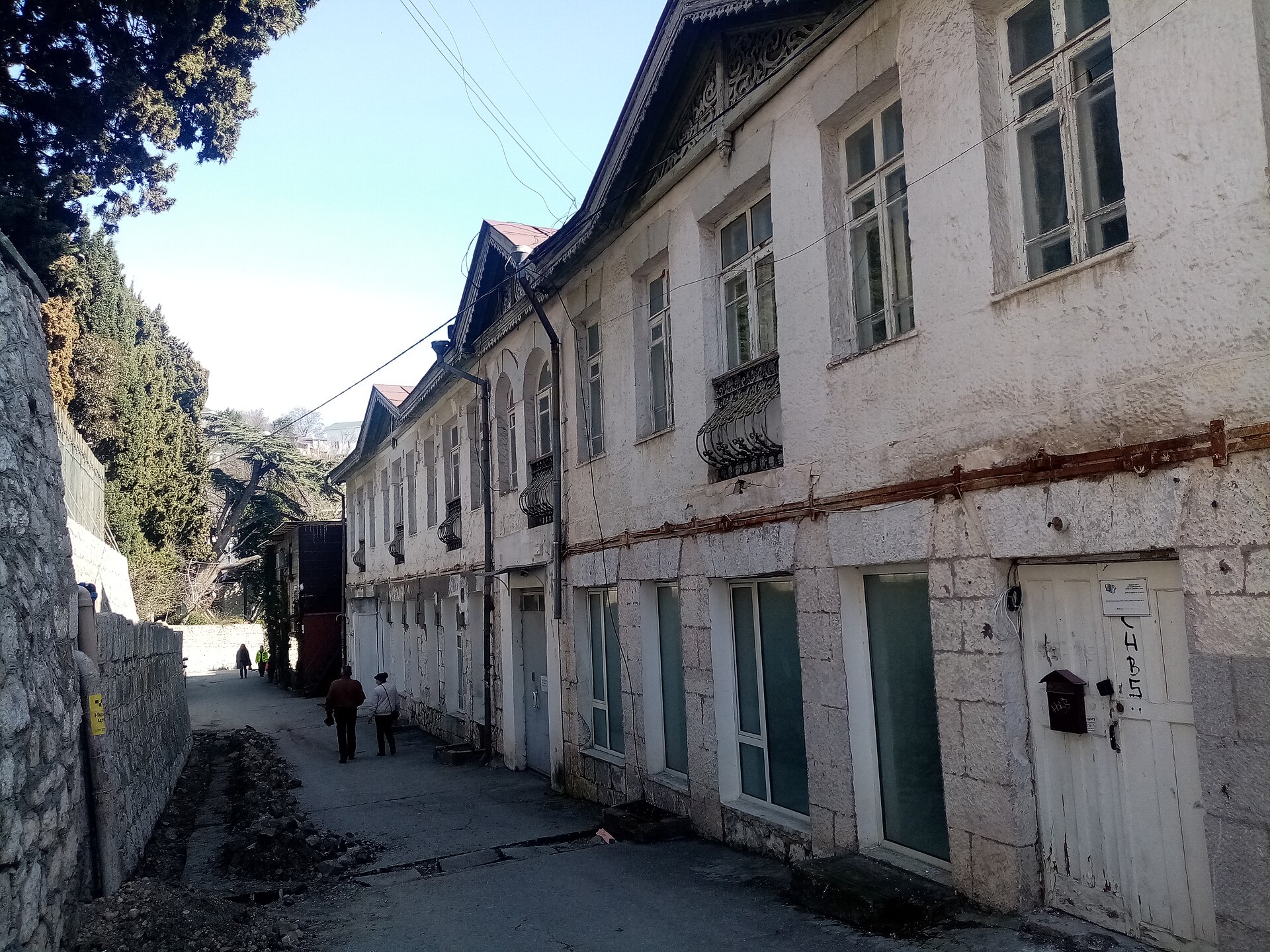
Photo: Kosun, CC0
Hôtel de France
out of 5 0 ratingsNestled along Parkovoye Shosse in Alupka, the Hotel France stands as a quiet witness to a bygone era, its walls holding stories of a time when the Crimean coast was the playground of aristocrats, artists, and intellectuals. Built in the late 19th century, the hotel emerged during a period when Alupka was transforming into one of the most fashionable resorts of the Russian Empire. Its architecture reflects the elegance of that age—tall windows, delicate balconies, and a façade adorned with classical details that once offered guests sweeping views of the Black Sea and the surrounding mountains. Though the building has seen renovations over the decades, its essence remains unchanged, a rare survivor of a world that has otherwise faded into history.
The hotel’s name, likely an homage to France, hints at the aspirations of its creators. In an era when European culture held immense prestige among Russia’s elite, the Hotel France was designed to evoke the sophistication of Parisian salons and grand European hotels. It became a gathering place for those who saw travel not merely as leisure but as a way of life. The halls once echoed with the rustle of silk gowns and the murmur of conversations in French and Russian, while the sound of a piano drifted from the drawing rooms. Even today, stepping into the hotel feels like entering a living portrait of the past, where the ghosts of former guests seem to linger in the corners.
The architecture of the Hotel France is a blend of European influences and local traditions, a style that defined much of the southern Russian coast during that period. The façade is adorned with intricate stucco work, and the entrance is framed by columns that lend an air of grandeur without overwhelming the building’s modest scale. Inside, the original interiors—high ceilings, parquet floors, and ornate fireplaces—spoke of a meticulous attention to detail. While some of these features have been altered over time, enough remains to evoke the atmosphere of refinement that once defined the hotel. The building’s proportions and design create a sense of intimacy, a contrast to the more imposing structures of the era.
Alupka itself was a place of contradictions—a small town with outsized charm, where the grandeur of the Vorontsov Palace and its sprawling gardens coexisted with the quiet rhythm of local life. The Hotel France sits just a short walk from these landmarks, offering a more understated perspective on the town’s history. Unlike the bustling promenades of Yalta or the crowded beaches of modern resorts, Alupka retains a slower pace. The streets around the hotel are narrow and winding, lined with low-slung houses that seem to have grown organically from the landscape. A stroll along the waterfront or a quiet moment on a bench overlooking the sea reveals why this place once captivated so many.
During the Soviet era, the Hotel France, like many historic buildings, lost some of its former glory. It was repurposed as a sanatorium, a place where workers could enjoy the same sea air and mountain views that had once been the privilege of the elite. Yet even in those years, the hotel retained a certain dignity. It became a symbol of accessibility, offering simple comforts without sacrificing the beauty of its surroundings. For many who stayed there, it was a place of respite, where the past and present coexisted in an unspoken harmony.
Today, the Hotel France is more than just a place to stay; it is a bridge to another time. It appeals to travelers who seek not only the conveniences of modern hospitality but also a connection to history. The hotel’s walls seem to whisper stories of the writers, musicians, and thinkers who once walked its halls, drawn to Alupka by its natural beauty and the promise of inspiration. While the grand balls and soirées of the past are gone, the hotel still offers moments of quiet reflection—a terrace overlooking the sea, a leisurely walk through the Vorontsov Park, or an evening spent in the company of old books and fading photographs.
For most visitors, Alupka is synonymous with the Vorontsov Palace and its legendary gardens. Yet those who choose to stay at the Hotel France discover a different side of the town—one that is more personal and less polished. Here, there are no crowds, no souvenir stalls, no rush. Instead, there are cobblestone streets, crumbling facades with stories to tell, and the sense that time moves differently. The hotel serves as a gateway to this quieter Alupka, where the past is not just preserved in museums but woven into the fabric of everyday life.
Crimea has always been a crossroads of cultures, a place where empires and eras have left their mark. The Hotel France is one of the few buildings that has not only survived these changes but continues to thrive, fulfilling its original purpose. It stands as a reminder that travel is more than just movement from one place to another; it is an opportunity to step into history, to feel the weight of time, and to understand the lives of those who came before. In that sense, the Hotel France is more than a building—it is a piece of living heritage, a testament to the enduring allure of a place where the sea, the mountains, and the past converge.
Day around this place
Where else to go on the same day
Building the day…
Where it is
44.42079, 34.05043