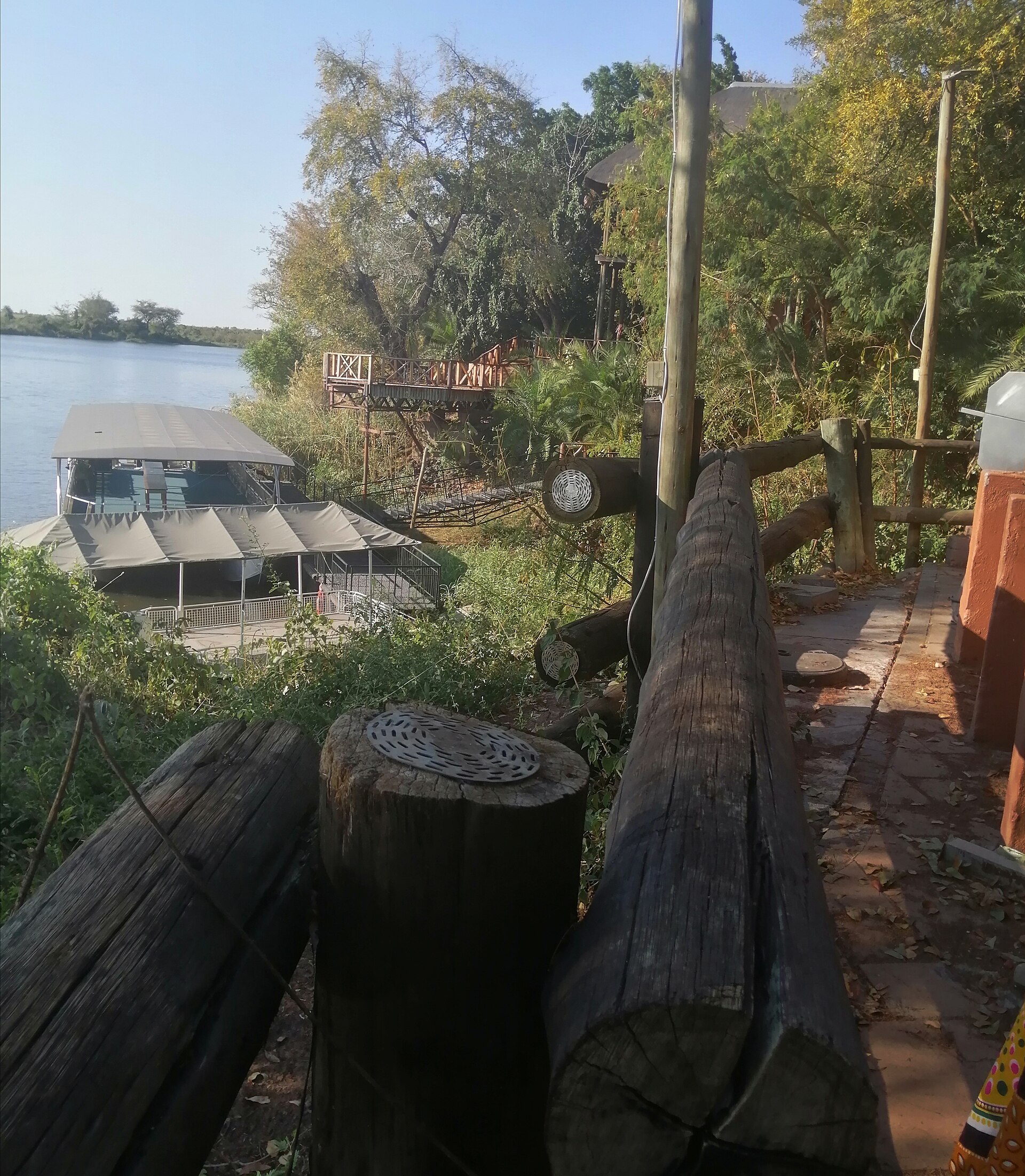
Photo: Lorato Othusitse, CC BY-SA 4.0
Chobe Marina Lodge
out of 5 0 ratingsKasane sits quietly in the far north of Botswana, where the Chobe River bends to meet the borders of Namibia, Zambia, and Zimbabwe. It’s a place where the land feels vast and untamed, and the river carries the weight of the wild. Chobe Marina Lodge stands along its banks, not as a grand statement of luxury, but as a quiet invitation to step closer to the pulse of the natural world. From the rooms, the water stretches out like a living thing—elephants wade in at dusk, their trunks curling into the current, while hippos lounge in the shallows, half-submerged in the heat of the day. This is the rhythm of Chobe, and staying here means waking up to it, watching it unfold just beyond the window.
The lodge itself is unassuming, built to blend rather than dominate. Low-slung chalets with thatched roofs nestle among the trees, their paths winding toward the river in gentle curves of natural stone. There’s no grand entrance, no towering structures—just wood, reed, and rock shaped by human hands to sit lightly on the land. Inside, the rooms are spare but open, designed to let the outside in. Furniture is minimal, the better to leave space for the light and the breeze, and the large windows frame the river like a moving painting. It’s not about opulence; it’s about being present.
Chobe National Park begins just beyond the lodge, a sprawling expanse of savanna and woodland where wildlife moves freely. This is one of Africa’s great elephant strongholds, especially in the dry season when herds gather along the river, their dusty trails leading to the water. But the park holds more than just elephants. Lions prowl the grasslands, leopards slip through the trees, and buffalo graze in the distance. The river itself is alive with crocodiles and hippos, their presence a reminder of the wildness that still thrives here. The lodge arranges game drives and boat safaris, offering a way to see it all up close—though close here still means respecting the space between you and the animals.
There’s no need to rush into the park, though. The lodge has its own quiet magic. Mornings can be spent on the veranda with a cup of tea, watching elephants cross the river on the opposite bank. Afternoons might drift into a walk along the water’s edge, where the air smells of dry grass and damp earth. Nearby, small villages dot the landscape, home to communities that have lived here for generations. Some guests are invited to visit, though these encounters are never staged for tourists. They’re a chance to glimpse a way of life that has endured, rooted in tradition and the land itself. It’s a reminder that this place is more than just a backdrop for safaris—it’s a living landscape, shaped by people as much as by wildlife.
Evenings settle in slowly. As the sun dips below the horizon, the sounds of the bush take over—the rhythmic chirp of cicadas, the distant roar of a lion, the soft splash of a hippo surfacing in the river. There’s a small bar where local beer or wine is served, but most people gather around the fire instead, swapping stories with guides or fellow travelers. There are no loud parties here, no forced entertainment. Just the quiet hum of conversation and the occasional laugh, punctuated by the calls of the night.
Kasane itself is a modest town, more functional than picturesque. It’s a place where travelers stock up on supplies, grab a meal at a simple café, or browse the market for fresh fruit and handmade crafts. For many, it’s a stopover on the way to Victoria Falls or deeper into Botswana’s national parks. But those who linger find that Kasane has its own unhurried charm. It’s a gateway, yes, but also a place where the pace of life slows to match the river’s flow.
What Chobe Marina Lodge offers isn’t luxury in the conventional sense. There are no infinity pools or spa treatments, no air-conditioned cocoons sealing you off from the world outside. Instead, there’s the river at your doorstep, the stars overhead, and the quiet understanding that you’re sharing this space with something far older and wilder than yourself. The elephants will come whether you’re here or not. The hippos will keep their watch in the water. The lions will hunt under the same moon. Staying here isn’t about owning the experience—it’s about being allowed to witness it.
Day around this place
Where else to go on the same day
Building the day…
Where it is
-17.80066, 25.14906