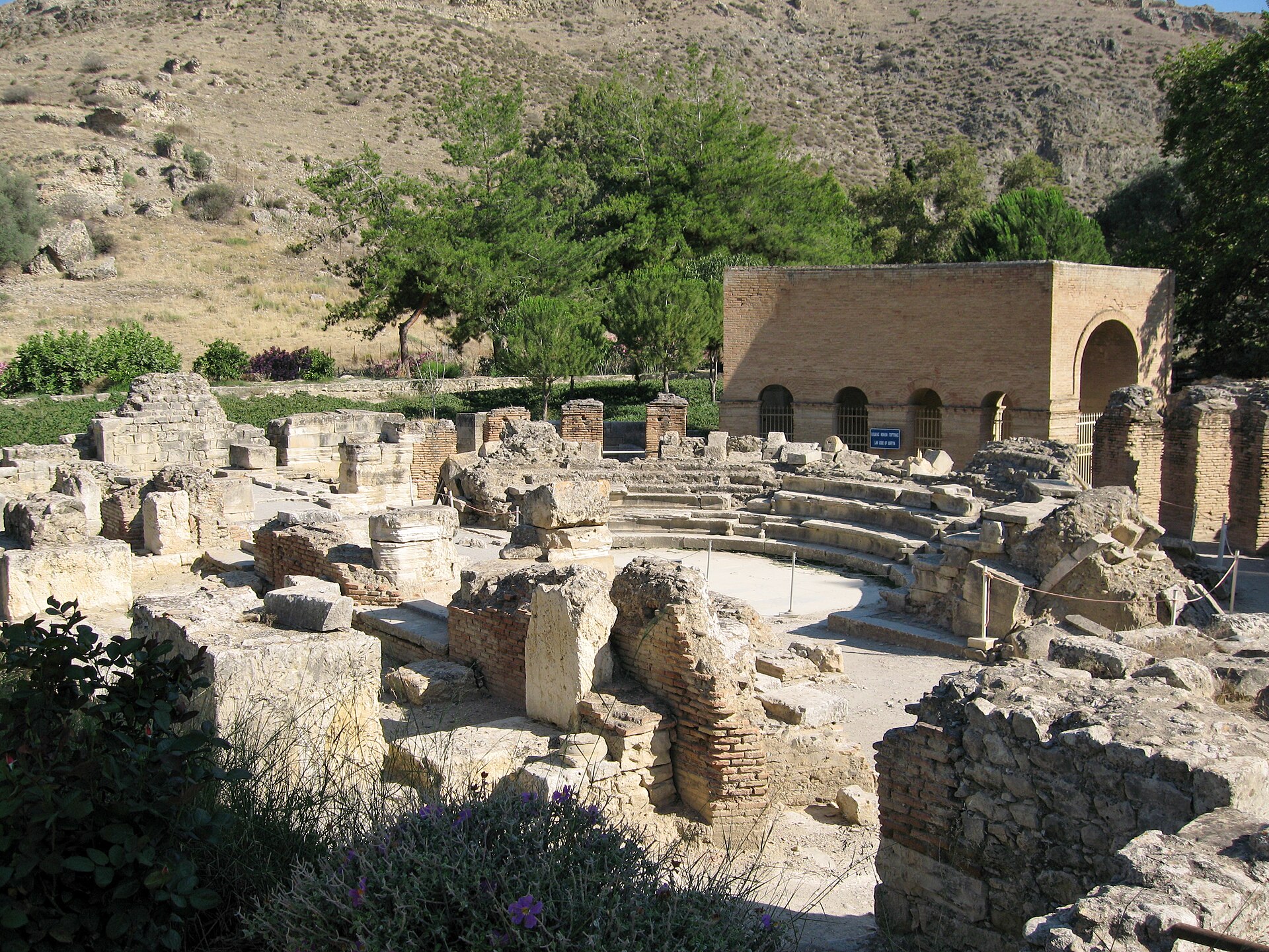
Gortyn is one of those rare places in Crete where history doesn’t just exist in books or museums—it lingers in the very earth beneath your feet. Tucked away a short distance south of Heraklion, this ancient city was once the island’s capital, though it never gained the same fame as Knossos or Phaistos. There are no grand reconstructions here, no vivid frescoes or meticulously restored palaces. Instead, the ruins sprawl across a quiet field, overgrown with wild grasses and dotted with olive trees, as if time itself has paused somewhere between antiquity and the Middle Ages.
The site’s origins stretch back to the Minoan era, around four thousand years ago, but Gortyn truly flourished under Roman rule. By the first century BCE, it had become the administrative heart of Crete, later rising to prominence as one of the Roman Empire’s key provincial cities. Coins were minted here, temples and theaters built, and decisions made that shaped the island’s fate. The Byzantines later inherited this legacy, turning Gortyn into a religious center. The archbishop of Crete once resided here, and in the sixth century, a grand basilica complex was erected—though today, only fragments of its mosaic floors and columns remain.
The most famous relic of Gortyn is the Law Code, carved into stone blocks in the third century BCE. One of the oldest legal texts in Europe, it governed matters of property, marriage, and inheritance, written in the Doric Greek dialect. Though much of the inscription has faded with time, some phrases are still legible. This isn’t just an artifact; it’s a reminder that Gortyn was a place where laws were first codified, laying the groundwork for future legal systems.
The ruins are scattered across a vast area, and to grasp their scale, you have to wander through the field, where the remnants of columns, building foundations, and crumbling walls rise among thyme and olive groves. The most striking structure is the Roman odeon, a small theater where music and poetry competitions once took place. Its semicircular tiers are remarkably well-preserved, and if you listen closely, you can almost hear the echoes of applause from an audience two thousand years ago. Nearby lie the remains of the Temple of Pythian Apollo, where priests once interpreted the will of the gods.
The Byzantine era left its own mark on Gortyn. The Basilica of Saint Titus, built in the sixth century, was one of the largest Christian churches on Crete. Even in its ruined state, its dimensions are impressive—only the foundations and a few columns remain. According to tradition, the relics of Saint Titus, a companion of the Apostle Paul and the first bishop of Crete, were kept here. The basilica was destroyed by an earthquake in the Middle Ages, but its ruins are still considered sacred, and locals sometimes leave flowers among the stones.
Gortyn isn’t just an archaeological site; it’s a living part of Crete’s landscape. The field where the ruins lie is surrounded by rolling hills covered in vineyards and olive groves. On hot summer days, the place is quiet, the only sounds the hum of cicadas and the occasional bleat of sheep being herded past ancient stones. In the early morning or late afternoon, you might see elderly villagers sitting in the shade of olive trees, reminiscing about the past. For them, Gortyn isn’t just an open-air museum—it’s a piece of their own history, woven into the land they’ve known all their lives.
Visiting Gortyn feels less like a guided tour and more like stepping into another time. There are no flashy signs or detailed plaques explaining every stone, so you have to rely on your imagination. You can picture Roman soldiers marching down these streets, church hymns echoing through the basilica, or poets reciting verses in the odeon. Or you can simply sit on one of the ancient steps and watch the sun dip below the hills, casting a golden glow over the ruins. In moments like these, it’s easy to see why Crete is called the island of myths—here, the past isn’t gone. It’s just waiting to be rediscovered.