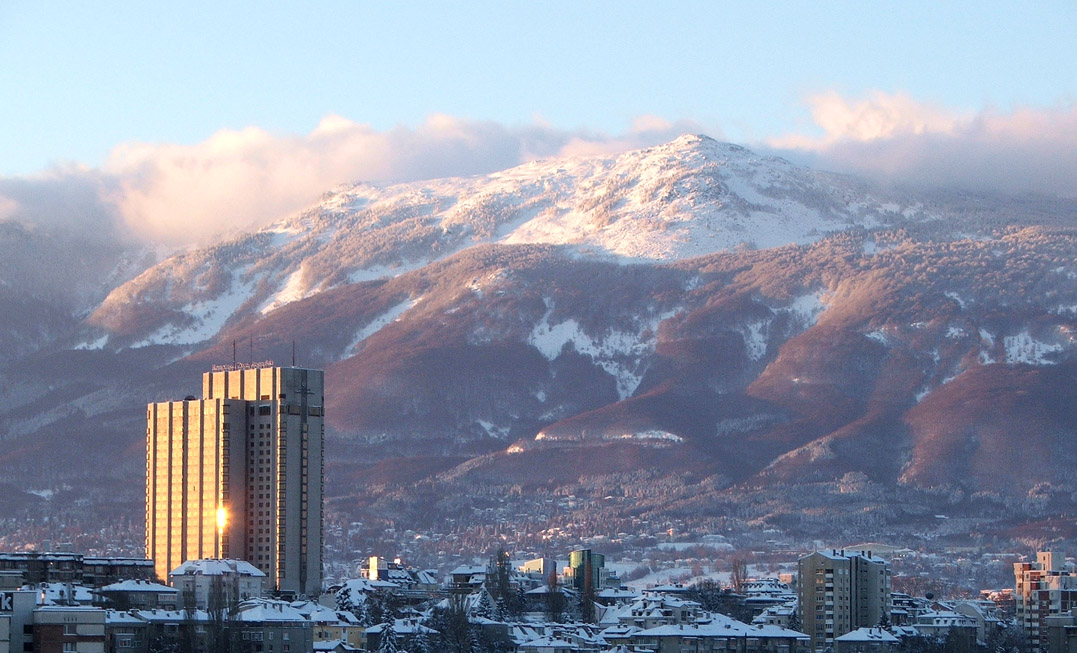
Vitosha Mountain rises just outside Sofia, a quiet giant watching over the city. Its slopes begin where the urban sprawl ends, a sudden shift from streets and buildings to forests and rock. For centuries, this mountain has been more than just a backdrop—it’s been a refuge, a challenge, and a place where Sofia’s residents escape the pace of city life. The air here is different, cooler and sharper, carrying the scent of pine and damp earth. On clear days, the summit offers a view that stretches beyond the city, across the plains and toward the distant Balkan range.
The mountain’s shape is unmistakable, with its broad shoulders and the distinctive rock formations known as the Stone Rivers. These are not rivers at all, but long trails of boulders, some as large as houses, that spill down the slopes like frozen streams. They formed thousands of years ago, when glaciers ground the rock into fragments that later settled into these strange, winding patterns. Walking among them feels like stepping into another time, where the landscape moves at a pace far slower than the world below.
Vitosha has always been a place of movement. In the 19th century, it was a hideout for revolutionaries and outlaws, a natural fortress where they could disappear into the forests. Later, it became a destination for those seeking fresh air and open space, long before the idea of weekend hikes became common. The first organized tourist routes appeared in the early 20th century, and by the 1930s, the mountain had its own cable car, connecting Sofia to the higher altitudes. That cable car still runs today, creaking its way up the slope, offering a slow ascent past trees and cliffs.
The highest point is Cherny Vrah, a name that means Black Peak. At just over 2,290 meters, it’s not the tallest mountain in Bulgaria, but it feels imposing when you stand on its summit. The wind here is stronger, the horizon wider. On summer mornings, the sun rises over the plains, turning the sky shades of pink and gold. In winter, the peak is often wrapped in clouds, and the snow can linger well into spring. The climb to the top is not difficult, but it’s not effortless either—there’s a reason why Sofia’s mountaineering clubs have long used Vitosha as a training ground.
The mountain is also home to a handful of small huts, scattered along the trails. These are simple wooden buildings, some dating back to the early 1900s, where hikers can stop for tea or a bowl of hot soup. The oldest, Aleko Hut, sits at 1,800 meters and has been a waypoint for generations of climbers. Inside, the walls are lined with old photographs and maps, a quiet record of the people who’ve passed through. There’s no luxury here, just warmth, shelter, and the kind of hospitality that comes from shared effort.
Vitosha changes with the seasons. In autumn, the beech forests turn shades of amber and rust, and the trails are carpeted with fallen leaves. Winter brings deep snow, and the mountain becomes a playground for skiers and snowboarders, though the slopes are gentler than those of the more famous resorts further south. Spring is when the wildflowers appear, splashes of color against the green and brown. By summer, the mountain is alive with hikers, families, and groups of friends, all taking advantage of the cooler air.
For Sofia, Vitosha is more than just a mountain—it’s part of the city’s identity. It’s where people go to clear their heads, to test their endurance, or simply to sit on a rock and watch the sunset. The trails are well-marked, but they’re not polished; there are roots underfoot, loose stones, and the occasional steep climb. This isn’t a manicured park, but a wild place that demands a little respect. That’s part of its appeal. The mountain doesn’t try to impress; it simply is, steady and unchanging, while the city at its feet grows and shifts.
There’s a saying in Sofia that if you haven’t climbed Vitosha, you haven’t really lived in the city. It’s an exaggeration, of course, but there’s truth in it. The mountain is a constant presence, a reminder of something larger than the daily routine. Whether you come for the views, the challenge, or just the quiet, it leaves an impression. Not because it’s grand or dramatic in the way of the Alps or the Rockies, but because it’s familiar. It’s the mountain that’s always been there, waiting.