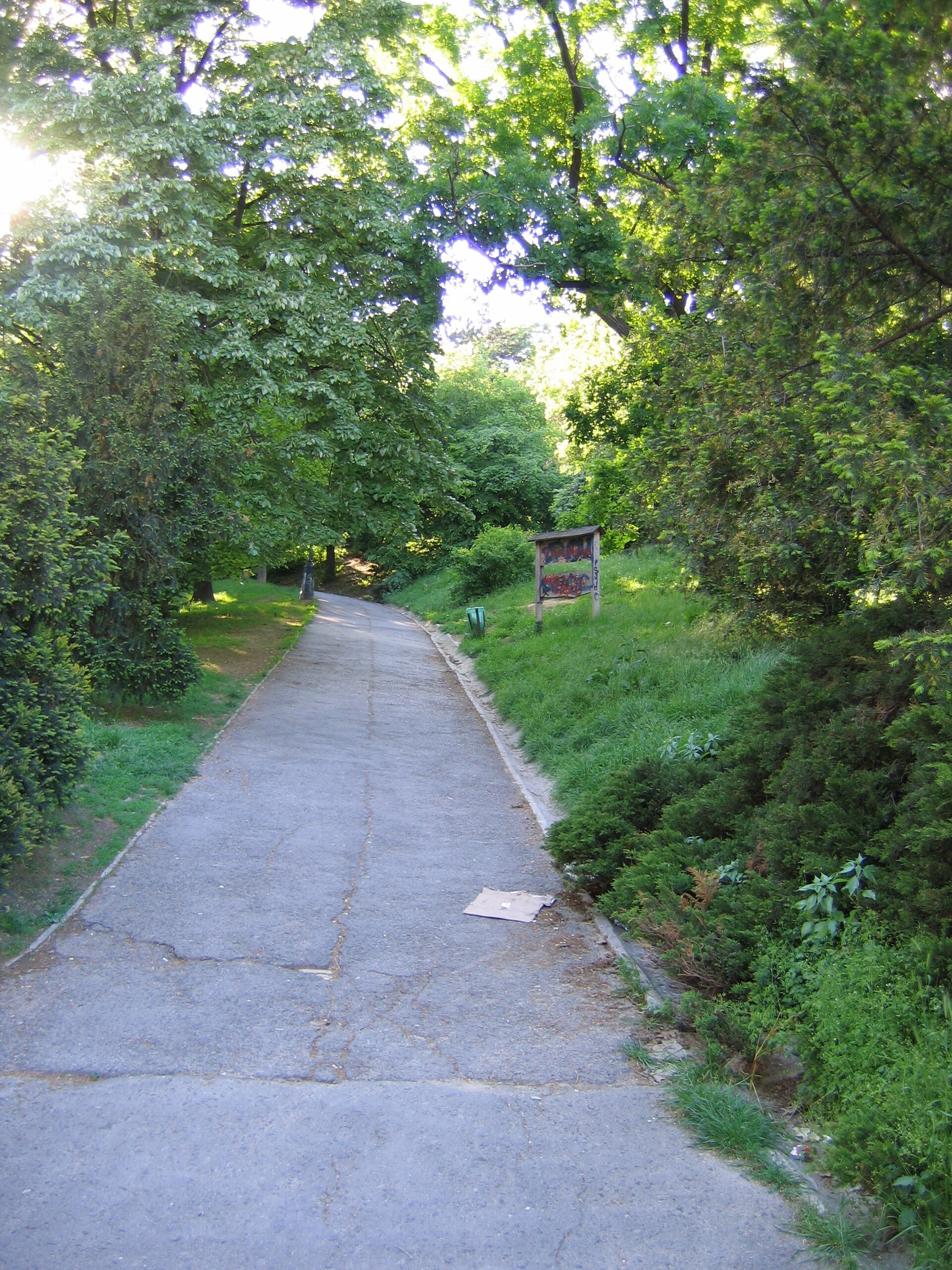
Gellért Hill rises above the Danube like a quiet guardian of old Buda, its slopes thick with greenery and steeped in stories. From its summit, nearly a hundred and fifty meters above the river, the view unfolds across Budapest in a way that feels almost deliberate—each landmark, each bend of the water, arranged as if to remind you why this city has long been called the heart of Central Europe. The hill is more than just a vantage point; it’s a place where history, nature, and everyday life overlap without fuss, where the past isn’t preserved behind glass but woven into the fabric of the present.
The name itself carries weight, tied to Saint Gerard, an Italian monk who arrived in Hungary in the 11th century to spread Christianity. Legend says he was martyred here during a pagan uprising, rolled down the hill in a barrel studded with nails. Whether the story is true or not, it lingers in the air around the bronze statue of the saint that stands on the slope, a quiet figure often surrounded by fresh flowers. The small park around it is one of those rare spots in the city where time seems to slow—shaded benches, the rustle of leaves, the occasional sound of footsteps on gravel.
Long before the statue or the legends, the hill was a strategic point. The Romans used it as a lookout, and later Hungarian kings built fortifications here. But its modern identity took shape in the 19th century, after Buda and Pest merged into one city. That’s when the Citadel appeared—a massive fortress built by the Austrians after crushing the Hungarian Revolution of 1848–49. Meant to symbolize imperial control, it instead became a monument to resistance. Today, the Citadel’s walls offer more than just history; they frame one of the best views in Budapest. From here, the Danube splits the city cleanly in two, with the spires of Parliament on one side and the towers of Buda Castle on the other. On clear days, the horizon stretches far beyond the center, and in the evening, when the lights come on, the river turns into a ribbon of gold, the bridges glowing like threads stitching the two halves of the city together.
Tucked into the hillside is another piece of history—the Cave Church. It began in the 1920s when Carmelite monks carved a chapel into the natural rock. For decades, it was a place of quiet devotion, until the socialist era sealed it behind concrete. Only after 1990 was it reopened, its rough stone walls now adorned with simple frescoes and statues. The small museum inside tells the story of its survival, a reminder of how faith and politics have shaped this city. Stepping inside feels like entering a different time, the cool air and dim light making the outside world feel distant.
But Gellért Hill isn’t just about monuments. It’s a place where the city breathes. Winding paths crisscross the slopes, used by locals as much as tourists. In summer, runners weave through the trees; in winter, children sled down the gentler inclines. There’s a funicular that climbs to the Citadel, but many prefer the walk, the scent of pine and earth mixing with the occasional breeze off the river. Benches line the trails, occupied by couples, students with books, or older Hungarians enjoying the quiet. It’s not the kind of place where you’d find crowds or noise, but it’s where you might feel most connected to the city’s pulse.
Then there’s the Liberty Statue, perched near the summit. Erected in 1947 to honor Soviet soldiers who died in World War II, it’s a figure that divides opinion. Some see it as a relic of occupation; others, as part of the city’s layered history. The woman holding a palm branch has become an icon, her silhouette recognizable from across Budapest. At night, when the lights illuminate her, she seems to hover over the city, a reminder that freedom is both a memory and a living thing.
What makes Gellért Hill special is how unassuming it is. There’s no grand entrance, no ticket booth, no hype. You can spend an hour here or a whole day—climbing to the Citadel, wandering into the Cave Church, sitting on a bench with a coffee, watching the sunset paint the Danube in shades of pink and gold. It’s not the kind of place that dazzles with spectacle, but it’s where you might feel the weight of history most keenly, not as something distant, but as something that still lingers in the air, in the stones underfoot, in the way the city unfolds below.
For all its history, the hill remains a part of daily life. Locals walk their dogs here, teenagers meet on the steps of the Citadel, and families picnic on the grassy slopes. It’s a place where the past and present coexist without fanfare, where you can stand on the same ground as kings and revolutionaries, then turn around and see a city that’s very much alive. That’s the strange magic of Gellért Hill—it doesn’t just show you Budapest; it lets you feel it.